East Africa appeal
The situation
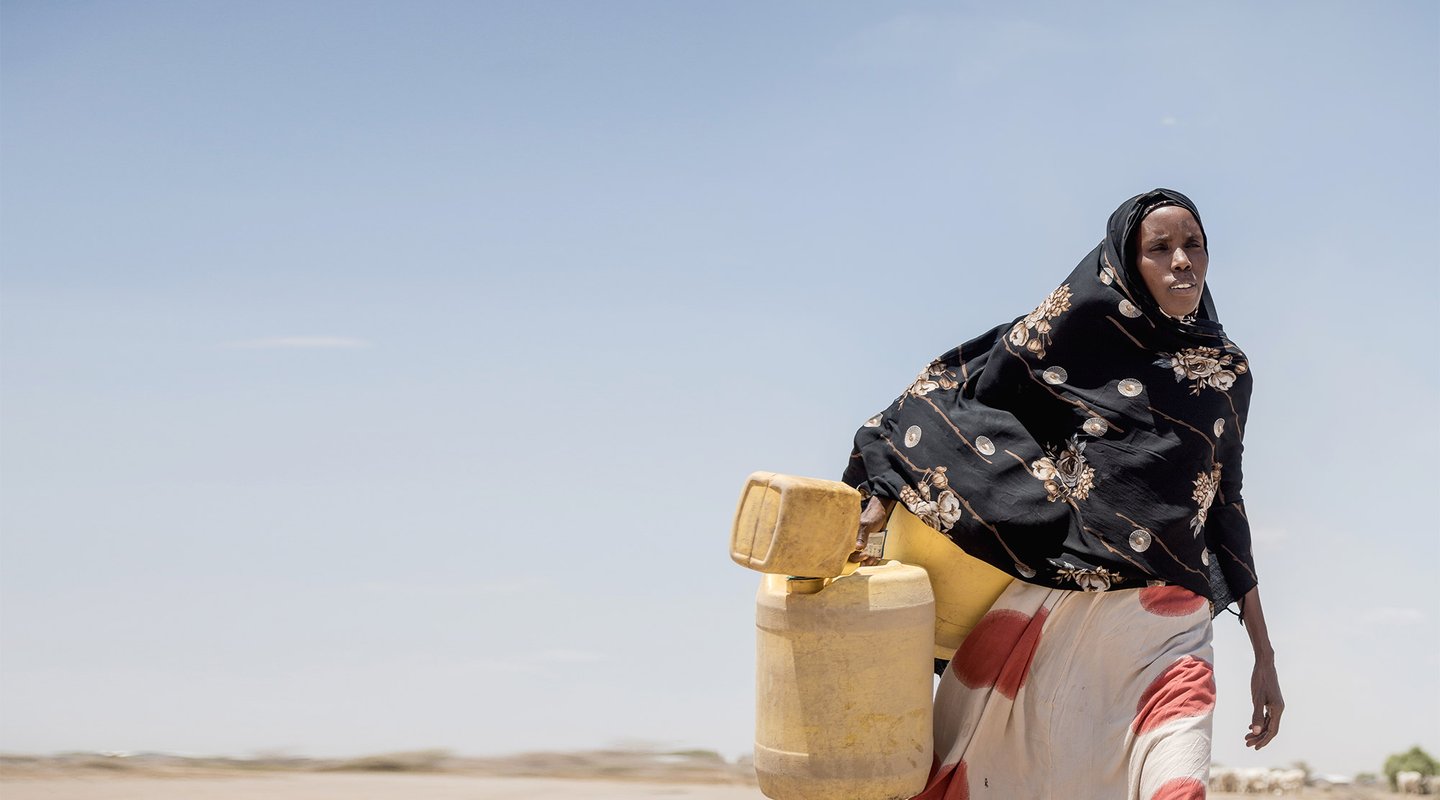
Rains failed in 2010 and 2011, pushing up food prices and causing millions of small farmers and nomads to lose their livelihoods. As a result, 13 million people across the Horn of Africa were facing desperate food and water shortages by July 2011. A famine was officially declared by the UN in parts of Somalia.
What Oxfam is doing
We are reaching about 2.9 million people in Ethiopia, Somalia and Kenya with the food, cash, water and basic sanitation they desperately need.
Learn more about our emergency work in:
Oxfam's response: Ethiopia
Oxfam is responding to the food crisis in Ethiopia in three regions: Somali, Oromiya and Tigray, where we are providing emergency support to local communities and to refugees who have fled across the border from Somalia. So far we are supporting 425,514 people.
Our work focuses on:
-
Water, sanitation and hygiene
-
Livestock and livelihoods
Water and sanitation and hygiene
In Ethiopia a major focus of our work involves helping communities look for more sustainable sources of water by drilling boreholes, developing motorised water schemes and improving traditional water harvesting systems.
In the driest and worst affected areas we have also been trucking in emergency water supplies to more than 32,000 people. The water is treated and used for drinking, cooking, washing and keeping animals alive. Each person gets at least five litres of water per day – the bare minimum that people need.
Community health workers also conduct public campaigns to help stop the spread of waterborne diseases such as diarrhoea. These include training community officers on efficient management of water sources.
Livestock and livelihoods
Disease can spread quickly among animals too, particularly as they get weaker because of the impact of the drought. Most people in these areas depend on their livestock, and we're ensuring that 500,000 heads of cattle have access to water, pasture, vaccinations and medical treatment.
We're also running 'cash-for-work' schemes with communities to help clean, rehabilitate and build water sources, to clear pasture, and rehabilitate local roads or drainage systems. These help communities weather the drought, while providing them with a valuable source of income for weeks at a time.
In some areas, where food is scarce, providing cash is not enough so we work with women's food supplier groups and co-operatives to help make sure food is available in the markets. This includes providing them with training to strengthen their businesses and putting them in touch with wholesalers to re-establish the supply chain. We are also planning to supply these groups with goods such as rice, pasta, cooking oil and sugar, which they can then sell within their community. This helps ensure that food is available in the markets, and helps revitalise the local economy.
Audio slideshow
All hands to the pump
Jane Beesley meets a shipment of aid as it arrives in Ethiopia and staff pitch together to construct water equipment for a new camp.
Oxfam's response: Kenya
In Kenya, Oxfam is responding to the food crisis in three main areas: the northern regions of Turkana and Wajir, and in Dadaab refugee camp near the border with Somalia which is home to several hundred thousand refugees who have fled conflict and famine in their homeland.
Overall we have helped more than 1 million people in these three areas.
Turkana and Wajir
In Turkana and Wajir, we are providing water, sanitation and hygiene services. Activities include water trucking, fuel subsidies, public health promotion and water point renovation and maintenance through drilling boreholes and the servicing of generators.
We are also supporting people who have lost their means of making a living because of the drought, through special 'cash-for-work' programmes and distributions of cash grants, as well as giving food rations where necessary.
Many people in Wajir and Turkana rely on livestock as their main source of income and nutrition, but the drought has left the animals weak, dying and hard to sell. Oxfam's 'de-stocking' programme buys up some of the weakest animals - ensuring that owners get an income and some vital cash before their assets die - and then the meat from these animals is distributed to the community.
Dadaab refugee camp
With hundreds of thousands of Somalis seeking refuge across the border in Kenya, we are also working in the extension of Ifo refugee camp in Dadaab to provide water, sanitation and hygiene facilities.
Despite ongoing insecurity and threats of violence in the area, we have successfully managed to maintain life-saving support here in one of the world's largest refugee camps.
On film: public health in Dadaab
Oxfam's response: Somalia famine
Somalia is the epicentre of the food crisis in East Africa, with 4 million people affected by drought and famine. Oxfam is providing emergency support to 1.5 million people there.
Cumulative droughts, loss of livelihoods, and insecurity have pushed 4 million people – more than half of Somalia's population – into crisis. An estimated 1.8 million people are also displaced.
Oxfam has worked in Somalia for 40 years providing water, sanitation, public health promotion, and livelihoods support. Through our network of Somali partners, we are able to reach hundreds of thousands of people in need throughout the country.
As part of our emergency response we are continuing our water, sanitation and hygiene work by rehabilitating and constructing new boreholes and distributing water purification sachets, as well as providing cash relief to assist newly displaced Somalis fleeing conflict and drought in Lower and Middle Juba.
In the capital, Mogadishu, we are working with local partners to run the single largest nutrition programme in South Central Somalia, treating more than 12,000 severely malnourished children and pregnant and lactating mothers a month.
Blog: As drought weakens Somalia, children regain strength
We are also providing water, sanitation and hygiene services to more than 209,000 vulnerable people in Mogadishu and working on Acute Water Diarrhoea (AWD) preparedness and control, for example setting up oral rehydration points and increasing chlorination rates in water at Banadir hospital.
In addition to this, we are running a life-saving cash transfer programme which will assist around 66,000 highly vulnerable people to meet their basic food needs, enhance their coping mechanisms and reduce their vulnerability to future shocks.
In Lower and Middle Shabelle, Galgudud, Gedo and Hiran regions we are providing assistance in a variety of ways, including cash relief or 'cash-for-work', land rehabilitation, distributing agricultural inputs and non-food items and supporting water, sanitation and hygiene services.
In Lower Shabelle we are supporting the single largest public health programme in Somalia, providing water and sanitation services to more than 250,000 displaced people in the Afgooye corridor and providing cash relief to over 16,000 vulnerable people.
In Hiran, we are running an 'Integrated Management of Acute Malnutrition' (IMAM) programme with a long-standing partner to provide nutritional support to approximately 11,000 children under five and women of childbearing age.
Blog: 'City of Hope' - reflections from Somaliland
Find out about our work in: Ethiopia | Kenya
Update: January 2012
GROW: Oxfam's food campaign
The crisis in East Africa is a strong example of a food system stretched to breaking point. We can fix this system, and it’s vital we do so now.
We knew the failing rains would affect farmers and communities, yet people in power haven’t done enough to protect them. Now their lives and livelihoods are being devastated. Small-scale food producers haven’t received investment to help them through this difficult time, and plans made to protect vulnerable people were not good enough. The price of food has risen beyond the reach of many and, because their needs have been ignored for so long, there’s not enough for them to eat and nowhere for them to turn.
Responding to this crisis and saving lives now is vital. But this is also a wakeup call to governments and the international community: we need to address the issues that make people vulnerable in the first place. The crisis in East Africa, like in many other parts of the world, is the result of recurring long-term problems – problems that will become more frequent and more severe as issues such as climate change get worse.
We need more investment in small-scale food producers to be able to cope with a changing climate, as well as in generating sustainable livelihoods. Communities must have a say in the decisions that affect them, and better support must be put in place to protect vulnerable people. It’s no coincidence that the worst affected by this crisis are those who have been most neglected.
The resources and solutions exist to ensure that no one goes hungry. But the current food system is failing to feed nearly one in seven of us. In the short term we must react to this emergency. In the long term we must make the food system work for everyone.
Oxfam is working with others to respond to this emergency, but also to ensure that more is done to address the root causes of crises like this. We understand that the System’s bust. The GROW campaign is Oxfam's global movement of people uniting to fix it. Piece-by-piece, it's time for change.
Donate to Oxfam's emergency fund and join the GROW movement to fix the System.
Make a donation
Donate to Oxfam's East Africa appeal.
Latest news
Latest news and reports from East Africa

![[Photo: Andy Hall]](images/east_africa.jpg)