Conflict in D.R. Congo

Returnees go back to their destroyed villages in eastern Congo. Photo:Tineke D'haese/Oxfam Solidarité

Oxfam is responding to a growing crisis in the Kivu region of eastern Congo
Latest news and blogs

A humanitarian catastrophe in the east

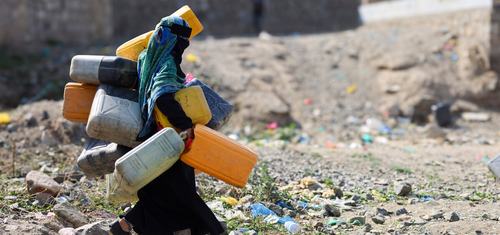
An upsurge of fighting in eastern Congo has seen up to a staggering 900,000 people flee their homes since the start of 2009. Communities have been torn apart, homes have been burned to the ground, and thousands of women have been raped. A government military offensive, backed by the United Nations, has made the situation even more dangerous for Congolese civilians.

Oxfam has expanded its emergency response to deal with the deteriorating situation, providing vital assistance to 800,000 vulnerable people.

Take action: Sign our e-petition to stop the killing in Congo

Voices from the conflict

On film: Conflict in D.R. Congo

Oxfam's Jim Clarken recently visited Lubero, an area badly affected by the upsurge in fighting.

Oxfam is there

We are working with local partner organisations to provide vital clean water, sanitation and promote good health and human rights.

In pictures: Oxfam in action in the Congo

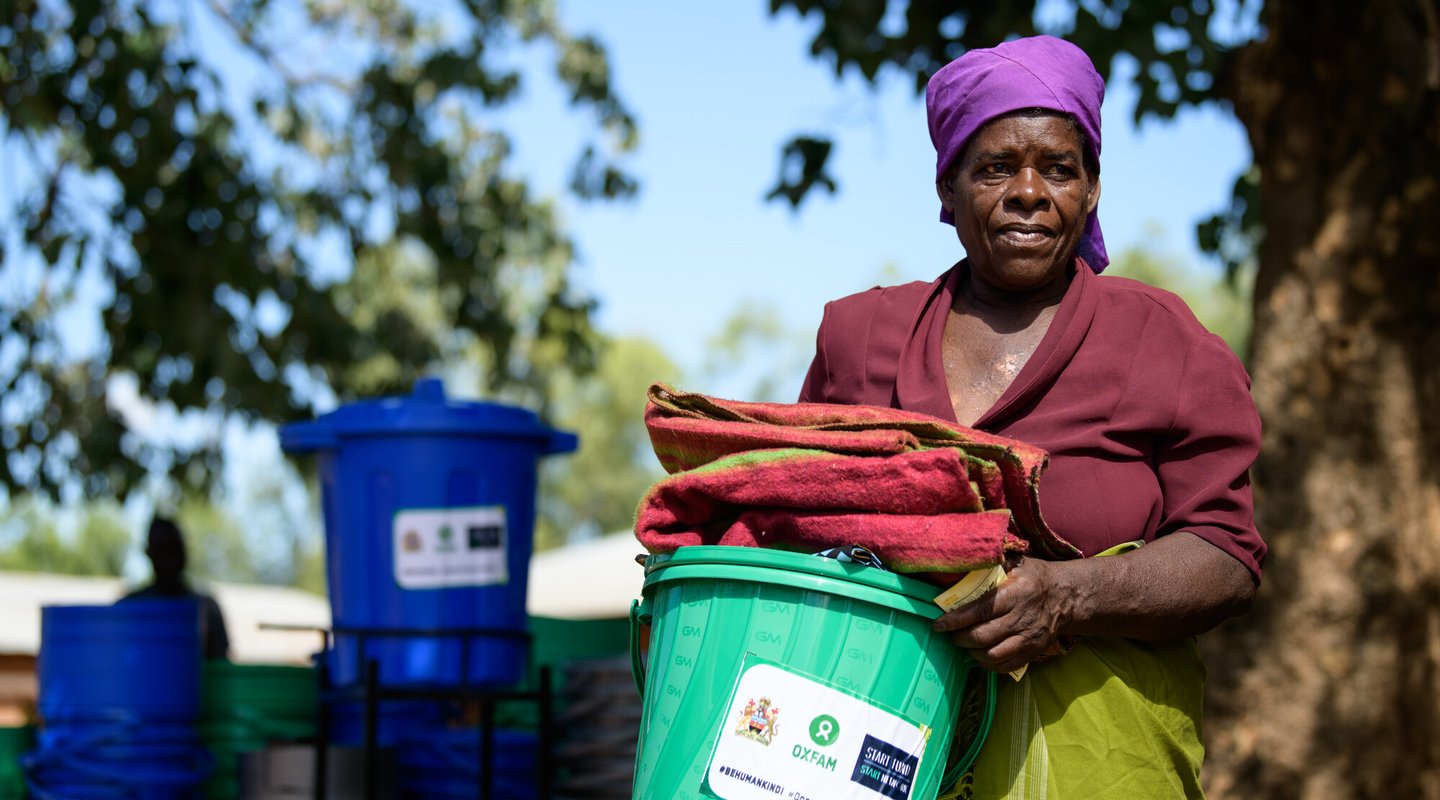
Oxfam stocks of buckets ready for distribution to newly displaced people. [Photo credit: Oxfam]In major towns such as Lubero, in North Kivu, we are working with partners to truck 200,000 litres of clean drinking water every day. These towns are currently the safe havens for many displaced people, and the needs are enormous.

In South Kivu province, Oxfam’s new programmes in Bukavu and Uvira will supply water and sanitation to more than 80,000 people.

We are also distributing items essential for maintaining good health and hygiene, such as soap and buckets.

Oxfam staff member teaching camp members about public health. Photo: Helen HawkingOxfam is also working with Congolese partners to help communities prevent and respond to violence and human rights abuses, through supporting community education and advocacy with local civilian and military authorities. At least 50,000 people in North and South Kivu are benefiting from this project.

Escalating violence in northern Congo

The Lord’s Resistance Army (LRA) – originally from northern Uganda but whose horrific violence has also devastated parts of Congo and Sudan – has recently intensified violence against civilians in northern DRC.

Oxfam is starting a new programme in Haut Uélé territory, where over 200,000 people have recently fled new attacks. Oxfam plans to assist over 40,000 people there.

Update: November 2009

ECHOECHO (Humanitarian Aid Department of the European Commission) is supporting Oxfam's emergency response in eastern D.R. Congo

Oxfam's campaign

In late 2008, the crisis in Goma hit headlines around the world. One year later, the situation in eastern DR Congo has only got worse – every day more people leave behind their homes and everything they own in search of safety. Each day more women are raped and civilians killed.

Take action: Sign our e-petition to stop the killing in Congo

This appalling violence is no accident.

It is the result of a UN-backed Congolese military operation against a militia known as the FDLR. The operation has led to massively increased violence against civilians by all sides – including deadly attacks by the Congolese army, and revenge raids by the FDLR.

This operation is being supported by international governments – including the US, UK and France – and in the highest echelons of the United Nations. Yet it is responsible for untold suffering.

Since the operation was launched in January 2009 there have been:

  • More than 1,000 civilians killed
  • Around 7,000 women and girls raped
  • Over 6,000 homes burned to the ground
  • Some 900,000 people displaced

Oxfam believes that all militia groups, including the FDLR, must disarm – but on the ground it is clear that the current strategy is failing, and that the negative impact on civilian communities has been out of all proportion to the number of combatants who have been disarmed.

Take action: Sign our e-petition to stop the killing in Congo

Oxfam’s is calling on politicians to do more to stop the violence. Our e-petition will be handed to the UN in later this year.

  Ordinary Congolese people are paying the cost of this operation, with their lives and their homes. These terrible human tragedies are happening in remote areas far away from television cameras, but this does not make the suffering less real for those concerned.

Marcel Stoessel, Head of Oxfam in D.R. Congo

On film: Stop the killing in the Congo

An unimaginable situation

The origins of the current conflict date back to the early 1990s, particularly the aftermath of the Rwandan genocide, when both perpetrators and victims fled into eastern Congo.

The conflict is fuelled in part by the illegal exploitation of mineral wealth; the weak state authority across large parts of the east; and armed groups taking advantage of this vacuum. With porous borders, weapons flow into the country with ease.

This has fed cycles of violence, with civilians both caught in the crossfire and directly targeted by a range of armed groups. This long-term instability and insecurity has stripped much of eastern DRC of almost all modern infrastructure, leaving it with virtually no industry and limited opportunities for education and jobs. The resulting poverty further fuels the violence, by giving many young men an economic incentive to take up arms.

Recovery and development

While conflict rages in parts of eastern and northern Congo, other parts of the country are trying to recover from years of war and political turmoil which have left the country one of the poorest and least developed in the world.

Oxfam works to promote long-term development in these areas, by:

  • Providing communities with water and sanitation facilities and hygiene education
  • Improving basic education, and improving school and hospital facilities in western Congo and the capital Kinshasa
  • Enabling people to start making a living again, by training people in business skills and giving tools such as nets for fishermen and animal vaccines for herders
  • Helping people who fled their homes during the violence to return home and integrate back into their communities

  Before, we were suffering from a lot of stomach problems. We’ve really noticed a change since Oxfam has been working with us.

Chief Singo Pele, Datule village

Creating a better future for the next generation

After 30 years of conflict, government neglect and prolonged economic crises, primary education in D.R. Congo is limited and often non-existent – keeping future generations locked in poverty.

  • Nearly half of children do not attend school
  • 75 per cent of those who do, drop out of school before their fifth year

Oxfam is working to improve the quality of basic education and increase school enrolment, especially among girls. We train teachers and refurbish schools, making them rainproof and supplying them with desks.

  I can now learn better, the roof is much better and I like the new benches.

Sarah Mokita, pupil at Diangenda School

Make a donation

Make a donation

Make a donation to Oxfam's response in D.R. Congo


    £


In pictures

In pictures

View the Congo slideshow

Oxfam's work in the Congo

Latest news

Latest news

Latest news and reports from D.R. Congo

Cheka kidogo

Cheka kidogo

Furaha Vumilia, 65. Photo: RankinRankin's exclusive personal portraits of D.R. Congo refugees