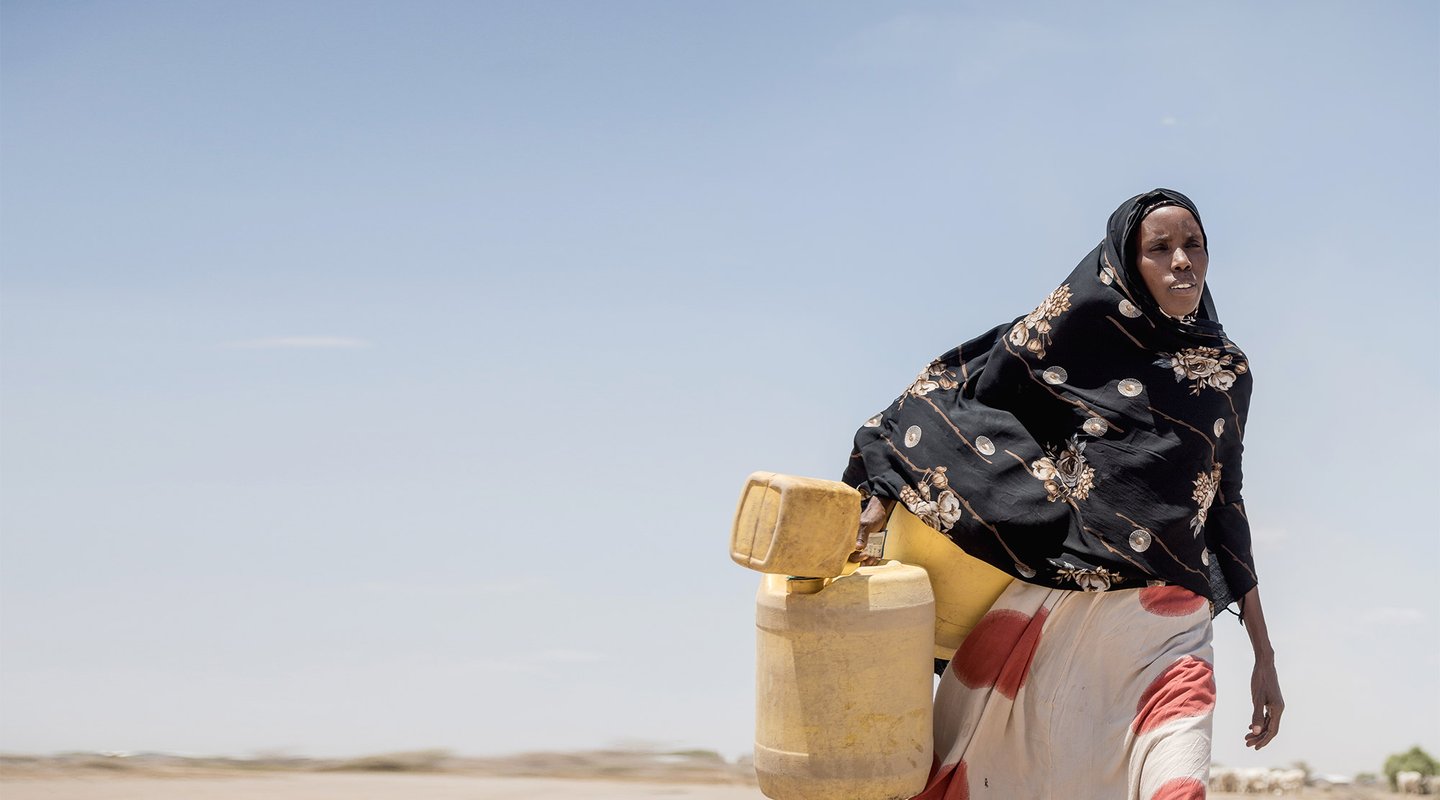
World leaders have failed to do enough. People are losing their livelihoods, homes and family members to hunger.
Women and girls are among the worst affected. Mothers are missing meals so their children can eat. Girls will sacrifice their education to look after family whilst their parents are forced to search for food.
South Sudan
South Sudan is in the midst of a catastrophic humanitarian crisis driven by ethnic conflict and climate. Over 5.9 million people are facing high levels of acute food insecurity and need urgent humanitarian assistance.
The conflict in Sudan has forced millions of people to flee to neighbouring countries. This is deepening humanitarian needs and exacerbating food insecurity, not only in Sudan but also in the wider central and eastern African region.
As people are forced from their homes, they lose their possessions, crops and income, and often get stranded in places where there aren’t enough facilities to support tens of thousands of new arrivals.
In South Sudan, the arrival of people fleeing Sudan’s conflict has put more pressure on already scarce resources, which is deepening local tensions and threatening the fragile peace South Sudan is struggling to maintain. Every day, hundreds of people arrive at transit centres in Renk, South Sudan, to seek refuge.
In March 2026, thousands of people including aid agencies were forced to flee the northern border town of Akobo East in South Sudan after an evacuation order was given by the South Sudan People's Defence Forces to leave within four days. The evacuation forced many families to flee again, leaving them with even fewer resources and support.
More than half of those displaced people are women and children. The escalating violence and repeated displacement is increasing the threat of sexual violence and abduction, and also the risk of child marriage.
Ethiopia
The humanitarian crisis in the wider region is placing strain on Ethiopia which is facing its own overlapping crises, from conflict to drought. Thousands of people have crossed into the Gambella region of Ethiopia to seek refuge from the recent evacuation in the town of Akobo East in South Sudan, which already hosts over 450,000 South Sudanese refugees.
Ethiopia, Somalia and Kenya are also facing the worst drought in history. More than 9 million people in Ethiopia need urgent humanitarian support because of extreme drought and conflict.
Millions have seen their livelihood suffer across four southern drought-affected areas. The northern regions of Ethiopia are severely affected by conflict. Levels of malnutrition in children and lactating women are alarmingly high.
Somalia
90% of Somalia is experiencing severe drought conditions. The lack of access to safe water, hygiene and sanitation facilities has heightened the risks of water-borne diseases and gender-based violence.
6.7 million people (more than half of the population) need humanitarian assistance. Approximately 1.8 million children are facing acute malnutrition.
Kenya
In Kenya, droughts, floods and disease outbreaks are becoming more frequent and intense, leaving little opportunity for affected communities to recover. An estimated 4.4 million people are facing severe hunger.