
Crisis in Gaza
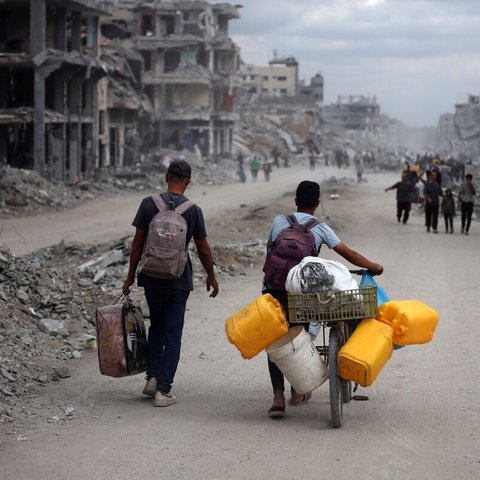
Israel’s blockade has meant that the one and a half million people living in Gaza are facing shortages of fuel, electricity, food, medical supplies and water equipment.
The situation
80 per cent of Gaza’s population are now dependent on food aid and Israel is limiting the amount of food and other humanitarian supplies entering Gaza.
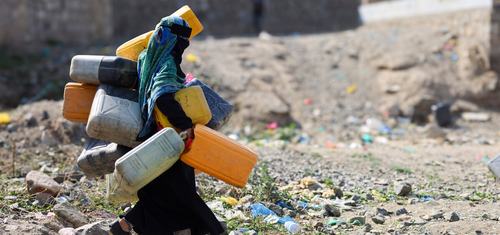
Despite the truce which started in June 2008, supplies of fuel continue to be heavily restricted, severely impairing essential services, and Israel is still refusing to allow most urgently needed spare parts into Gaza. Because the electricity distribution in Gaza is mostly under voltage, the water and wastewater system is heavily reliant on diesel-powered generators to operate. Restrictions on diesel entering the territory have meant that some water pumps do not have enough power to provide much needed running water or pump sewage away from residential areas.
Gaza’s economy has been destroyed because it is not allowed to import raw materials; farmers and businesses are unable to produce and export their goods leaving 70,000 people and their families – nearly half a million people – without an income.
Oxfam's response
Our work to help 71,000 vulnerable people to meet their basic food, water, and hygiene needs is ongoing, despite a widespread lack of fuel.
One year on in Gaza; treating, planting, speaking out
Food distributions to 2,000 people in Gaza City have just started with families being given vouchers to exchange for a food parcel containing items such as chicken, eggs, potatoes, tomatoes, lemons, greens and onions. Oxfam is buying this produce from local farmers who are unable to export their goods, thereby ensuring they are getting a fair price for their produce.
In this new phase, special attention is given to tackling high anaemia levels amongst children and pregnant women. This project is done with in partnership with Ma’an Development Center and with the financial support of the World Council of Churches.
In the Middle Area of the Gaza Strip, some 1,000 households (10,000 people) will benefit from a cash-for-work initiative funded by ECHO. Some 44 kilometres of agricultural roads will be rehabilitated. This work will have a positive impact on the whole community and especially for farmers who face difficulties in getting to their lands during the rainy season.
Due to recent increases in food commodities and fodder for animals, Oxfam is helping farmers to develop a locally produced fodder. In this second phase of our programme, 30 farmers from the south of the Gaza Strip will learn how to produce silage for livestock out of wheat, watermelon, cucumbers and hay residues.
The vegetables, chicken and eggs we get every week makes all the difference! We particularly like the way field workers ask us what vegetables we would like to receive the following week. It makes us feel more involved. ![]()
Um Layla, Gaza City
Water and sanitation work is currently planned for six location. Sewage networks will be rehabilitated, in other areas a desalinisation plant will be constructed to increase the quantity of drinking water available to the population and a storm water wet pit will be cleaned up. Finally electrical spare parts will be distributed to the Coastal Municipalities Water Utility (CMWU) to maintain and repair their water wells generators.
Throughout these projects, the Public Health team and its partners will conduct hygiene promotion sessions to ensure the population knows how prevent diseases and how it can participate to the general good maintenance of the new interventions (as appropriate).
Meanwhile, we continue to call on Israel to immediately allow fuel and electricity supplies to answer the needs of the 1.5 million people living in the Gaza Strip. Oxfam is working with Palestinians, Israelis and the International Community to bring an end to the human suffering caused by the blockade.
Trapped in Gaza: Learn about Oxfam and Gisha's campaign
26 August 2008
Make a donation
Donate to help people affected by the crisis in Gaza.
In depth
Learn more about Oxfam's work in the occupied Palestinian territories and Israel
Gaza Diary
Omar, a humanitarian officer working in partnership with Oxfam, has been blogging about life in the Gaza Strip