Photo credit: Oxfam International
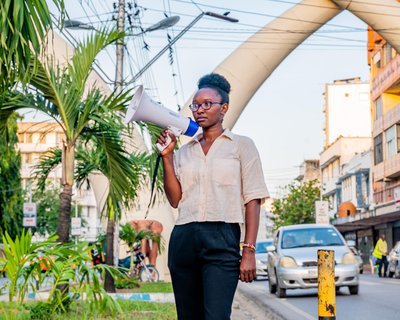
We need trust and solidarity to collectively solve the nature and climate crisis we're facing.”
Kenyan climate activist Elizabeth Wathuti.
Climate Justice
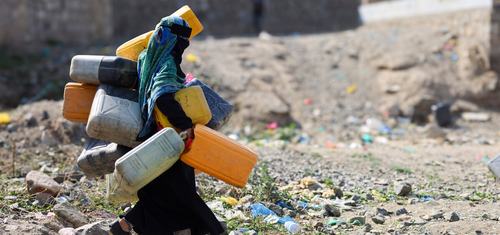
The climate crisis isn't in the future, it's here now. The effects of climate change are currently hitting those who have done the least to cause it, but it will affect us all, if it hasn’t already.
What is climate justice?
Why do we want to stop climate change?
Photo: SumitAwinash
Tell your MP: no more North Sea drilling
The new PM has signalled that he is likely to approve more oil and gas drilling in the North Sea.
More fossil fuels means more climate damage for communities in the UK and around the world.
We need investment in clean energy and a fair transition to support workers and communities.
Sign the petition
Call on the UK government to tax the super-rich.
- The majority (over 70%) of the British public support taxing the super-rich in order to tackle rising inequality and the climate crisis.
- The government must deliver a just transition to a clean future and to support communities globally to adapt, cut emissions, and recover from climate disasters.
Join us today
- Fossil fuel companies and big corporations are profiting from pollution, whilst frontline communities are paying the price.
- Governments across the world must fairly tax the biggest and richest polluters, and use that money to fund global climate solutions and a just transition to a fairer greener world for all.
What are the solutions to climate change?
True life climate stories
Climate witnesses
A video series inviting people across the world to share the experiences that made them realise the climate crisis is on their doorstep.
Oxfam x Waterbear
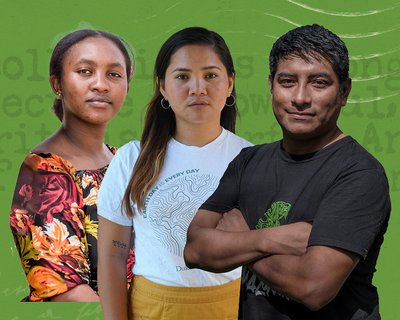
Oxfam and Waterbear present Climate Dispatches – a series to share urgent stories from three climate activists.
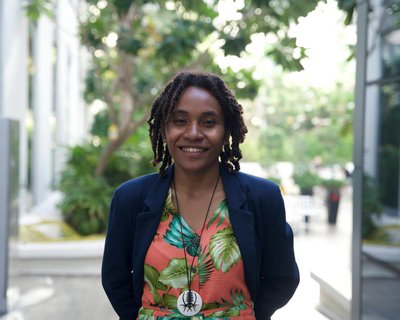
Climate activists
We are collaborating with climate activists from around the world who are on the front lines of the fight against climate change.
How do we achieve climate justice?
The front page Image: Max van Woerkom/ Oxfam
Ever wondered how inequality and the climate crisis cross over with each other?
2023: The richest 1% emit as much planet-heating pollution as two-thirds of humanity.
2024: Billionaires emit more carbon pollution in under 3 hours than the average Brit does in a lifetime.
2025: The UK's super-rich are polluting 56 times more than those on the lowest incomes.
Want to know more?
Why do we need global agreements?
The climate crisis is a global crisis, and no single country can solve this problem alone. We need to work together to be able to agree a way to thrive not just survive.
We know that global meetings, agreements, papers, and reports take time – but this is a complex problem and it requires complex solutions. If you ever hear the words ‘it’s simple, all we need to do is…’ then stop listening, because it isn’t that simple. Justice is simple, finding justice never is.
Global agreements come through big annual meetings one of which is called the Conference of Parties (COP).
What is COP?
Every year there are global meetings. The UN Climate Change Conference of the Parties (COP) is a global conference where world leaders, civil society, companies, and campaigners gather to discuss our collective response to the climate crisis.
Over the years the COPs have achieved quite a few breakthroughs – from the Kyoto agreement in 1997 where parties agreed to work together and set targets, to the Paris agreement in 2015 where global targets for emissions reductions were agreed.
There were also multiple years where funding for adaptation, and loss and damage, were agreed. Working collectively has brought the world together to try to tackle the climate crisis – but as we all know, it hasn’t gone fast or far enough.
What has Oxfam been calling for at COP?
COPs go back for years, and Oxfam has attended many of them, here are the last 3 years.
In 2023, COP28 took place in Dubai.
- We demanded a planet for the 99%.
- We told the PM before he went that the UK wants to make polluters pay.
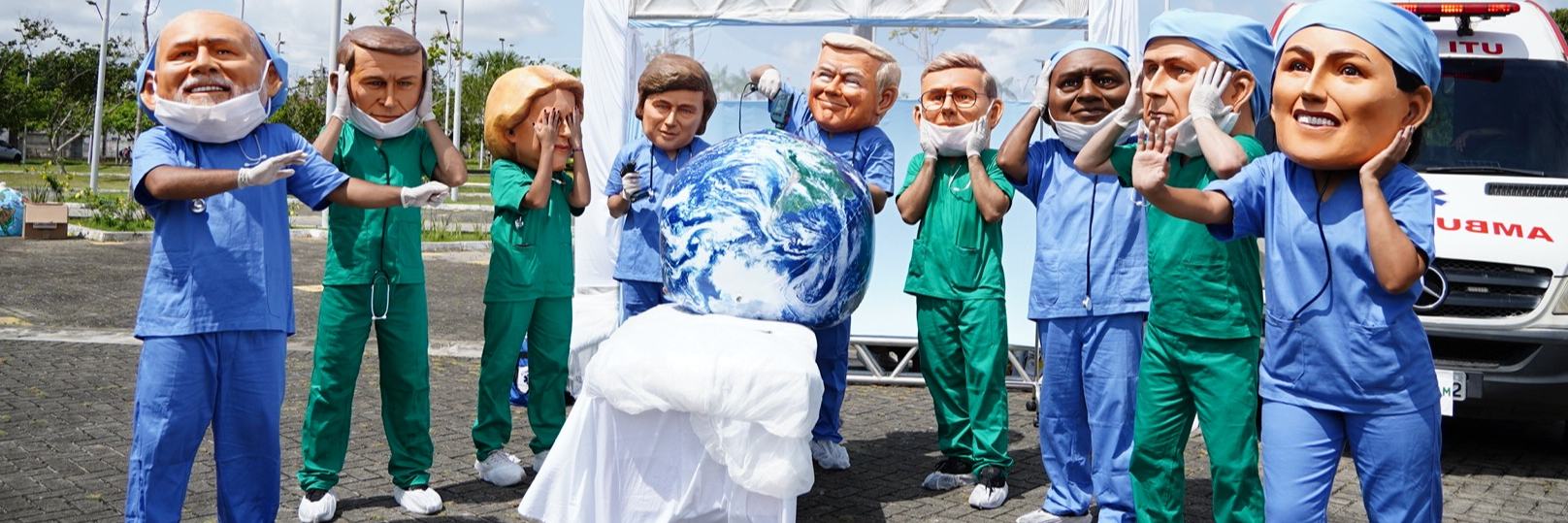
- We told global leaders that the world wants to make polluters pay. Elizabeth Wathuti, a climate activist from Kenya, presented the global petition at COP itself.
- Find out more about what was agreed at COP28.
In 2024, COP29 took place in Baku, Azerbaijan.
- Again, we were pushing for climate justice.
- Read more about what happened at COP29.
In 2025, COP30 was in Belém, Brazil.
We fought for climate justice through focusing on:
- Just transition: Ensuring that climate action is fair and inclusive for workers and communities.
- Climate finance: How to meet and surpass the target for climate finance set at COP29.
- Adaptation: How to help countries prepare in the face of increasingly severe climate impacts.
- Read more about what happened at COP30.
Act now for the climate
There are many ways to get involved. From listening to the stories from people who stand up for their communities to signing petitions to make the richest polluters pay.
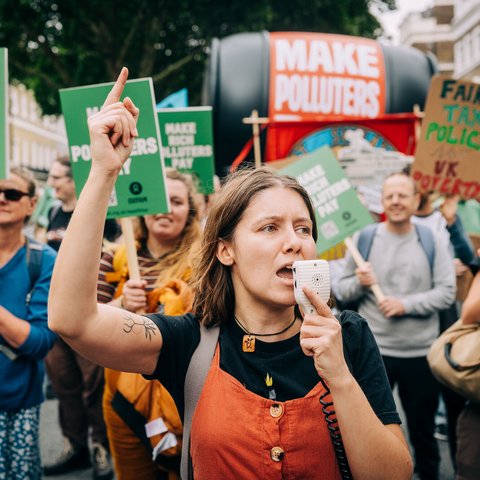
Tackling inequality starts with making those at the top pay their fair share. This wealth tax is just an example of more taxes we need. We should be taxing the super-rich to tackle inequality and fight the climate crisis.
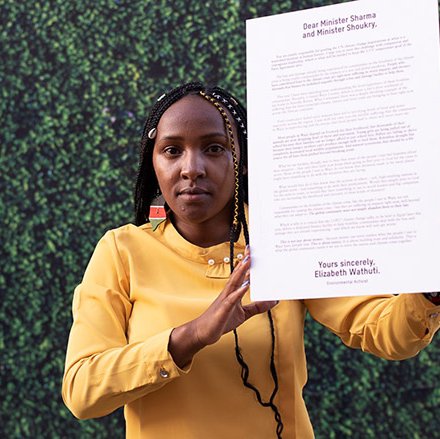
Listen to young energy expert and climate activist Abigael Kima on the Hali Hewa Podcast. Episode 1 features Elizabeth Wathuti, founder of the Green Generation Initiative.
Elizabeth Wathuti has worked with Oxfam and wrote an open letter to world leaders demanding that we Make Polluters Pay.
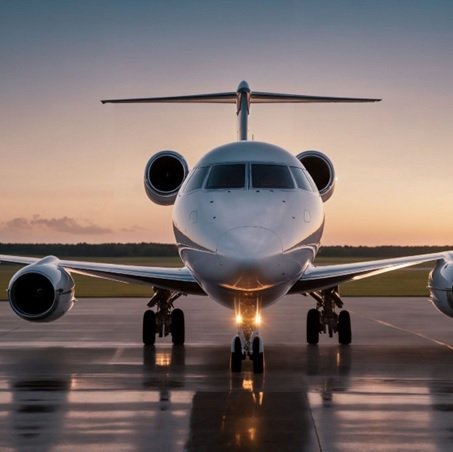
Super rich individuals must pay for their climate damage, not people living in poverty. Climate-wrecking behaviour, like flying on private jets or sailing on super yachts are not only highly polluting, they're also not fairly taxed.