With the critical UN climate summit in Copenhagen just days away, join our efforts to secure a safer future for the world’s poorest people. Take action now.
-
Action 1: Join the wave
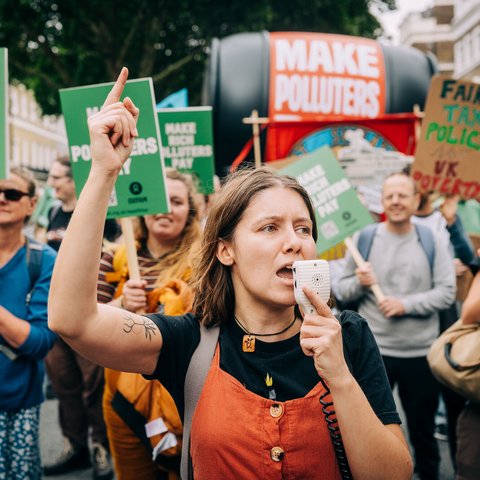
London, 5 December. Be there. Be blue. Just two days before Copenhagen, join the UK’s biggest and noisiest ever climate demo.
-
Action 2: Make a £1- a-week commitment
If just 85 people started now, by next week we'd have enough money to raise one home above flood-level.
-
Action 3: Sign up for our action bulletin
Tackling climate change takes time
and persistence, but it’s worth it. Sign up for our one-a-month action bulletin. -
Action 4: Buy unique second-hand stuff
Be kind to the climate, fight poverty and save yourself some cash.
-
Action 5: Keep pushing the Prime Minister
12,000 of us pushed him and now Gordon Brown is going to Copenhagen. Let's make sure he delivers.
-
Action 6: Do something for money
Run for it. Walk for it. Bake, even bathe for it. Do something, get sponsored and raise enough cash to fight clmate change.
Why we need action Here and Now
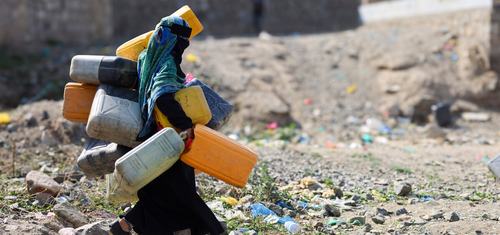
Climate change is first and foremost a human story. The poorest people in the world are already being hit hard by climate change. Failed harvests. Unprecedented floods. Dried-up water supplies. Critical weather patterns that used to be reliable are now anything but. Oxfam needs your help to do our work on the ground.
Climate change costs lives
Climate change costs lives. Every minute we put off doing something about it, millions of people needlessly sink further into extreme poverty. That means more communities and families are put at risk. And more tragic stories like Sufia's.
East Africa: 23 million now at risk
Right now, 23 million people in East Africa are enduring the worst humanitarian crisis the region has seen in more than a decade. Vital rains are becoming increasingly unpredictable, or failing altogether under the growing influence of climate change. Donate now.
Climate change in Peru
An exhibition of photographs taken by Helena Christensen documenting the threats of climate change on people living in Peru has opened in London.
View Helena's photos
Why we need action Here and Now
We wouldn’t ask you to take action if it didn’t work. And here’s some proof. While we are doing lifesaving work on the frontline of climate change, we’re getting results with world leaders too. Get involved and help us achieve the breakthrough that the poorest and most vulnerable people desperately need.
Brown books his seat in Copenhagen
The UK Prime Minister Gordon Brown has booked his seat at critical UN climate talks in Copenhagen this December, thanks in large part to pressure from 12,000 Oxfam supporters. Our work doesn’t stop there though. Now we’re pressing him to get other major world leaders round the table to forge a fair and safe climate deal for the poorest people. The clock is ticking.
E.ON shelves crazy Kingsnorth plans
Pressure from Oxfam supporters has also helped force energy supplier E.ON to drop plans for a new coal power station, and with it a dire precedent for the UK’s future carbon footprint. That’s a victory for people vulnerable to the worst effects of climate change. Find out more.
Keep up the pressure
So if you want to help keep the pressure on, here’s two things you can do.
Right here, you can register to join the Wave in London on 5 Dec and now. And right now, you can keep pushing the Prime Minister to get a fair and safe deal at the Copenhagen climate talks.
Oxfam and climate change – FAQ
Poor people are suffering the effects of climate change, here and now. Find out why tackling global warming and climate change is central to Oxfam’s work to fight poverty, and the positive part you can play.
- What is climate change?
- Is climate change really happening?
- Why is Oxfam working on climate change?
- When did Oxfam start working on climate change?
- Is climate change already having an impact on Oxfam's work?
- What is Oxfam doing about climate change?
- Why is 2009 so important for climate change?
- What is Oxfam asking for at the climate change conference in Copenhagen?
- What does 'climate change adaptation' mean?
- What does 'climate change mitigation' mean?
- Why do we need to limit global warming to 2C?
- Shouldn’t we wait until the global financial crisis is resolved?
- Will Oxfam continue to work on climate change after 2009?
- Is nuclear power the solution to climate change?
- How will we fill the 'energy gap' without opening new coal power stations?
- Do Fairtrade products contribute to emissions because they come from developing countries?
What is climate change?
Overwhelming scientific evidence shows that there have been changes in the global climate since the early 1900s. These climate changes, and future climate change predicted over the next century, are largely due to human activities and excessive greenhouse-gas emissions, which are warming up the Earth. This is climate change, often referred to as ‘global warming’. (see: global warming vs climate change)
Is climate change really happening?
Yes. In the last 20 years, there has been an increase in extreme weather events such as floods and droughts, as well as noticeable sea level rise and seasonal unpredictability. The result of these climate changes is failed harvests, disappearing islands, destroyed homes, water scarcity and deepening health crises. And that means millions upon millions of people are struggling to get food, water and shelter.
Why is Oxfam working on climate change?
Because the effects of global climate change are already having a devastating impact on people’s lives. Extreme weather events are destroying homes, schools, crops and animals – the foundations of everyday life. Climate change is also throwing the seasons out of sync, causing crops to fail and water supplies to dry up. Extreme weather is pushing people backwards as they strive for progress. In short, Oxfam works on the causes and effects of climate change because the people we work with are being hit first and worst.
When did Oxfam start working on climate change?
Oxfam has been working on climate change for over 25 years. In 1983, Oxfam produced Weather Alert, a briefing paper that recorded the human impacts of various climate change anomalies affecting our programmes around the world. Then, in 1992, Oxfam discussed the special threat that climate change posed to people living in poverty, when climate change first became headline news after a UN summit in Brazil. What’s more, so much of our work and expertise – for example, responding to and preparing for natural disasters, or helping farmers to get better yields from their crops – is now inextricably linked with the changing climate.
Is climate change already having an impact on Oxfam’s work?
Yes. Oxfam staff and partners are seeing for themselves how poor people are being hit first and worst by the impacts of climate change, despite them being least responsible. The people we work with are reporting ever-changing and unpredictable weather patterns, whether that’s deeper and longer lasting floods in South Asia, irregular rainfall and drought in Kenya, or hotter temperatures which are melting glaciers in Tajikistan. Because of all this, so much of our work now needs to include the potential impact of the changing climate.
What is Oxfam doing about climate change?
We’re already helping people to cope with severe weather events, and also plan for the consequences of future climate change. Like everything that we do, our climate change work focuses on three core areas:
- Humanitarian
We are constantly responding to natural disasters which can be linked with global climate change, like our emergency relief efforts after floods in India, hurricanes in Haiti, or drought in Kenya. What’s more, we’re making sure these communities are better prepared for extreme weather events in the future, too. That means things like raising homes up on stilts, or providing early warning systems for when disasters strike.
- Development
Helping communities to adapt to climate change is a key part of our development work. In South Africa farmers are planting faster-maturing crops, making the most of less-reliable rains. In Bangladesh, villagers are creating floating vegetable gardens, to protect their livelihoods against flooding. And in Vietnam, communities are planting dense mangroves along the coast, to protect themselves from storm waves.
- Campaigning
We’re demanding urgent and decisive action on climate change from world leaders that results in a global deal that is just and fair for all people, not just those with power and money.
Why is 2009 so important for climate change?
2009 is an all-important year in the fight against climate change. In December world leaders will get together at the United Nations climate change conference in Copenhagen to decide how the world tackles climate change and global warming for decades to come. In the words of Oxfam’s Campaigns Director, Thomas Schultz-Jagow, this conference is "the most important meeting mankind has ever had."
What is Oxfam asking for at the climate change conference in Copenhagen?
We are looking for two key outcomes. Firstly, that there is a cap on rich country carbon emissions. Secondly, an adaptation fund is set up for poor countries, so that they can cope with the effects of climate change.
What does 'climate change adaptation' mean?
Climate change adaptation means communities, supported by governments, taking early action to reduce the damaging impact that climate change will have on their lives. Oxfam is already carrying out work to help people adapt to the impacts of climate change. For example, to cope with increased flooding in places like Bangladesh we are upgrading national flood early warning systems, building homes and schools on raised foundations, building high platforms for emergency flood shelters and creating community-based disaster response plans.
What does 'climate change mitigation' mean?
Climate change mitigation means reducing greenhouse gas emissions. Oxfam believes that it is vital that greenhouses gas emissions are cut dramatically – by 80 per cent by 2050 compared to 1990 levels – in order to limit global warming to as far below 2C as possible.
Why do we need to limit global warming to 2C?
The global average temperature has risen almost 0.8C over pre-industrial levels and is already causing serious climate change impacts for millions of people. If global temperatures rise more than 2C over pre-industrial levels, the climate impact on water resources, food production, sea levels, and ecosystems is predicted to be catastrophic for billions of people. At that point, scientists believe dangerous ‘feedback loops’ will trigger spiralling temperatures. This means runaway climate change, the impacts of which are difficult to predict.
Shouldn’t we wait until the global financial crisis is resolved?
The battle to halt the current financial crisis is not separate to the fight against climate change. A new, green economy can create jobs while reducing carbon emissions. It does mean making tough decisions, but that is part of the deal already in this economic climate. The two must go together.
Will Oxfam continue to work on climate change after 2009?
Absolutely. This is a long-term issue for Oxfam and the number one threat to overcoming poverty.
Is nuclear power the solution to climate change?
Oxfam is not qualified to assess or evaluate which specific energy technologies and solution are best for each society. In general, we believe energy solutions must:
- Be consistent with an urgent and radical shift to a low carbon future consistent with what action on climate change requires;
- Contribute to delivering modern energy services to the billions of people around the world who do not currently have access to them; and,
- Be cost effective under conditions that ensure the above.
By any measure, nuclear power is not one of these. The most important consideration is that nuclear energy generation cannot currently be installed fast enough over the next 10–15 years, when low carbon alternatives are required. Quite apart from the problems of nuclear waste and security risks, nuclear energy is also a very expensive form of energy that is not without its own carbon footprint.
How will we fill the 'energy gap' without opening new coal power stations?
Research shows that if we were to meet the government's targets, renewable energy and increased energy efficiency would bridge the gap. And some energy companies, like Centrica, have already ruled out new coal.
The energy gap should be seen as an opportunity to right our energy supply so that we can tackle climate change and begin to stem its devastating impact on poor people.
Do Fairtrade products contribute to emissions because they come from developing countries?
Only a tiny proportion of Fairtrade goods are transported by air. The vast majority are shipped, which has a much lower carbon footprint. Fairtrade also promotes sustainable agricultural practices and encourages farmers to invest in environmental protection programmes too.
Given that Fairtrade products make such an overwhelmingly positive contribution to poor producers' livelihoods and make a negligible contribution to climate change, Oxfam does not believe that the poorest and least responsible people should pay first for the need to lower global CO2 emissions.
The first things we can do are to make the necessary changes to what we do in our homes, how we travel, and how we make governments more responsible in tackling the problem.
*Global warming vs climate change
While the meanings of climate change and global warming are, to all intents and purposes in most cases, interchangeable, Oxfam generally prefers the term ‘climate change’ over global warming. This is because the effects of global warming do not automatically manifest themselves locally in weather events that might be termed 'warming' (ie rising temperatures). While millions of poor people are experiencing more intense drought, millions more are suffering from other extreme weather and climatic events, such as floods, hurricanes and rising sea levels.