I’m a Palestinian business owner and this is why the UK should end its settlement trade

• Published:
• Short URL: https://www.oxfam.org.uk/mc/gvrqog/

As a Palestinian business owner working in the West Bank, I witness every day the suffering our people endure under occupation and how it immobilises Palestinian livelihoods.

It is time for the UK to move off the sidelines and play an active role in ending this unjust economic struggle.”

Ziad Anabtawi, CEO, AlArd Group

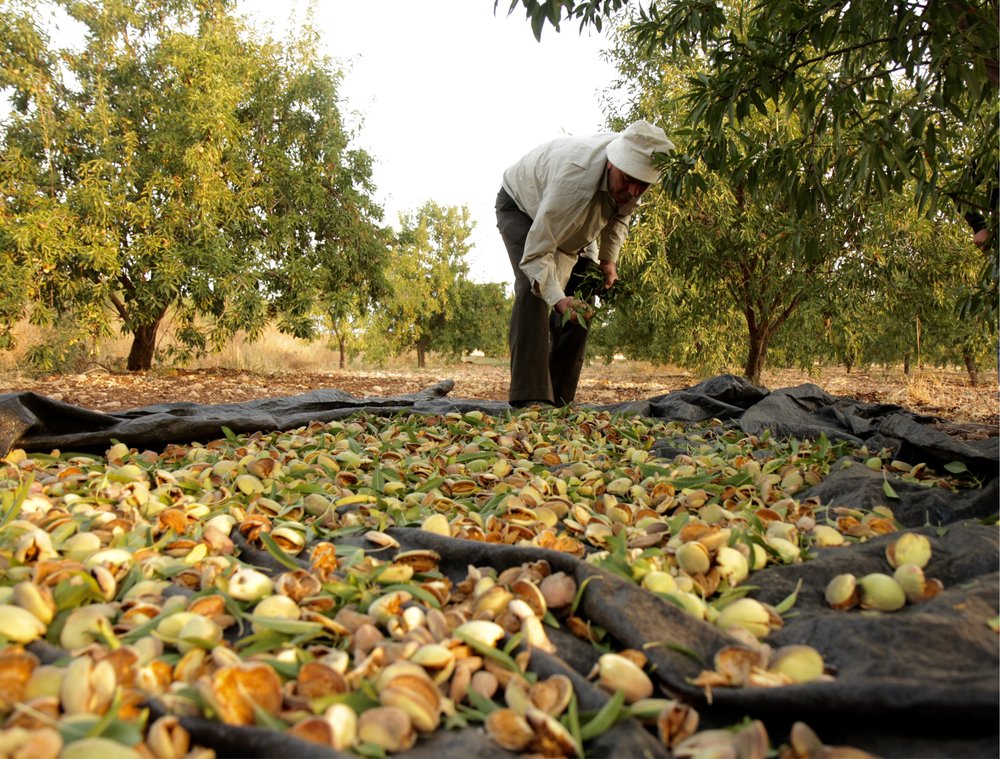
The settlement near Nablus has made even the simplest aspects of running my business a struggle: roads that should take minutes now take hours, deliveries are delayed or blocked, and crops are regularly damaged or uprooted by settler attacks. 

Products from Israeli settlements flow freely to international markets, while Palestinian goods remain trapped behind checkpoints and are forced to incur shipping costs to Europe twice as much as settler shipments. 

It is time for the UK to move off the sidelines and play an active role in ending this unjust economic struggle. 

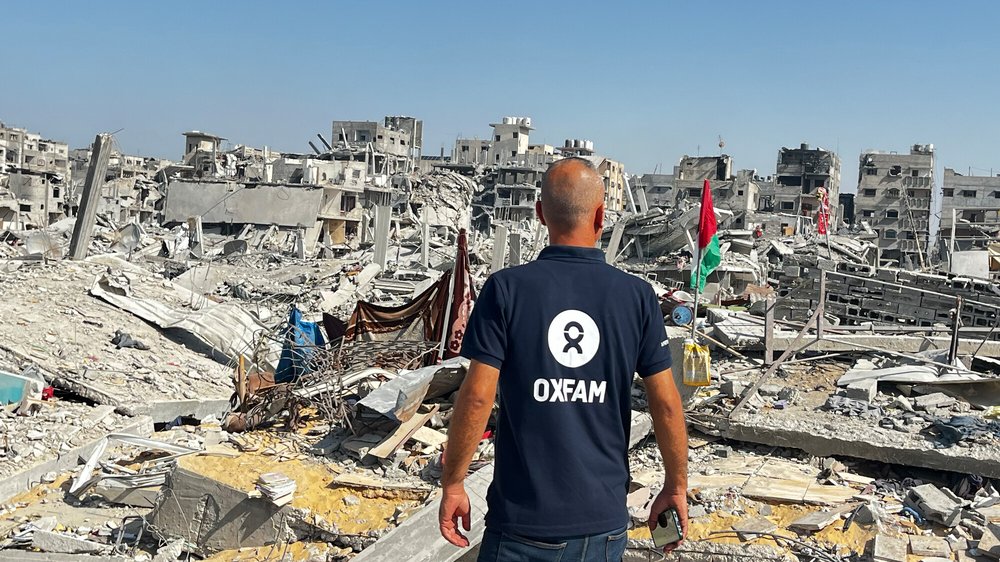
The construction and expansion of Israeli settlements is illegal under international law. Let me be clear: it is illegal. And yet, the sad truth is that this catastrophic crime against a people and their homeland continues relentlessly, without accountability, exposing a stark double standard in the application of international law to Israel. In just three years, between 2023 and 2025, the number of settlements in the West Bank and East Jerusalem increased by 50 percent, rising from 141 to 210. In addition, as of December 2025, there were 224 “outposts” - settlements established since the 1990s, not yet officially “recognized” by the Israeli government.

The Israeli government has publicly declared its intention to annex the West Bank. Next month, Israel plans to begin work on another “settler-only” road, which, like many others, will further restrict Palestinian movement and close off more of the occupied West Bank.

Settler violence has increased dramatically, deliberately targeting Palestinian farmers, preventing them from harvesting their land and crippling their ability to provide for their families.

This story is not new. Since 1948, our land has been systematically stolen, our natural resources plundered, families displaced, and lives destroyed.

Aggressive economic and trade restrictions imposed by Israel on the West Bank have further weakened an already besieged Palestinian economy. Since 1967, Israeli authorities have prevented the development of independent economic and trade policies, leaving the Palestinian economy heavily dependent on Israel for trade, labor, fiscal flows, and financial systems.

After the war in Gaza erupted, severe economic restrictions were imposed on the West Bank. The recent “ceasefire” in Gaza ignores the West Bank and Palestinian territorial integrity as a whole.

In the UK, the Government's recognition of a Palestinian state has been welcomed, but there is much more the UK Government should be doing to help achieve a just and lasting peace, especially in light of the ongoing occupation and colonisation of the West Bank.
The structures for a Palestinian state already exist with a functioning government and economic system. All that is lacking is international recognition and support for true sovereignty.”

Ziad Anabtawi, CEO, AlArd Group

This week, I am in London calling on the UK government to enforce a ban on settlement trade - including goods and services - a necessary and urgent step to uphold international law, safeguard Palestinian livelihoods, and halt and reverse Israel’s settlement expansion, moving toward ending its unlawful occupation.

The structures for a Palestinian state already exist with a functioning government and economic system. All that is lacking is international recognition and support for true sovereignty.

More than 80 humanitarian, development, human rights and faith-based organisations, including Oxfam, have seen first-hand the catastrophic consequences of illegal Israeli settlements for Palestinian communities and livelihoods, which are described in the report examining the impact of illegal settlements in the West Bank on Palestinian lives and livelihoods. The report details how businesses across the UK and Europe are actively involved in the settlement economy and therefore supporting the Israeli occupation. This must end.

We Palestinians have a proud agricultural and entrepreneurial heritage. For it to flourish, the shackles of occupation and oppression must be removed.

Ziad Anabtawi is a Palestinian business leader, founder and CEO of AlArd Group, a company that supports Palestinian farmers by promoting authentic Palestinian agricultural products.

Notes to editor

  • On shipping costs: transferring products from Al’Ard’s main warehouses in Nablus to the ports in Haifa or Ashdod typically costs around $2,000.
  • This process involves:
    Delivering the container to the border crossing between the West Bank and Israel, transferring the goods to an Israeli truck, yhen delivering the shipment to the port.
    Israeli producers, by contrast, do not go through this additional process, giving them a clear logistical and cost advantage.
  • For context, the average cost of shipping from Haifa/Ashdod to Germany is around $3,500, meaning that nearly half of Al’Ard’s total shipping cost is spent just getting the product to the port. This is a burden that Israeli producers either avoid entirely or pay significantly less for.

Press contact

For comments, interviews, or information please contact the Oxfam GB Media Team: