Yemen: A Nation Paid in Delays

• Published:
• Short URL: https://www.oxfam.org.uk/mc/hdi64v/

How irregular public-sector salaries are pushing families to the brink.

By Fatma Jaffar and Nada Alsaqaf

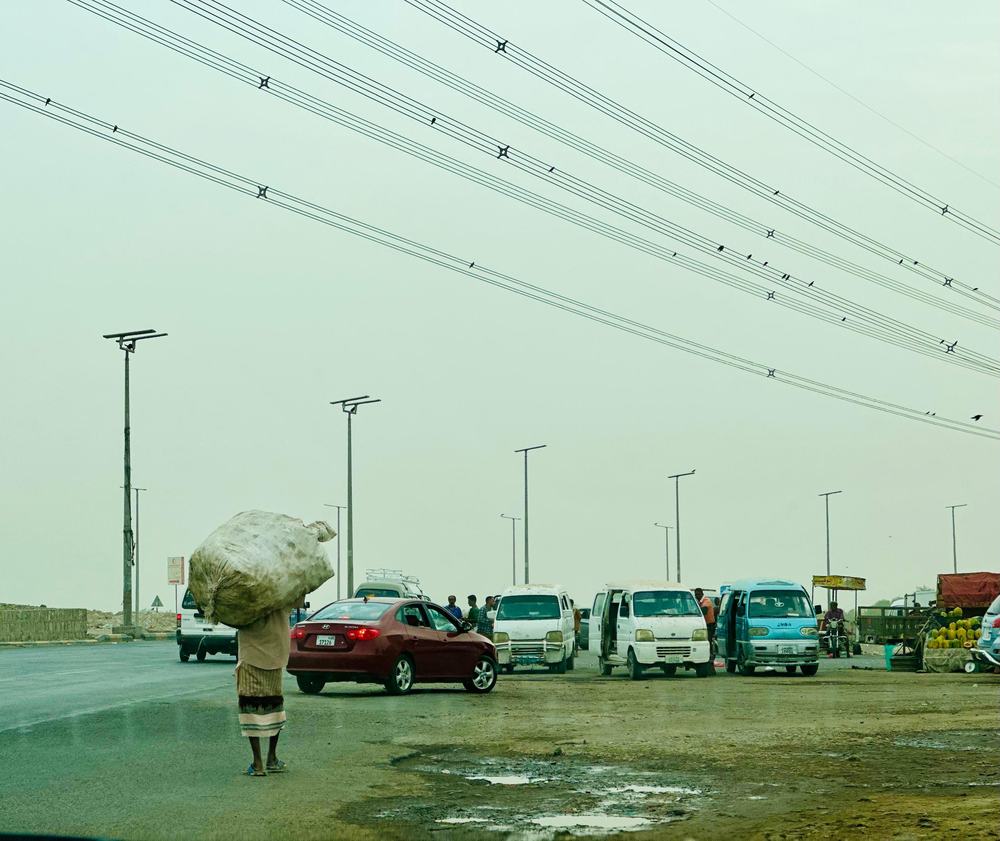
Aden. Credit: Nada Alsaqaf

“When the salary is delayed, everything stops.”

For a contracted teacher and mother of four in Yemen, “everything” means milk for her youngest daughter, school fees, medicine, and the dignity of a daily meal. Across the country, this sentence has become a shared reality.

For nearly a decade, millions of Yemeni public-sector employees have lived between paydays that may never come. Salaries are delayed for months, partially paid, or suspended altogether. Even when payments arrive, inflation and currency depreciation have reduced their value to a fraction of what they once were.

As Yemen enters its eleventh year of conflict, the war is no longer measured only in battles and frontlines. Increasingly, it is felt through the quiet collapse of household budgets. Families wait month after month for salaries that arrive too late to prevent debt, hunger, and painful trade-offs between basic needs.

Today, 19.5 million people require humanitarian assistance, while over half the population faces crisis-level food insecurity or worse. Yet for many households, the crisis is not only about the decline of aid, but the disappearance of income.

Before the war, public-sector employment supported nearly one in five Yemeni households. Teachers, health workers, and civil servants relied on these salaries to feed their families, pay school fees, and access healthcare. But since 2016, institutional division and economic collapse have paralysed the salary system.

The roots of this crisis lie in the early years of the conflict, when the government lost its ability to pay wages. Before the war, oil and gas exports provided 70% of the national budget. Today, attacks on export infrastructure and political deadlock over revenue sharing have halted these exports, leaving a massive funding gap.

The institutional split in Yemen’s civil service dates to the 2016 relocation of the Central Bank (CBY) from Sana’a to Aden, which fractured the country into two competing financial jurisdictions and severed the unified payroll system. Consequently, while the Internationally Recognized Government (IRG) generally pays civil servants in its areas -albeit with frequent delays and a currency that has lost value-, most public employees in Sana’a-based authority areas have received only sporadic "half-salary" payments once or twice a year since 2016. To resolve this and ensure timely payments for all, the economic file must be prioritized in peace negotiations to establish a unified mechanism for pooling national revenues specifically from oil and gas exports into a neutral, supervised fund dedicated exclusively to public sector wages across all territories.

In some areas of Yemen, wages are now worth as little as $30–$70 per month, while the cost of food continues to rise. Even a “full” salary rarely guarantees stability. In some cases, it barely covers the cost of transportation required to collect it.

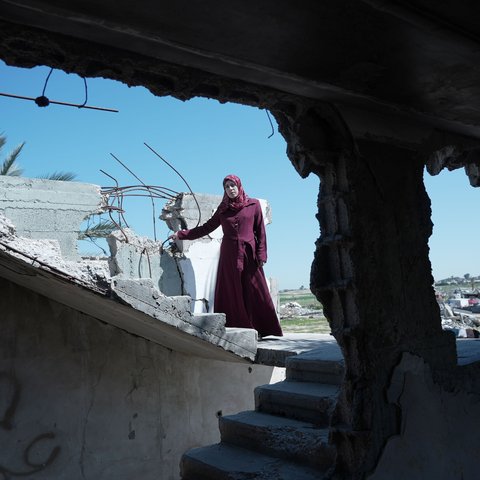
Aden. Credit: Nada Alsaqaf

When a salary no longer sustains life

For one contracted teacher we spoke to, irregular salaries have reshaped every aspect of daily life.

“My youngest daughter is four years old. I had to stop buying her milk. When she cries for it at night, my heart breaks, but I hold her and apologize silently.

After her husband died suddenly, she became the sole provider for her four daughters. Her salary—around $30 per month is sometimes delayed for up to four consecutive months.

“When the salary is delayed, everything stops,” she explains. “We fall into debt. I count every rial before spending it.”

Some days the family eats only two meals. If they have breakfast, they skip dinner. If they have dinner, they skip breakfast.

To cope, she now works evenings as a private tutor.

“I am exhausted,” she says. “But I keep smiling because I am still fighting for my daughters.”

Displacement and shrinking survival options

For displaced families, the crisis is even more severe.

Aliya fled conflict in Al-Jubah district four years ago and now lives in Al-Wadi camp in Marib in the north of Yemen. A contracted teacher and divorced mother of six, she is also responsible for caring for her elderly parents.

“Delayed salaries have multiplied our suffering,” she says.

Like many displaced families, she is indebted to the local grocery store and pharmacy. When her mother suffered a stroke, the pressure intensified.

“I felt as if life had stopped,” she recalls. “I carry everything in this house on my back—as a mother, a daughter, and a divorced woman.”

When salaries are finally disbursed, Aliya must travel from the camp to the city to collect them. Transport alone costs her around 12,000 Yemeni rials, reducing what little income she receives.

“By the time I return home, part of the salary is already gone.”

Some days there is nothing to eat. Yet she describes fragile solidarity among displaced families.

“In the camp, suffering is shared,” she says. “Sometimes someone knocks on the door with a bag of flour. We all feel each other’s pain.”

Over time, Aliya stopped relying on her salary entirely. Instead, she learned to bake pastries and sew clothes to generate small amounts of additional income.

Humanitarian crises and wider economic collapse

Across Yemen, irregular salaries are pushing families deeper into debt and undermining essential public services.

More than 170,000 teachers have gone years without regular pay, contributing to an education crisis in which 2.6 million children are unable to go to school. The health sector faces similar pressure, with around 40% of health facilities no longer functioning nationwide.

For many families, the disappearance of income has also weakened traditional support networks.

“In the past, people helped each other,” one health worker in Aden explained. “Now everyone is struggling just to survive.”

The collapse of salaries is therefore not only an economic issue, but also a humanitarian and political one. Without stable income, families are forced to make impossible choices between food, medicine, and education.

Restoring regular public-sector salary payments is essential to protect Yemen’s remaining public institutions and prevent further erosion of household resilience.

Peace cannot be sustained on unpaid salaries.
Press contact

For comments, interviews, or information please contact the Oxfam GB Media Team: