Patrick Moran/Oxfam
Impact stories
Protecting local ecosystems
In Cambodia, communities living along the Mekong River rely upon the river for food, water, and income.
In the last few decades, hydropower dams have been built along the river’s route, causing widespread challenges to local communities. These impacts include loss of land, decreasing fish populations, environmental damage, and lower agricultural production. Climate change is also causing extreme and unpredictable weather events, leading to flash flooding, droughts, and smaller fish catches.
How are communities advocating for themselves?
For over a decade, Oxfam and local partners have been working to support vulnerable communities advocate for their homes and income to be preserved.
These actions have included:
- Establishing and supporting fishery networks.
- Supporting fishery committee members' advocacy.
- Raising awareness on local disaster and climate risks.
- Training on managing disaster and climate risk.
- Supporting disaster risk management committees.
- Supporting women and marginalised people in leadership roles.
- Holding developers accountable for malpractice.
Siphon's advocacy
Patrick Moran/Oxfam
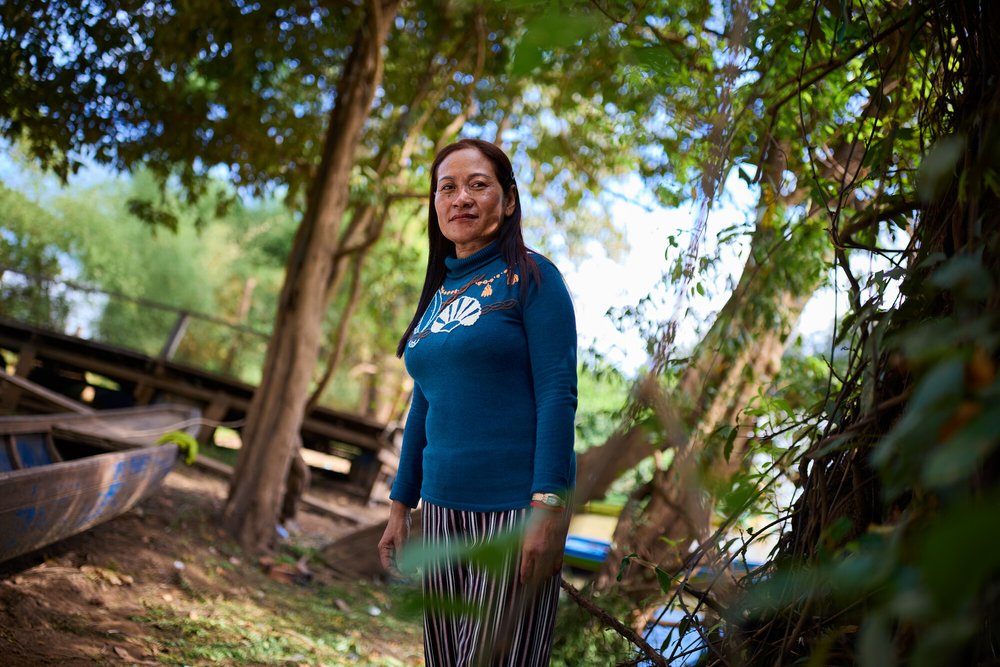
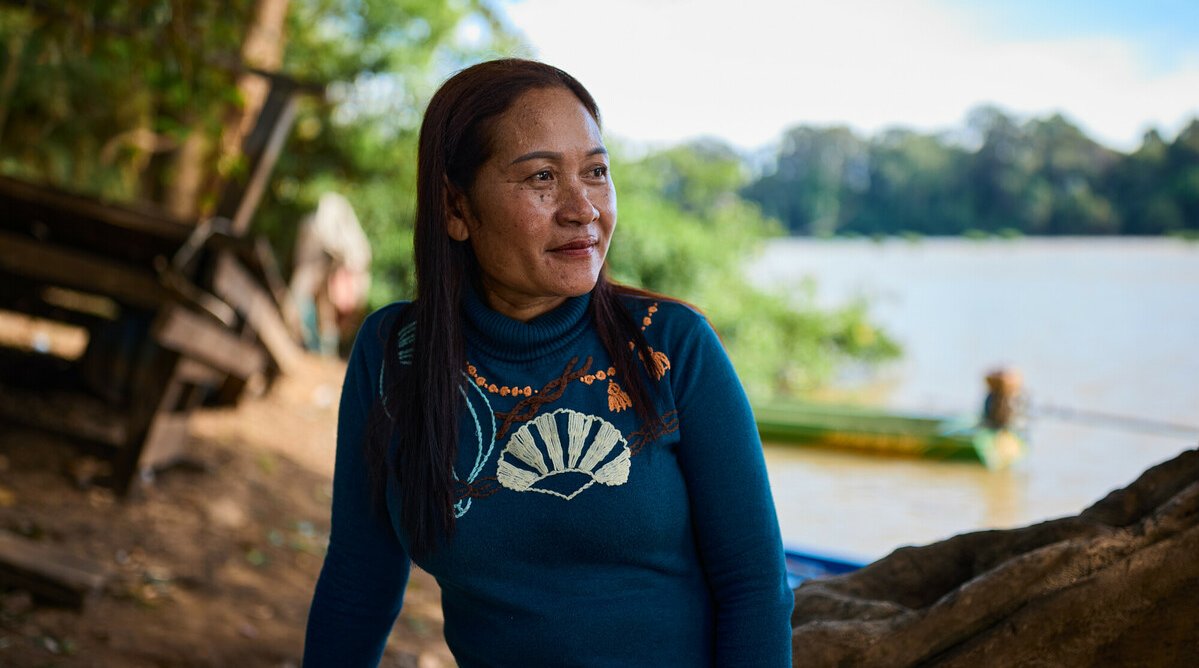
Siphon is a community activist who was trained by Oxfam partner 3SPN to advocate for community issues with the local authorities.
"Because I am one of the community fishery management committee members, I gather [with others] to patrol this lake. We saw that a company was throwing waste into the lake. We reported this to the fishery administration.
Three days after that, the company poured soil to cover up the waste. The community and relevant stakeholders [...] made an agreement for the company to stop dumping waste into the lake and stop covering it with soil.
Next time, we were patrolling when we saw water pumps. Seeing the water pumps, we reported them to the village and commune authorities. And we met the representative of the company. We told them to take away the pumping machine from the lake and we made an agreement that stated that the company is not allowed to pump water, throw the waste into the lake, and fill up the soil around the lake."
Chanthourn's story
"Because [of dam constructions], our river has become like a lake. If people within the community conduct illegal fishing activities, there will be no fish for consumption in the future. If our community let the lake become privately owned, we will not have a place to find food."
“We heard that there were outsiders who wanted to occupy the lake, they wanted to make it private property. We thought...we must do something about this.”
Chanthourn, community fishery activist in Konmom, Cambodia.
Patrick Moran/Oxfam
Chanthourn and her husband Savorn, a fisherman, by the lake that they have successfully protected from illegal activities such as overfishing and pumping.
"The most important thing is that we want to keep this lake for collective use, and our young generation know that the older generation worked hard to protect the lake for them."
For three years, Chanthourn campaigned to the local authority with her fishery network. Finally, their requests were accepted. With Oxfam funding, they are now able to work on conservation projects, to protect the lake for use by future generations.
Patrick Moran/Oxfam
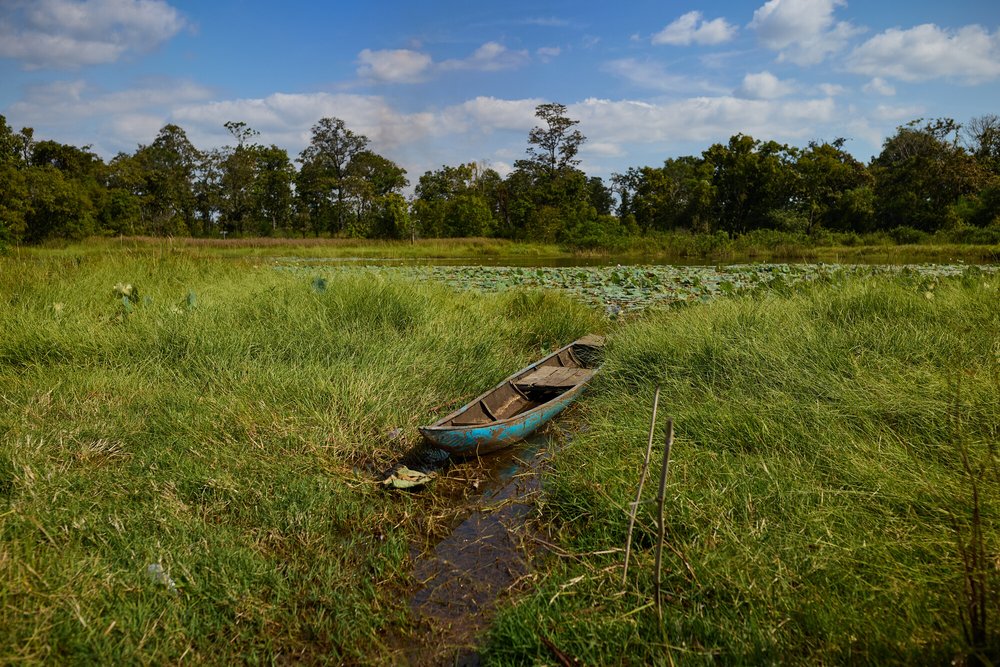
Boeungchres Lake, which was advocated for by Chanthourn and Savorn.
Working together for a better future
By working with communities to elevate their voices, activists like Chanthourn and Siphon are able to advocate for a better future for themselves and their families.
Protecting ecosystems requires bringing diverse voices into decision-making spaces.