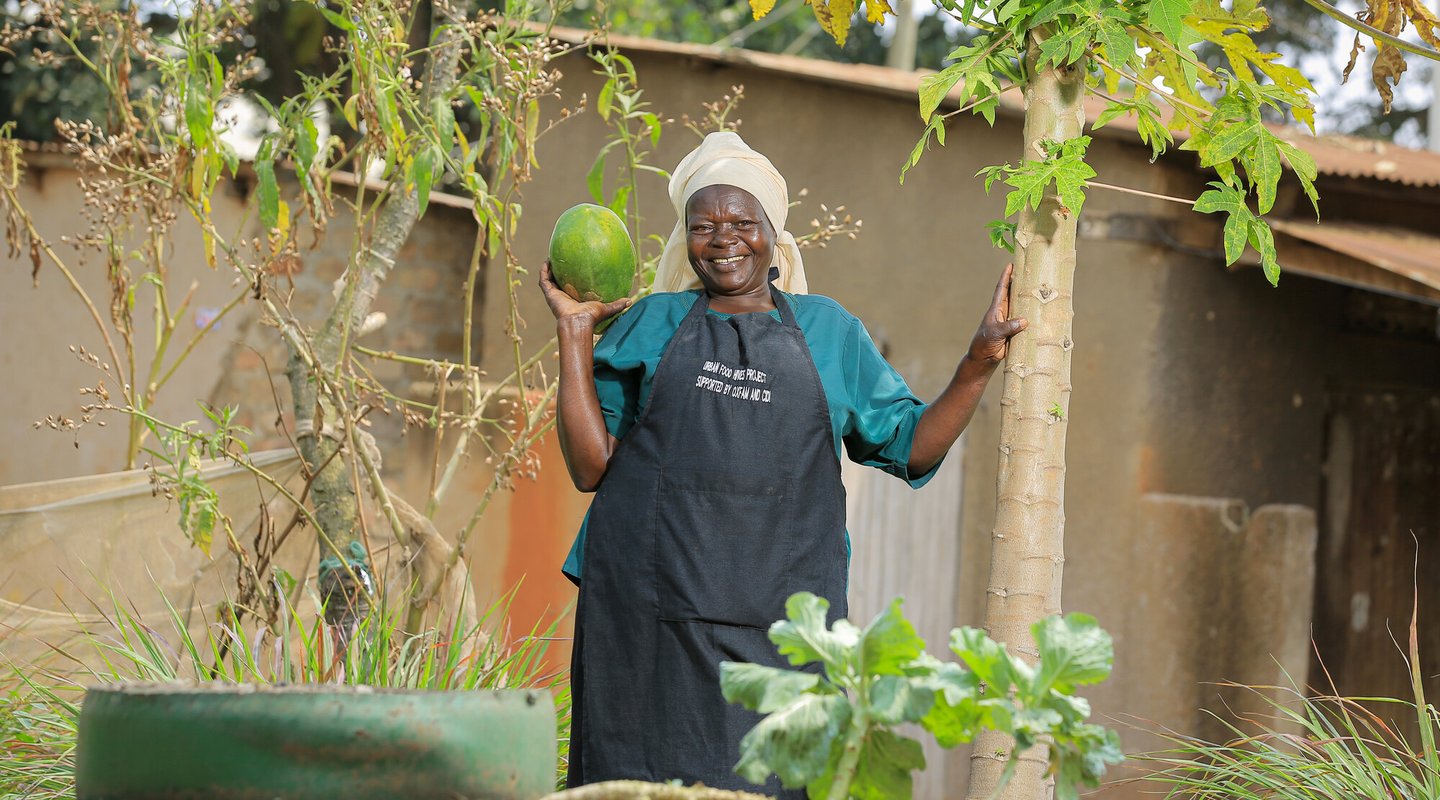
Maimuna in her garden after harvesting a Pawpaw. Philip Makaka/Oxfam
Impact stories
Growing urban gardens in Uganda
In Kampala and Soroti, Uganda, limited land access has made it challenging for communities to access affordable and nutritious food.
In 2021, Oxfam in Uganda implemented a four-year Urban Food Hives project in partnership with local organisation Community Integrated Development Initiatives.
Why urban gardens?
A survey commissioned by Oxfam in Uganda found high rates of urban poverty and food insecurity, with women and youth-led households being most impacted.
In a country where over 13 million people live in urban areas (with this number projected to reach about 21 million by 2040), urban farming paves the way for the population to grow their own food locally, while building healthier, more resilient communities.
“These skills have not only enriched my life but also created opportunities to earn an income.”
Zuwena in Kampala, Uganda.
Philip Makaka/Oxfam
Zuwena and Stella are members of local youth group CIVACT, and set up demonstration gardens to teach their community about urban gardening.
About the project
The project was made up of three main areas:
- Demonstration farms: to train communities in practical urban farming techniques, increasing local food production. This training included innovative recycling practices, such as using recycled materials as plant pots.
- Entrepreneurship: to link urban farmers with buyers, increasing incomes for those with surplus produce.
- Coordination: to work with local and national government and civil society to strengthen collaboration within Uganda’s food system.
Philip Makaka/Oxfam
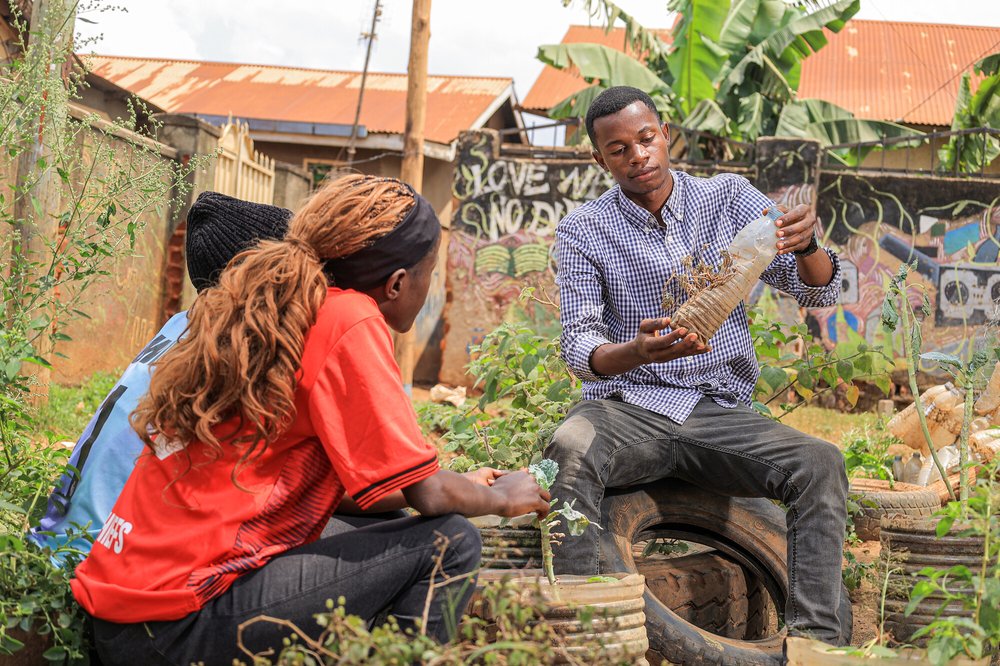
Nasifu, a member of the CIVACT Youth group, demonstrates how to recycle used bottles as planters to grow spices to fellow group members Stella and Zuwena.
However small the space is, you can make use of it.”
Nasifu, CIVACT youth group team leader, in Kampala, Uganda.
Over its four years, the project showed that with creativity, collaboration, and community commitment, urban farming can thrive even in limited spaces. It provided households with food, generated income, and empowered young people as champions of change.