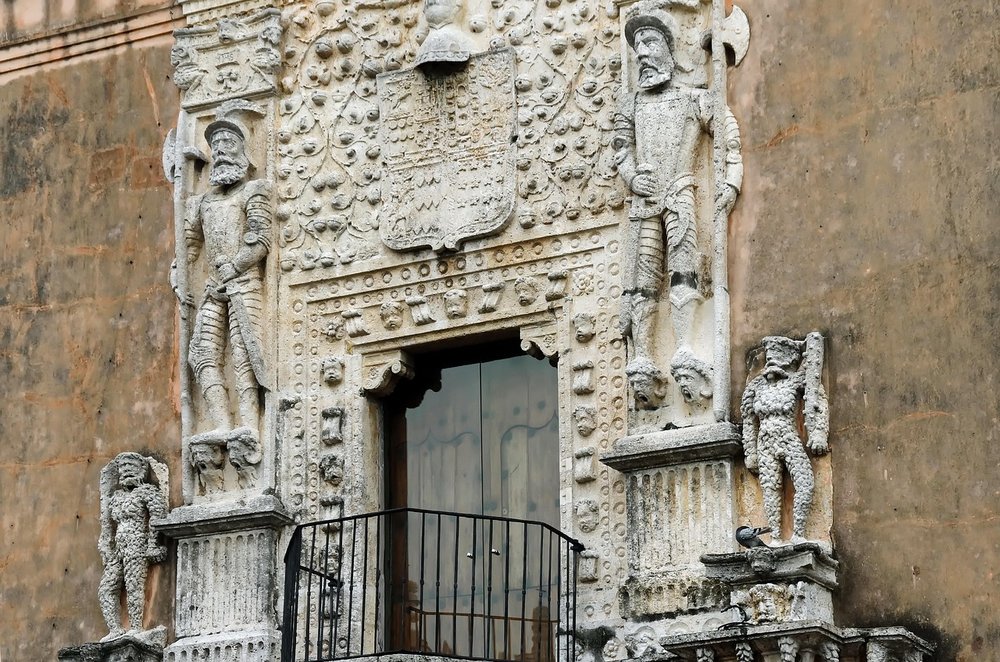
Graphic with a pale beige background that depicts 5 men in red silhouette stood around or sat on a large roll of 100 dollar bills. In the background is a black and white graphic of two women, a baby and a young man stood next to a small pile of coins

The new trillionaire class is nearly here

The world looks set to see five trillionaires within a decade — and more billionaires are now being created through inheritance than entrepreneurialism. Anjela Taneja and Harry Bignell introduce Oxfam's 2025 Davos report, which reveals the scale of unearned wealth and how those riches are built on a colonial legacy of exploitative global systems.

Wealth built on inheritance, monopoly and colonial legacies

Remember in 2024 when Oxfam said we would soon see the world's first trillionaire? Well, calculations from 2025 suggest that the world is now on course for no less than five trillionaires within a decade. And while the super-rich continue to amass unimaginable wealth, our report for Davos 2025 shows how simultaneously the number of people living in poverty is stagnating — in fact it has remained virtually unchanged since 1990.

The 2025 report demonstrates the extent to which our global economy is skewed, as the super-rich profit at the expense of the rest. We are now seeing almost four new billionaires every week, with the wealth of the richest growing three times faster in 2024 than in 2023. But behind these remarkable numbers are two crucial themes.

The super-rich are takers, not makers

Billionaire wealth is generally not earned on merit but built on inheritance, cronyism and monopoly. They enjoy the fruits of all our labour.

Billionaire wealth built on colonialism

The historic plunder of empires and slavery that extracted trillions, and the living legacy of that era in modern-day colonialism: unjust global economic systems, racial and gender hierarchies and other inequities baked into the global world order that have their origins in the formal colonial era.

Sixty years after the end of the formal colonial period, we spell out how our global economy still channels wealth from Global South to North, and specifically from ordinary people in the South to the richest in the North.

How inheritance, cronyism and monopoly drive extreme wealth

2023 was a bumper year for billionaires, with over 200 new billionaires created. Our report sets out how inheritance, cronyism and monopoly are driving those fortunes.

Billionaire inheritance

In that same year — for the first time — more new billionaires got rich through inheritance than through entrepreneurship. In fact, all of the world's billionaires younger than 30 inherited their wealth.

The next three decades will see over 1,000 of today's billionaires transfer more than US$5.2 trillion to their heirs.

Cronyism fuels wealth

And much of the wealth of the ultra-rich is not about what you know, but who you know: who you lobby, who you entertain, or whose campaign you finance. In short, much extreme wealth is the product of crony connections between the richest and governments.

Monopolising to increase wealth

Monopoly power is also escalating extreme wealth and inequality worldwide. Monopolistic corporations can control markets, set the rules and terms of exchange with other companies and workers, and set higher prices without losing business. These strategies drive up the wealth of their billionaire owners.

Oxfam calculates that:

18%

of billionaire wealth is from monopoly power.

36%

of billionaire wealth is now derived from inheritance.

6%

of billionaire wealth is from crony sources.

Extreme inequality rooted in colonialism

A central theme of the report for the 2025 Davos summit was how ours truly is the age of billionaire colonialism. People who are wealthy today benefit not just from a history of brutal wealth extraction, but also from modern systems and structure that continue to transfer wealth from Global South to North. The result is that most billionaires (68%, who hold 77% of total billionaire wealth) live in the rich countries of the North, despite these being home to just one-fifth of the global population.

Slavery and empire

The extracted wealth and riches from slavery and empire flowed mainly to European powers in the Global North. Colonisers subjected people to violence, enslavement, forced labour on white settlers' and multinationals' plantations, killings and extermination. In the Americas, for example, European colonisation, wiped out 90% of Indigenous peoples, reducing the global population by 10%. Colonial powers also extracted what experts today say amount to trillions from enslaved peoples (see a range of estimates in our report). For instance, it is estimated that 40% of Dutch economic growth in the 1770s can be traced to slavery and the slave trade.

Oxfam calculates that between 1765 and 1900, the richest 10% in the UK extracted wealth from India alone worth US$33.8 trillion in today's money. This would be enough to carpet the surface area of London in £50 notes almost four times over.

The main beneficiaries of such colonial extraction were the richest and the ruling classes in colonising countries, many of which were themselves highly economically unequal. For example, in Britain in 1820, the income share of a person in the richest 1% was 75 times that of a person in the poorest 50%. By 1900, when the British empire was at its height, the gap was 107 times greater.

Modern systems echo the colonial past

A core argument of the report is about how the repercussions of that colonial era are still felt today. That’s not just in our financial systems but in profound social-economic and political legacies that continue to shapes lives and entrench divisions around the world. The era fundamentally reconfigured social structures, weaponising characteristics such as race, gender and class to reinforce systems of extraction and oppression.

The legacy of this can be seen in wages in the Global South that are between 87% and 95% lower than wages in the North for work of equal skill. It is time to amplify the voices of those who have called for action to address this legacy of colonialism.
The colonial legacy

The report sets out how today's global economic system reflects and perpetuates inequalities that can be traced back to the colonial era, disadvantaging poorer nations and the poorest people within countries. Key pillars of a system that is delivering enormous and ongoing transfer of wealth from the Global South to the North.

A demonstration on the street of a Latin American city with men and women smiling, waving colourful flags and holding a very large colourful banner with the Spanish words "Descolonicémonos 12 de Octubre nada que celebrar".

Rigged financial systems

  • The report reveals how a rigged global financial system (which provides lower borrowing costs in the Global North) benefits Global North financial actors. For example, in the first quarter of 2024, central banks globally held around 58.9% of their allocated reserves in US dollars. Oxfam calculates that this imbalance alone leads to a payment of almost US$1 trillion dollars a year from the Global South to the North, of which US$30 million an hour is being paid to the richest 1% in rich countries.

Unequal power in global governance

  • The World Bank and the International Monetary Fund (IMF) hold huge power of the economies of low and middle-income countries, yet the latter have little say in how they are run. G7 countries still hold 41% of the votes in the IMF and World Bank despite having less than 10% of the world’s population. For every vote the average person in the Global North has in the World Bank and IMF, the average person in the Global South has only one-eighth of a vote; the average South Asian has only one-twentieth; in the IMF, a British person's vote is worth 41 times more than a Bangladeshi's vote.

Trade rules keep the Global South poor

  • Global trade and investment regimes are weighed against the Global South. These countries often continue to find themselves locked into export-oriented economies that depend on producing raw materials or low-cost goods for markets in the North: a system that was created by colonialism.

Tax unearned privilege and repair historic wrongs

How can we start to fix a system that perversely rewards unjust amassing of wealth and historic crimes, while penalising the poorest, particularly in the Global South? The report calls on global leaders to take immediate action in six areas.

  • Radically reduce inequality — setting global and national goals to do so. for example, aiming for the total income of the richest 10% to be no more than the total income of the poorest 40%.
  • Repair the wounds of historical colonialism. Former colonial governments must acknowledge and formally apologise for the full range of crimes and bear the cost of reparations.
  • End systems of modern-day colonialism. The IMF, the World Bank, the UN and other global institutions should completely change their governance to end the formal and informal dominance of the Global North and the interests of their wealthy elites and corporations.
  • Tax the richest to end extreme wealth. Global tax policy should be harmonised under a new UN tax convention and facilitate the payment of higher taxes by the richest people and corporations.
  • Promote South-South cooperation and solidarity. Global South governments should form alliances that promote economic independence and reduce reliance on former colonial powers or Global North economies, as well as demand reforms in international institutions.
  • End formal colonialism in all forms. All remaining non-self-governing territories must be supported to realise their rights to equal rights and self-determination.

Authors

Anjela Taneja

Anjela Taneja is Public Service Policy and Advocacy Lead at Oxfam International and was commissioning manager and co-author of the 2025 Davos Paper.

Harry Bignell

Harry Bignell is the Project and Publication Manager of the 2025 Davos paper and campaign.

Sources