Cement and steel water tanks in Uran, Marsabit County. The water is powered from the cement tank into the newly installed steel tank, for onward supply into the community farms. Photo: Peter Irungu/Oxfam
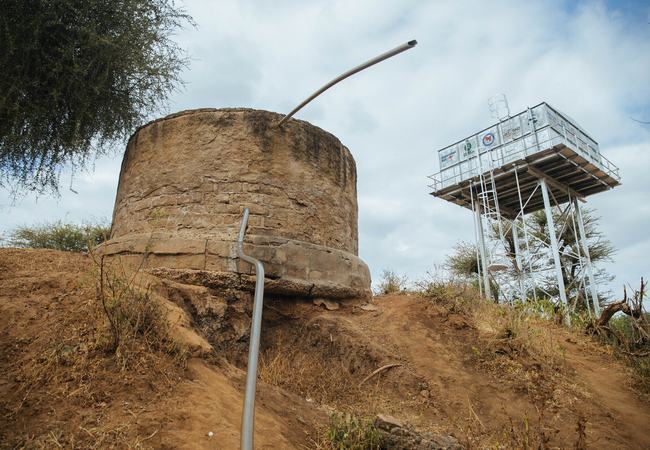
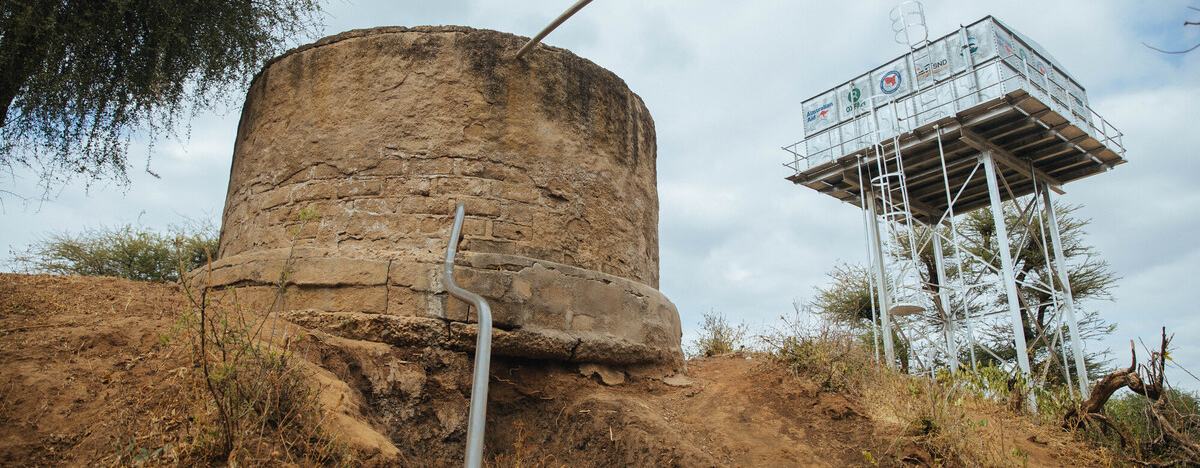
Cement and steel water tanks on top of a dry muddy hill in Uran, Marsabit County, Kenya.

Understanding drought, water scarcity and the human impact

Droughts are becoming increasingly visible worldwide, from California in the USA to regions across Southern, Eastern and the Horn of Africa. Prolonged drought is placing significant pressure on communities in Somalia and northern Kenya.

These events raise important questions about the role of climate change, rising water demand and the decision‑making by policymakers and governments. Understanding how drought and water scarcity differ – and how each affects people – is essential for supporting communities and strengthening resilience.

Sally Rangecroft, from the University of Birmingham University, and Niko Wanders, from Princeton and Utrecht University, explore the interconnected relationship between drought and water scarcity.

Are droughts becoming more common?

Many people are asking whether droughts are becoming more common with climate change and as water demand grows. How far are human activities contributing to increasing the number of, or changing the nature of, drought? And does a drought “matter” if it occurs in a place or at a time where land is less densely populated?

How human activities influence drought

If we look at the impact of droughts it is even clearer that they have a severe impact on humans and that we, in turn, impact drought through preventative measures like building dams and increasing irrigation to support our crops. If we take a step back we can see how drought manifests differently in California and Somalia due to environmental, political and socio‑economic contexts.

Identifying human behaviour in drought research

In today’s world it is hard to find environments and regions where human activities are not impacting the natural system. As hydrologists, our work looks to incorporate a human aspect into drought understanding, processes and research. Our research also seeks to better understand how humans are changing drought hazard and impact.

But whilst it is argued that human activities are influencing drought hazard processes (eg water abstraction), it is important to understand that there is a difference between drought and water scarcity.

What’s the difference between drought and water scarcity?

Drought and water scarcity are intimately linked but it is obvious that water scarcity – for human-related activities – can occur without drought. Indeed, water scarcity is one of the most defining features of human societies in which poverty and marginalisation prevents people accessing water. For example, the dry climate in many regions of the Middle East and Asia creates constant water scarcity, resulting in a high demand for irrigation, drinking water and energy production.

When drought happens without water scarcity

Droughts on the other hand, focus on the natural system and can, and do, occur in less densely populated areas. This means that, as paradoxical as it seems, droughts can occur without water scarcity.

Of course, drought and water scarcity often occur simultaneously and drought events can result in water scarcity. Put simply:

  • Drought refers to the state of the system (often quantified as when water levels fall below a certain threshold).
  • Water scarcity refers to the dependence of people on that system and it only occurs when water availability is low compared to the human demand.

How drought develops and spreads through a water system

Drought therefore is often defined as a deficit in water compared to “normal” conditions of availability.

Drought events normally have a large spatial extent (100-1000km) and can last from weeks, months to multi-year events (eg the ongoing drought in Somalia and northern Kenya).

Types of drought

Drought can be caused by natural large-scale climatic variability. Human activities can cause this too.

Direct human activity causing climate variability:

  • water withdrawal
  • dam building
  • urbanization
  • land use change.

Indirect human activity causing climate variability:

  • anthropogenic climate change (long-term shifts in Earth's weather patterns and temperatures caused directly by human activities eg burning of fossil fuels).

These can all affect the available water, leading to aggravation or alleviation of droughts.

How droughts evolve

Drought can occur in a range of variables. A deficit in precipitation is known as meteorological drought, a deficit in soil moisture is known as agricultural drought, and a deficit in rivers, reservoirs and groundwater is known as hydrological drought.

Drought often moves from one type to another, starting as a meteorological drought and slowly propagating to agricultural and hydrological droughts, increasing in intensity and potential impact. This propagation process is slow, leading to the nickname “creeping disaster” for drought.

Understanding water scarcity as a supply and demand challenge

On the other hand, water scarcity is defined as an imbalance between water supply and water demand. Water scarcity is a deficit in the amount of available water compared to the desired amount for human use. The temporal scale can range from weekly to a permanent state due to constant over-demand.

Distinguishing between hazard, exposure and risk matters

This difference in definition is important since drought only defines the variations in the local water supply, whilst water scarcity can be impacted by both changes in supply and demand.

It is also important to disentangle the differences between drought hazard, exposure, vulnerability, risk and impacts. These concepts differ radically between locations, for example California compared to South Africa.