Pexels / Nataliya Vaitkevich


A desk with a sheet of paper showing a line graph with lots of peaks and troughs, a magnifying glass and coloured highlighters. There is also a pad with scrabble letters spelling C-H-A-N-G-E and a single letter C just above the G.

Why economic growth alone will not end global poverty by 2030

Analysis conducted by members of Padjadjaran Univerity, Indonesia and King's College London, UK shows the world is on course to miss the UN’s flagship development goals for 2030 by a wide margin. That means millions of lives blighted unnecessarily by sickness, poverty, and death unless we see radical policy changes.

Global progress towards ending poverty is not on track

The UN International Day for the Eradication of Poverty takes place every year on 17 October.

In new analysis for UNU-WIDER, we assess progress towards the global poverty-related Sustainable Development Goals (SDGs), specifically:

  • monetary poverty
  • undernutrition
  • child and maternal mortality
  • access to clean water and basic sanitation.

Our analysis then looks forward, making projections on the state of global progress over the coming years, up to the 2030 deadline for meeting the SDGs. The short answer? It’s not looking good.

Why economic growth is not closing the poverty gap

Our findings show that economic growth alone will not be enough to end global poverty and meet the global poverty-related SDGs, which will be missed by a considerable distance. That’s just numbers – we need to remember what they mean in terms that are all too human: millions of lives blighted unnecessarily by sickness, poverty, and death.

The number of undernourished people will be higher in 2030 than in 2015, when the SDGs were agreed, reaching 665 million in 2030.

These basic goals will not be achieved by 2030 without radical changes in policies to address national and global inequalities. Stronger emphasis is needed on inclusive growth and productive capacities (SDG 8) alongside social policy.

Are we facing another lost decade?

In the 1980s, many countries in the Global South experienced stagnant or declining progress on many indicators of standards of living, earning the decade the infamous ‘lost decade’ label.

Our sobering new projections indicate we may face another lost decade in the 2020s unless urgent action is taken.

We make new projections across a set of poverty-related SDGs with a consistent methodology.

We chose seven indicators based on their strong historic correlation to GDP per capita (which we test) and the existence of sufficient country-level data to make projections. This enables credible projections using the growth forecasts.

Why this moment matters

This year, 2023, is halfway to the 2030 deadline, from 2015 when the SDGs were agreed. Further, our estimates use economic growth forecasts that take into account recent global shocks, such as the COVID-19 pandemic and the inflation shock triggered by the Ukraine war.

What does our analysis indicate?

The answer to this question is widespread failure to meet the set of poverty-related SDGs.

Headline findings for countries of the Global South

  1. Over 600 million people will remain in extreme poverty in 2030.
  2. The number of undernourished people will be higher in 2030 than in 2015, when the SDGs were agreed, reaching 665 million in 2030. More than one in five children will be stunted in 2030.
  3. There will be an increase in the number of people living in extreme poverty in Sub-Saharan Africa (SSA) and low-income countries (LICs), though most of the world’s undernourished people will continue to be in middle-income countries.
  4. One in 10 of the population of developing countries will still lack access to clean water; one in three people in SSA and in LICs.
  5. More than one in five people in developing countries will still lack basic sanitation, with 2/3 of people in SSA and in LICs lacking access to basic sanitation.

Debt and austerity are driving a new crisis

The findings are sobering. A potential ‘new lost decade’. The major constraint on growth and progress towards the SDGs will be debt-servicing, which will limit social and productive spending in the Global South between now and 2030.

The current trajectory demands a forceful, seismic shift towards redistribution, nationally and globally.”

Arief Anshory Yusuf, Professor of Economics, Padjajaran University, Indonesia.
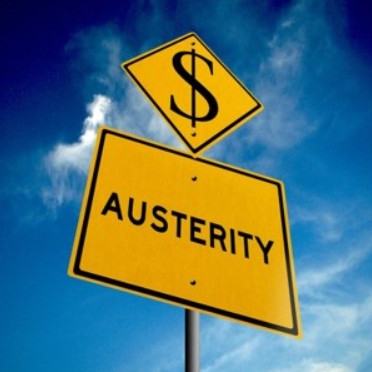
In fact, that is the root cause of this potentially catastrophic failure: the post-pandemic debt overhang and rising interest rates are triggering a new era of austerity across much of the Global South to ensure that debt repayments are met. This in turn is hampering governments’ abilities to raise incomes and spend what is needed on the SDGs (and could delay essential climate adaptation investments).

What governments and global institutions need to do now

Urgent policy action is required including urgent redistributive measures. To change course, we need urgent policy action on two fronts:

  1. A stronger focus is needed on inclusive growth and productive capacities. Specifically, new international financing needs to be made available through debt relief or other forms of finance to expand fiscal space across countries of the Global South to ensure that a stronger focus on SDG 8 can happen.

    This financing should ensure social and productive spending expands, rather than contracts.
  2. Focus should entail redistribution alongside growth, through policies that build productive capacities, introduce, or expand income transfers to meet the extreme poverty target, and ensure sufficient public investment to meet the health, water, and sanitation SDGs.

In short, today’s trajectory demands a forceful, seismic shift towards redistribution, nationally and globally. It also requires new finance to flow to the Global South.

Facing lost decades past and present, radical policy changes now provide the only hope of ending global poverty and achieving the poverty-related SDGs.

About the authors

Professor Arief Anshory Yusuf

Professor of Economics and Founding Director of the Center for Sustainable Development Goals Studies (SDGs Center) at Padjajaran University, Indonesia.

Professor Zuzy Anna

Director of the SDGs Center at Padjajaran University, Indonesia.

Dr Ahmad Komarulzaman

Professor of International Development at King’s College London.aran University..

Professor Andy Sumner

Professor of International Development at King’s College London