
REACH

Hero Anwar of REACH leaning against a wooden door frame to her office with arms folded looking into the camera.

Fair funding for local organisations matters in humanitarian aid

Organisations that are limping from grant to grant without money for overhead expenses must lay off key staff after every project is complete.”

Hero Anwar, Deputy General Director for REACH

Local humanitarian organisations are often expected to deliver life‑saving work with funding that does not cover the real cost of doing it well. When grants ignore essential overheads, they put staff wellbeing, fairness at work, and long‑term impact at risk.

In this blog, Hero Anwar explains why covering indirect costs is not an extra, but a vital part of effective, impartial aid. It is a call for funders and international organisations to support local partners with trust, respect, and fair funding.

What happens when grants do not cover real costs

What do you do when people give you something you badly need – but insult or injure you in the process? You smile, you thank them, and you walk away quickly to hide your feelings.

That’s how it is when a local organisation like REACH receives a grant that doesn’t include funding for its overhead expenses. This is known as indirect cost recovery (ICR) – in other words a grant that only covers the direct costs of a given project

Why indirect cost recovery is critical for local organisations

People often describe ICR as the money that enables organisations to pay the rent and keep the lights on, and that’s true. But, it represents so much more.

ICR supports strong partnerships

For an organisation to survive – to say nothing of thrive – it must pay the rent on its office, maintain its equipment and systems, and employ people to play an array of roles that are not directly connected to funded projects. If that money isn’t available from its grants, the group may have to close its doors.

INGOs and other funders who fail to, or pretend not to, understand this can’t hope to win the respect and trust of local organisations.

ICR makes fair labour practices possible

Our staff have to work for free. Often. It’s as painful and as simple as that. When a project is underway, we sometimes work 12-14 hours a day, seven days a week, for months. And there is never enough money left to compensate project staff for the reporting they must do when the project is complete. Long hours may be inevitable, but ICR can enable us to pay people for ALL their work.

ICR reduces staff turnover

Organisations that are limping from grant to grant without money for overhead expenses must lay off key staff after every project is complete. This is extremely hard on the project staff, and damaging to the morale of the organization. It also represents financial waste: we invest in staff training and then have to let trained staffers go.

ICR can prevent discrimination in the workplace

A small organisation working within tight, inflexible budget constraints can’t afford something as basic and essential as providing women staffers with maternity leave.

ICR enables aid to be neutral and impartial

Organisations that align themselves with political parties receive financial benefits for doing so, and they have the security of knowing the party has their backs no matter how many mistakes they make.

Agencies like REACH, which are committed to providing aid on the basis of need – not politics – and to high-quality responses, play an essential role in emergencies. But we pay a high price for our independence, neutrality, and impartiality, and without ICR, our survival is always on the line.

REACH

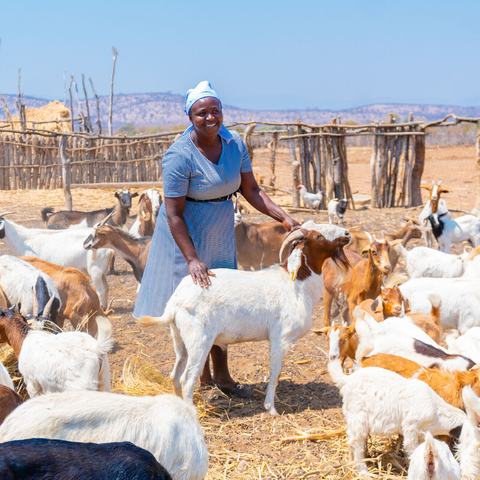
REACH supports families in Iraq by providing livestock as part of its programme to increase incomes and improve food security among farmers who have been affected by the climate crisis and internal displacement.

ICR supports wellbeing for staff and families

It is hard to describe the stress of our daily lives. We work long hours, setting aside the needs of our families. When grant budgets fall short, we spend our personal money to fill the gaps. We work under so much pressure that we inadvertently hurt one another, eg “It’s your fault the project is running late!”

All of this takes a toll on our mental and physical health. Without ICR we are chronically understaffed and overworked.

ICR builds long-term sustainability

Achieving sustainability means investing time and money into creating stable funding, into building a staff that is both well-trained and adequately compensated, and into continuous learning and capacity-strengthening. These are just some of what ICR makes possible.

ICR creates space for local leadership

The pressure to charge all our staff time to narrowly focused grants prevents local leaders from growing professionally and building our organizations’ influence and networks. From attending forums, engaging in advocacy, working on localization, serving on humanitarian country teams, and otherwise making our voices heard.

ICR represents trust in local organisations

We know how to spend money wisely and do not need to be told how important it is to keep our costs down while delivering aid to people in need.

When funders refuse to cover real costs

Some funders decline to give us ICR and also – through strict budget guidelines and monitoring – effectively cut off any other opportunity to charge out our indirect costs.

What are they thinking? Do they imagine that indirect costs are not real, or that they somehow represent corruption? Do they think the projects will go better if we close up our offices and do our work from park benches, using paper and pencil? Or are they just unwilling to share, and refusing to look at the consequences?

What allyship in funding looks like

In Iraq, Oxfam has proven to be an ally on this issue. They have strategized with us about how to qualify for ICR; they negotiated for 7% ICR on a major grant to us from a Western-government-funded agency; and in their grants to us, they build flexibility into the budgets that enables us to charge out indirect costs.

Yet, while Oxfam encourages its affiliates around the world to share ICR with local partners, it doesn’t require it. We hope and trust they will keep advancing on this issue – both in their advocacy work and through their own example – to provide leadership on ICR around the world.

Why indirect cost recovery is about fairness and impact

ICR is not simply an administrative add-on. It represents and enables so much of what we all care about in this work.

I look forward to the day when INGOs and other funders share ICR generously and wear it as a badge of honour. When they say, proudly: “We care about fairness, strong partnerships, aid effectiveness, sustainability, impartiality, trust, the rights and well-being of women and other workers, local leadership, healthy organisations, and reducing waste, so OF COURSE we provide local organisations with the ICR they need.”

About the author

Hero Anwar

Deputy General Director for REACH (Rehabilitation, Education, and Community Health) in Iraq, and an advocate for local humanitarian leadership. REACH is an Oxfam partner