Islam Mardini/Oxfam

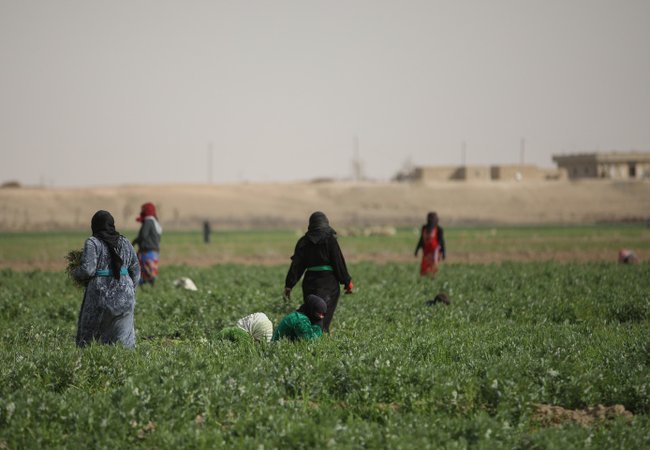
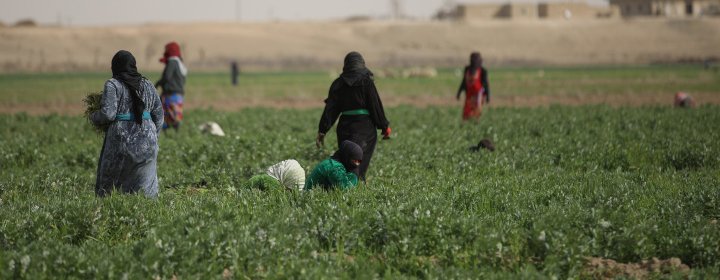
Women farmworkers tending a field in a village in Deir Ez-Zor, Syria

The women left behind in Syria fighting the patriarchal gap

Years of conflict have led to thousands of men dying or being pushed away. The women who remain face a huge challenge as stubborn social, economic and educational barriers frustrate their efforts to build decent lives for their families.

A land of no men in communities destroyed by conflict

As I walked the streets south of Deir Ez-Zor in East Syria, I couldn’t help but notice that women heavily outnumbered men. I was entering a ‘no-man’ land.

Like so many once-thriving places in East Syria, the towns of Bugross and Khsham are now sadly reduced to rubble – but as well as destroying the infrastructure, the cruel conflict has also devastated the male population: wiping out thousands of men and pushing away many more.

Women are left in an impossible situation: still held back by the old social norms and barriers of discrimination, yet now loaded with the extra burden of providing for and managing their households.”

Dania Kareh, East Syria

Locals told me that now up to three-quarters of the population are women because men have died in the protracted conflict, fled the country for safety – particularly during a three-year IS siege – or simply left to seek better lives abroad. The result is thousands of women and their dependents left behind to fend for themselves.

For the first time in their lives, local women find themselves responsible for a whole family – women in my country are heads of their families and the sole breadwinners.

Patriarchal norms continue to restrict women's lives

Traditionally, men in these areas, whether they are fathers or husbands, brothers or sons, have held the power to make decisions on behalf of women in the family. They have chosen their life mates, their moves, what to wear and even what to cook. Young women and girls have been forced out of education, into early marriage, and robbed of opportunities to earn and participate in decision-making at any level.

As men have left their households, you might imagine such a drastic shift could be life-changing for women and girls. Yet the bleak reality is it has left them in an impossible situation: still held back by the old social norms and barriers of discrimination, yet now loaded with the extra burden of providing for and managing their households.

The impact on women's opportunities

How can women change their reality when patriarchal norms have left them with limited skills, education and little knowledge of life outside the home? Many are still denied access to certain jobs by social norms that restrict what work a woman can do and where. Others still lack the official documents they need to participate fully in the economy and society, while many simply don’t have the means to break free from their dire work and life situation.

Even those who have managed to find a job in an exploitative job market face the tough challenge of managing their jobs alongside all the unpaid care they still have to do.

Trapped in an impossible situation

The reality is that many women are still trapped by a social system that still assumes absolute guardianship for males over their day-to-day lives, even though they no longer have a male in their families. This has landed women with impossible choices of bearing the societal pressures they are living under, or marrying back in to a conventional life.

A widow I met in Khsham told me that widows like her are generally considered a burden. They must find a male to run their life for them. This can be a father, cousin, father-in-law, brother, a son or even a new husband. She had to marry her brother-in-law to create a safe space for herself as a widow in her community.

The burden that women must endure to be dignified and accepted is a type of violence that needs to end.

A dignified future is possible

For some women it seems simpler to rely on humanitarian aid, rather than conform to negative gendered norms that perpetuate and sustain abuse.

Women want this challenging situation to change but lack the means to sustain themselves independently.

Islam Mardini/ Oxfam

The training and the sewing machine I received through the support, made me discover self-sufficiency. I'm now ready to start my small business and support my family.”

Amal is 48 and from Aleppo, Syria

In East Syria, too many women now find themselves trapped by the patriarchal system that disempowered them and that failed to prepare them for their current challenges. The result is they remain trapped in hardship, or they risk falling back into old structures of oppression.

But these same women have the courage to envision a better life for themselves: they only need a little support to help themselves out of poverty, to reclaim their self-esteem, to demand what is rightfully theirs and to forge a path forward.

It is time their voices were heard so they can finally have a say in shaping their reality.