What's happening in Lebanon?

Lebanon has faced crisis after crisis in recent years. The latest escalation in Israeli airstrikes has killed hundreds of people and injured thousands more, as violence in the region enters a dangerous new phase.

The Israeli army is expanding forced displacement orders to more areas of the country. Hundreds of thousands of people are being forced from their homes, many seeking safety in overcrowded collective shelters.

Oxfam and our partners continue to assess the situation and provide clean water, hygiene kits and bedding to displaced families.

Latest updates from Lebanon

Last updated 17 March 2026

  • Israeli airstrikes across Lebanon have killed hundreds of people and injured thousands. Families are fleeing their homes with little or no warning.
  • Over one million people are now displaced across the country. Many are staying with host families or sheltering in public spaces after fleeing the violence.
  • Hundreds of thousands of people are currently staying in collective shelters, many of which are overcrowded and struggling to meet basic needs. The real number of displaced people is likely higher, as many families are not captured in official reporting systems.
  • As the number of people displaced rises, humanitarian needs are growing rapidly. Many families do not have access to clean water, sanitation, healthcare and protection services, with women, children, older people and people with disabilities most at risk.

This expansion of Israeli occupation and its bombing of Lebanon will devastate people across Lebanon who had not yet recovered from the last wave of violence, inflicting more trauma on an already traumatised population. Once again, families have been forced from their beds and their homes as Israel rained bombs down on their communities.”

Bacchir Ayoub, Lebanon Country Director, Oxfam GB
Donate today to help people access the essentials they need including: safe drinking water, hygiene kits, menstrual products and bedding.

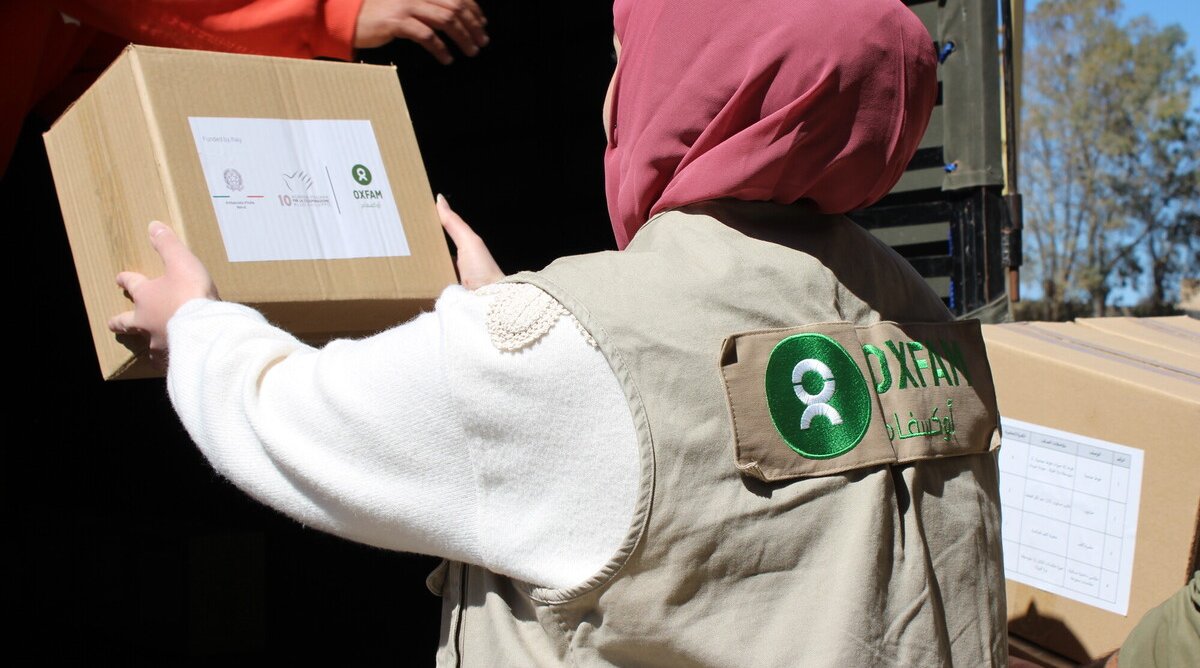
A female Oxfam colleague in the south of Beirut unloading a box of hygiene kits and menstrual health management kits ready to distribute to displaced people.

Oxfam staff in the south of Beirut distributing hygiene kits and menstrual health management kits to people who have been displaced by the escalating conflict. Photo: Ghiwa Abihaidar / Oxfam

Donate to the Middle East Appeal

What is the recent conflict in Lebanon about?

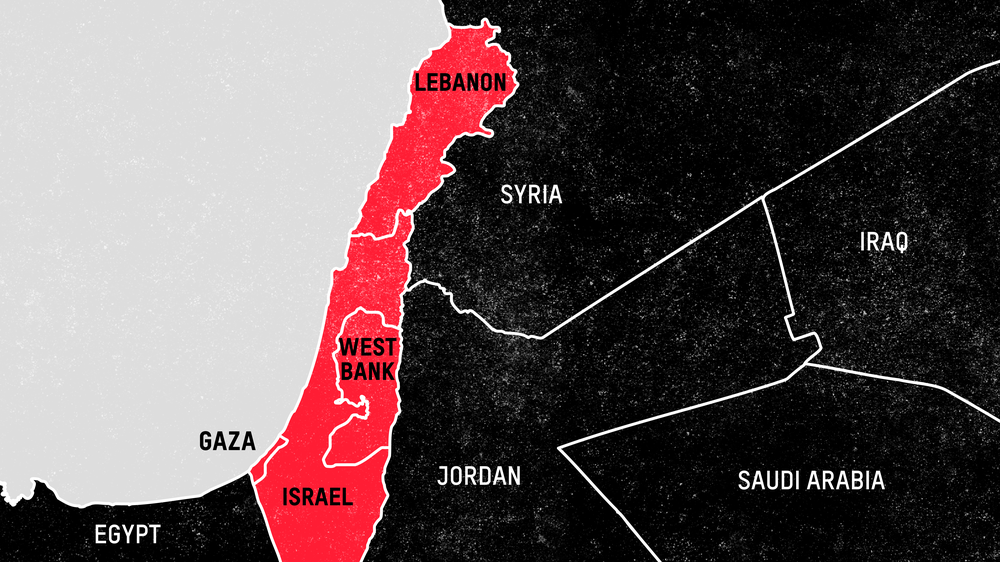
The recent violence in Lebanon is linked to a wider escalation of conflict across the Middle East involving Israel, Iran and armed groups in the region.

Image: Oxfam

A map showing areas affected in Gaza and Lebanon

A map of Lebanon, Gaza and the wider region.

Tensions between Israel and Iran have grown sharply following airstrikes and military attacks between the two countries and their allies. These developments have increased the risk of a broader regional conflict involving multiple countries.

In Lebanon, the armed group and political party Hezbollah – which is backed by Iran – has exchanged cross-border attacks with Israel. Hezbollah has launched rockets into Israel, while Israel has carried out airstrikes and military operations inside Lebanon.

These attacks have had devastating consequences for civilians. Israeli airstrikes have hit towns and villages across Lebanon, forcing large numbers of families to flee their homes and creating a rapidly growing humanitarian crisis.

Rescue workers search through the rubble after Israel's overnight bombing of Beirut's southern suburbs. Xinhua/Shutterstock

Israeli airstrikes have hit towns and villages across Lebanon, forcing large numbers of people to flee their homes, creating a rapidly growing humanitarian crisis.

As violence escalates, there are growing concerns that the conflict could spread further across the region, putting millions of people at risk.

Humanitarian organisations are calling for an immediate de-escalation and respect for international humanitarian law to protect civilians.

Global inaction has set the scene for this dangerous escalation. The inability of the international community to hold Israel accountable for its ongoing violations of international law has led us to this point, where we again see hundreds of thousands of people in Lebanon forced to flee in the march towards a wider regional war.”

Bacchir Ayoub, Lebanon Country Director, Oxfam GB

A country already facing multiple crises

Lebanon has faced crisis after crisis in recent years: a refugee crisis from the war in Syria, COVID-19, the Beirut Blast in 2020, a cholera outbreak in 2022, violent conflicts and an ongoing economic crisis which has resulted in skyrocketing poverty and the collapse of essential public services.

Families are living in constant fear, struggling to access basic necessities and trying to protect their children while violence continues around them.

Humanitarian needs are rising every day as communities cope with displacement, trauma and deep uncertainty.

How can you help the people of Lebanon?

Hundreds of thousands of people in Lebanon have been forced to flee their homes following evacuation orders and heavy Israeli airstrikes. Many families are now sheltering in temporary spaces in Tripoli, Beirut, Mount Lebanon and North Lebanon.

Oxfam and our partners are providing clean water, hygiene kits, menstrual products and bedding to displaced families. But as more people are forced to flee, humanitarian needs are growing by the hour.

We are preparing to scale up our response and reach more communities affected by the crisis.

Rupert at the Oxfam Supply Centre in the UK explains how staff are scaling up the response to the crisis in Lebanon.

Your donation today can help provide clean water, essential supplies and emergency support to families forced to flee their homes.

Voices from Lebanon

Oxfam colleagues and partners in Lebanon are supporting people forced to flee their homes and sharing first-hand updates about the reality families are facing.

Stay up to date with Oxfam's responses to the latest escalations in Lebanon.

What is Oxfam's message to global leaders?

This latest wave of violence shows that International Humanitarian Law has become negotiable.

As the region stands at a perilous moment, Oxfam urgently calls on all parties to the conflict to immediately end the violence. The extent of the impact of this crisis will not be contained only to the region.

International leaders and the global community must mobilise every effort to prevent the destruction of lives and livelihoods of millions across the region and beyond.