Salahuddin Ahmed/Oxfam
Impact stories
Zakat in action: food security in Cox's Bazar
Your Zakat is an Amanah, safeguarding lives in the world's largest refugee camp.
Your Zakat is an Amanah
In Cox’s Bazar, Bangladesh, the world's largest refugee camp, over 1.2 million Rohingya refugees and surrounding host communities face a daily struggle for food amid overstretched resources and fragile livelihoods.
World Food Programme aid has gone down from $12 to $8 per person monthly, causing a 33% cut in food rations since 2023. This is leaving families desperate as prices soar and weather disrupts supplies – eight years after the 2017 crisis faded from global view.
The growing influx of Rohingya refugees into the Teknaf and Ukhia areas in Bangladesh's south is putting a strain on the resources of the local Bangladeshi communities who have welcomed them. Oxfam, its local partners, and you with your donations are supporting both refugees and host communities to live happy and healthy lives.
Oxfam has worked in Cox's Bazar for over 50 years, partnering with trusted local organisations like Mukti. Together, we've reached more than 360,000 people through essential programmes. More recently, Zakat is helping expand vertical gardens, homestead kits and skills training.
When you contribute to the Oxfam Zakat Fund, 100% of your Zakat is used in line with Islamic principles to support Muslim communities in places like Bangladesh, Gaza, Yemen and Somalia.
Read on to learn how the Oxfam Zakat Fund is creating lasting change.
Gardens for food security and income
Vertical and homestead garden kits, training, seedlings and materials provided through local partners turn limited spaces into sustainable sources of nutrition and income for refugee and host families.
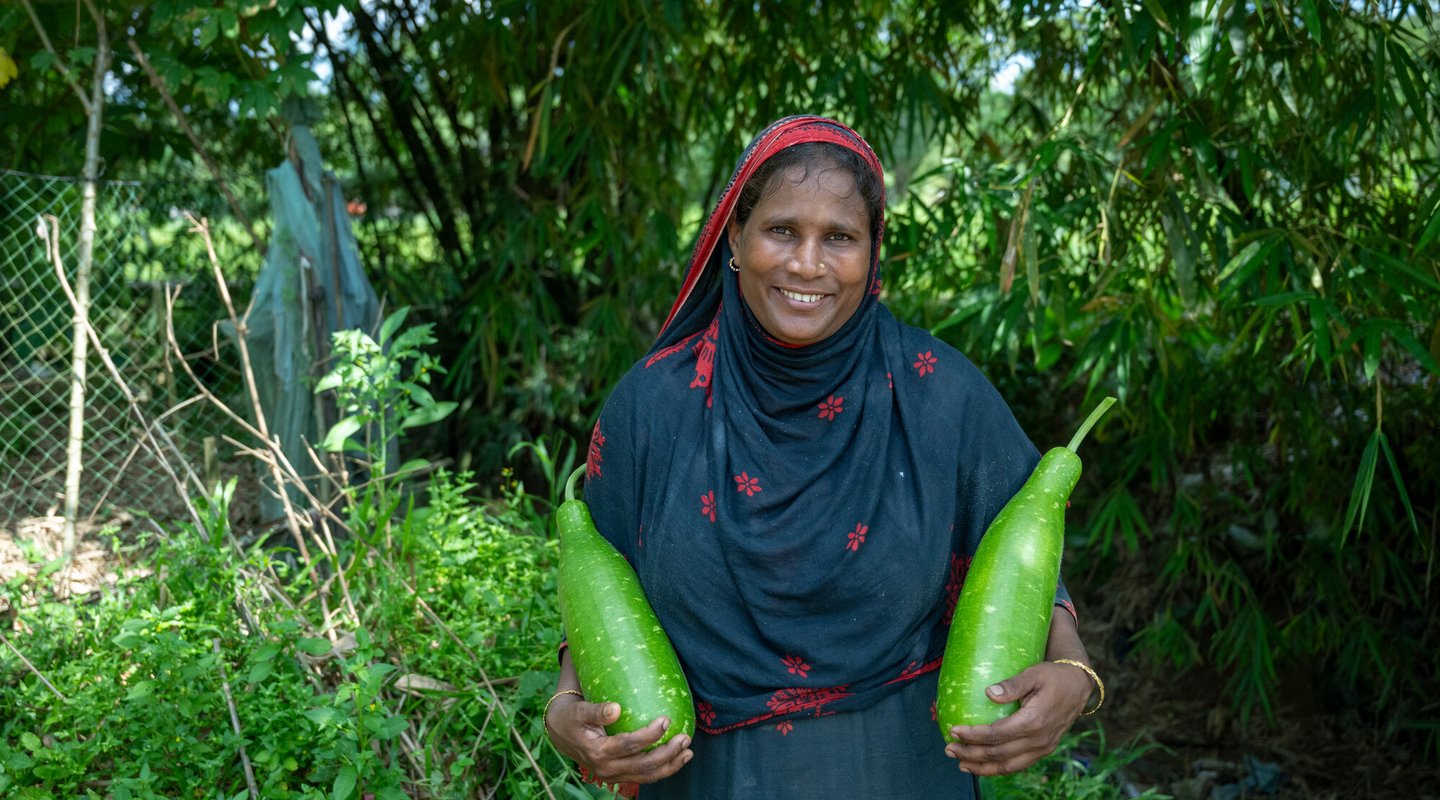
Tahera's story: growing food in a crowded refugee camp
Tahera fled from Myanmar to Cox's Bazar in 2017. Through joint funding, including Zakat contributions, Tahera received a vertical garden kit. In a place where families must grow upwards rather than outwards, she now grows enough vegetables for her family of seven and shares any surplus with relatives and neighbours.
Salahuddin Ahmed/Oxfam
I don't have to buy vegetables from the market anymore. I can provide for my family myself.”
Tahera, Cox's Bazar, Bangladesh
With her new skills Tahera has been able to grow on the roof and walls of her own home, but also created a pergola style structure from bamboo linking her roof to her neighbours across the public pathway. This has created a bigger area to grow more crops and has the added benefit of creating shade over the walkway for her community and passersby.
Tahera values the independence her vertical garden brings.
Salahuddin Ahmed/Oxfam
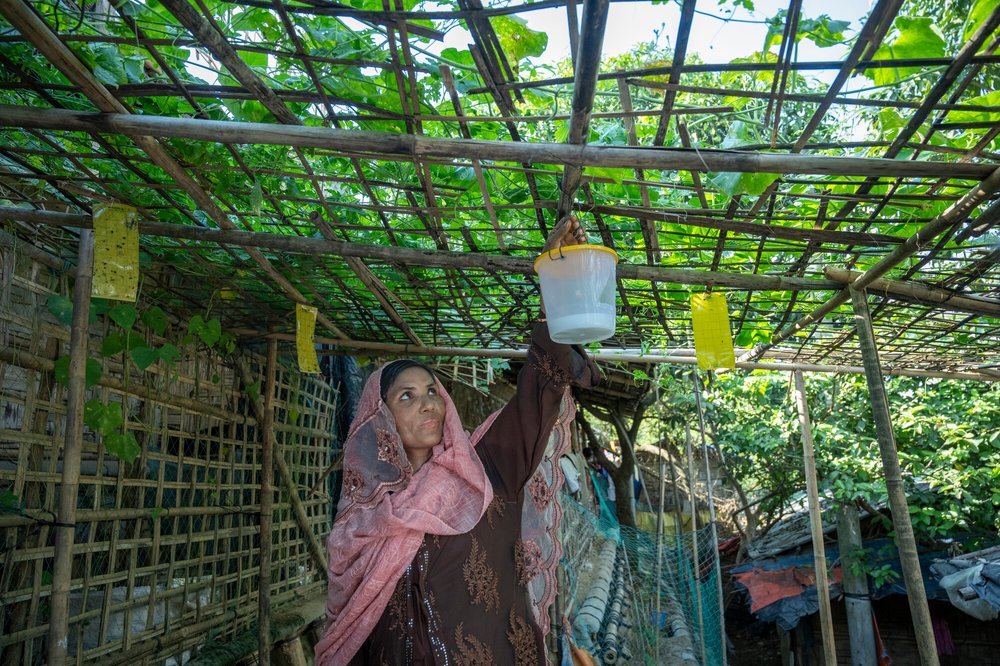
Tahera received training, seedlings, and essential materials from Oxfam, working in partnership with Mukti Cox's Bazar.
Aysha’s story: homestead garden income in Ukhia
Aysha's husband works as a day labourer, and the family relies on irregular daily wages that barely cover essentials. As a Bangladeshi member of the host community, rising food prices and unpredictable weather have made life even harder for their household of seven.
Salahuddin Ahmed/Oxfam
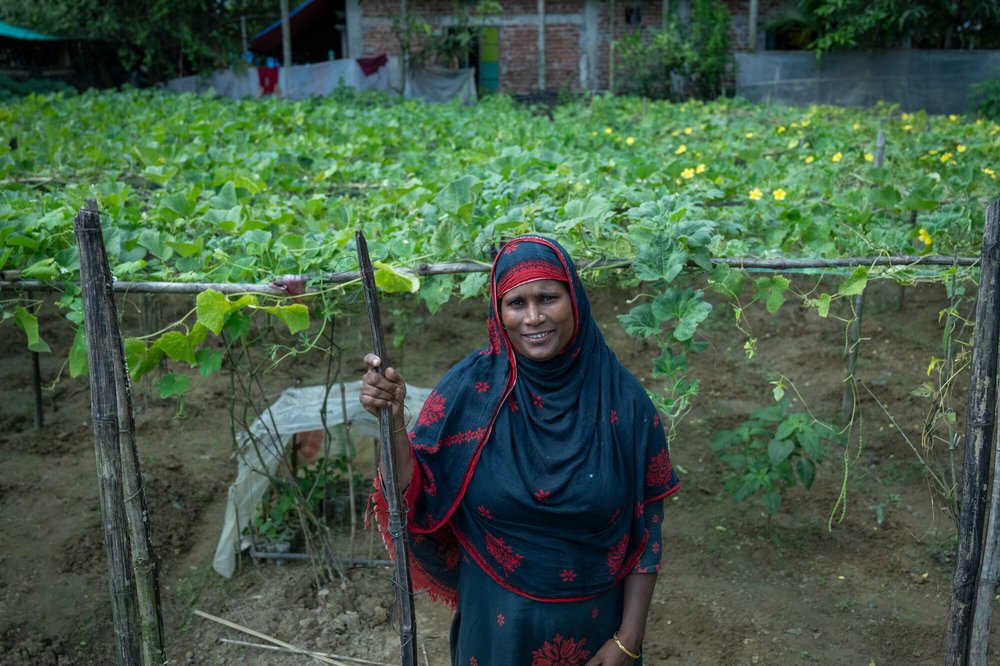
Aysha stands in her homestead garden in Ukhia, Cox’s Bazar.
With support from the Oxfam Zakat Fund and other funding, Aysha received training, seedlings, nets and materials from Oxfam and our partner Mukti to start a vegetable garden in her community.
“Selling the extra vegetables gives me a sense of independence and helps with our household expenses.”
Aysha in Ukhia, Cox's Bazar, Bangladesh
Today, she grows fresh food for her family and earns a little extra by selling surplus vegetables at the local market. Since starting her garden in June 2024, she has earned 27,000 taka (approximately £165). In Ukhia, Cox’s Bazar, Aysha now stands proudly among the vegetables flourishing in her garden. It has become a vital source of food and income for her family.
Aysha's garden is famous in her community, with people regarding it as an enviable success. Now she has established the foundations of her own garden, Aysha hopes to teach other women in her area how to create a homestead garden of their own.
Skills training for nutrition and resilience
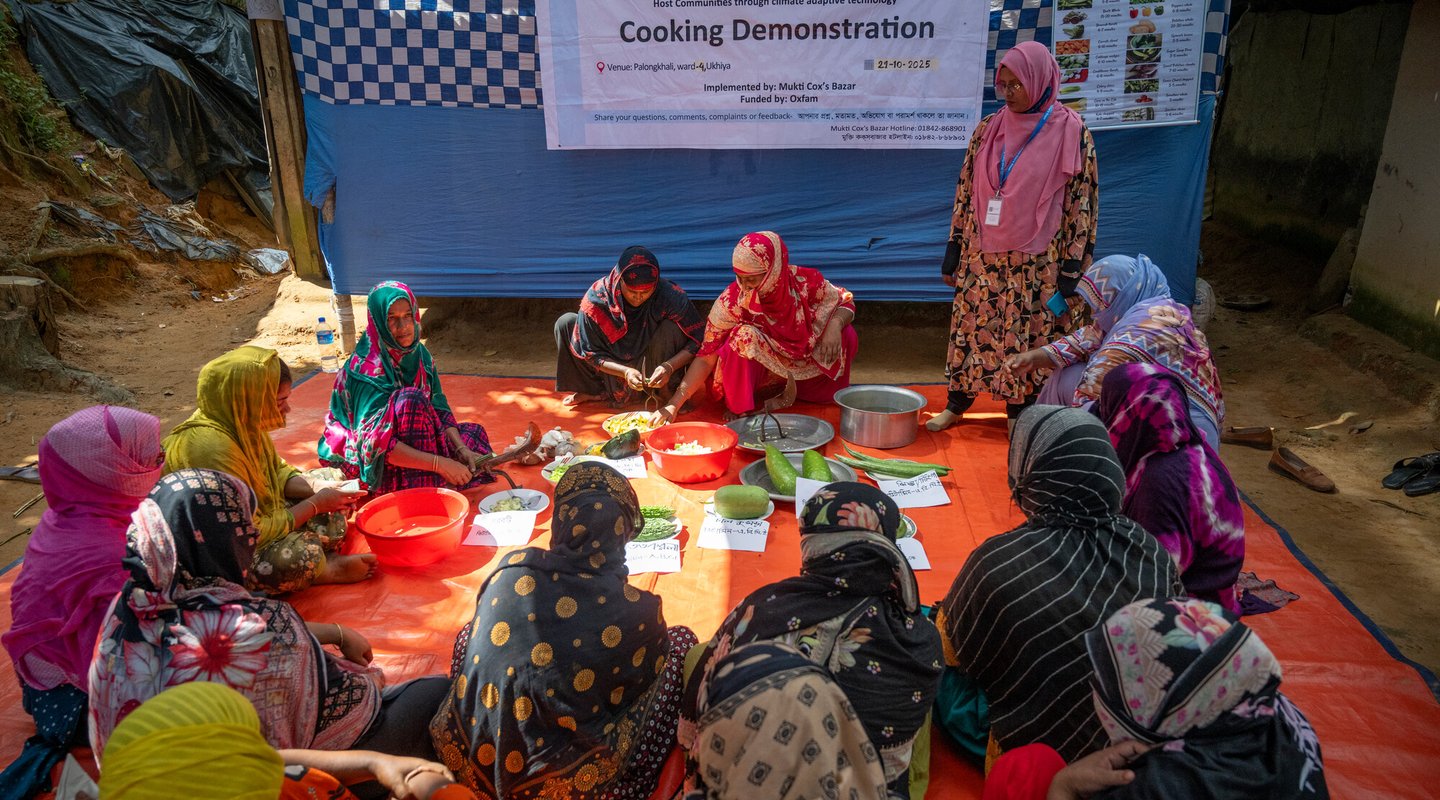
Before these sessions, many families struggled to prepare nutritious meals with basic ingredients, very little variety and weather patterns affecting what they could grow or buy.
Salahuddin Ahmed/Oxfam
Supporting women to make healthy choices
Practical cooking demonstrations led by Oxfam and Mukti Cox's Bazar support women to make the most of their produce, turning local crops into healthy meals that improve family nutrition and food security. Women learn climate-adaptive techniques and ways to plan meals despite changing seasons and extreme weather.
Zakat provides support
Your Zakat can equip parents, caregivers and community leaders with long-term skills to navigate changing climates and challenges, helping them build lifelong resilience against hunger.
Your Zakat creates sustainable change worldwide
Your Zakat delivers food, income and skills in Cox’s Bazar and surrounding host communities, helping families uphold their dignity and build sustainable independence. Through the Oxfam Zakat Fund, we are able to support more Muslim communities globally, offering assistance in places like Bangladesh, Gaza, Yemen and Somalia.
Oxfam is 100% Zakat eligible, with all Zakat funds managed in line with Islamic principles through our partnership with the National Zakat Foundation. This ensures transparency, accountability and impact for communities in need.
Source
United Nations in Bangladesh (press release): UN in Bangladesh appeals for immediate funding as Rohingya refugees face new cuts in food aid
Related content
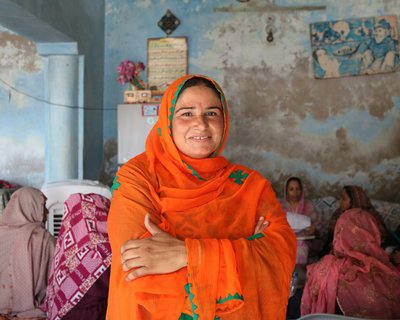
Oxfam's Zakat policy
By making your Zakat payment to Oxfam, you can be sure your payment will help those suffering from poverty or extreme hardship.
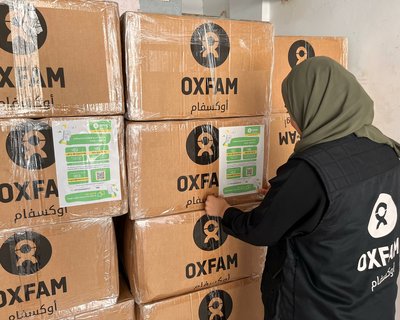
How your Zakat is used
Your Zakat is helping to distribute food and clean water to displaced families in Gaza.
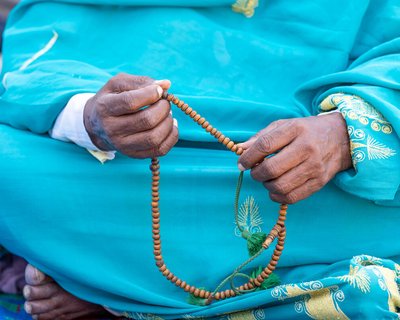
Leave a legacy
Learn more about the importance of writing a will in Islam and practical steps in how to do it.