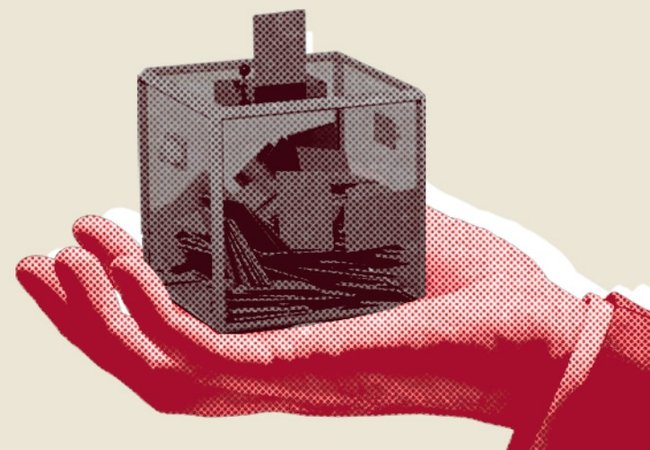
A graphic of a businessman's man holding a ballotbox

Resisting the rule of the rich – and why it matters

The rapid growth of billionaire wealth across the last year is shaping our world in ways that impact everyone. As economic inequality deepens and poverty eradication efforts stagnate, the super-rich are using their wealth to influence politics, media and the law more brazenly than ever before. Oxfam's Inequality Report – released to coincide with the World Economic Forum in Davos 2026 – explores how concentrated wealth threatens the rights and freedoms of people around the world – and what must be done to tackle it.

The rich are getting richer while ordinary people struggle

"Let me guess," said a friend when I mentioned Oxfam's impending Inequality Report launch, "the rich are getting richer and the rest of us are f***ed?"

Well, he wasn't too far wrong. In fact, the wealth amassed by the super-rich over the last year has reached a historic high. Global billionaire wealth grew three times faster in 2025 than in the five years before.

Five years in which ordinary people are facing increased hardship, all over the world. One in four people now regularly skip meals, because they cannot afford to eat, and almost half the world is living in poverty.

In the last year billionaires around the world gained $2.5 trillion, enough to eliminate extreme poverty 26 times over.

The outsized influence that the superrich have over our politicians, economies and media has deepened inequality and led us far off track on tackling poverty.”

Amitabh Behar, Oxfam International Executive Director

Politics and policy are fueling extreme wealth

This huge spike in billionaire wealth has coincided with the election of Donald Trump, himself a billionaire. Their wealth has shot up largely because the stock market and corporate profits have surged. This is driven in turn by the actions of a distinctly pro-billionaire Trump administration which has pushed the deregulation of artificial intelligence (AI), ended any actions to break up monopoly power and pulled out of global agreements to increase the taxes paid by corporations – all of which has further lined the pockets of the richest people in the world. While US billionaires have enjoyed the biggest spike in their wealth, the super-rich all around the world have benefitted.

When billionaire wealth becomes political power

So yes, the rich are getting richer, and ordinary people are struggling to get by. But what did my friend's profanity-punctured summary miss? The key argument of our report this year is that increasingly billionaires are using their enormous wealth to gain inordinate control over politics, the media and government, while the rights and freedoms of the rest are being eroded. Economic wealth is manifesting as political wealth the world over, and this should be deeply concerning to us all.

Owning influence, not just assets

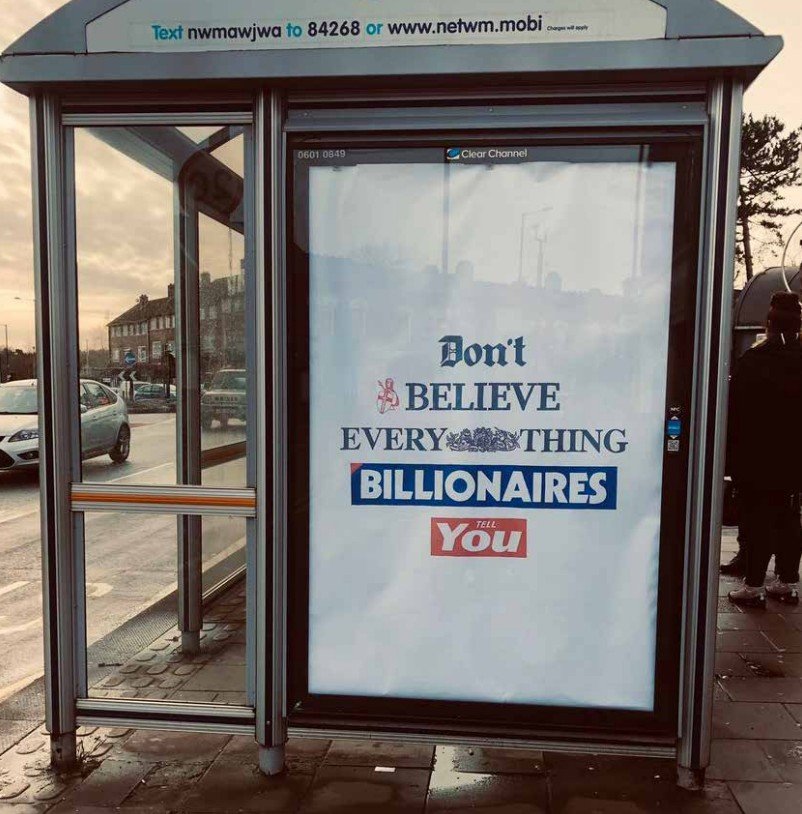
It is one thing to own a big house, or a yacht, it is another to own a politician, a newspaper or a judge. Billionaires are exerting direct influence over societies via media, social media and AI ownership – with seven of the 10 largest media companies and eight of the top 10 AI companies having billionaire owners. Why does this matter? Well, it means that they have immense control over the priorities and narratives that shape our societies.

Darren Cullen

An advert on a bus stop in England that reads "don't believe everything billionaires tell you" in reference to billionaire owned media in the UK.

Photo and artwork: Darren Cullen. See his work here: www.spellingmistakescostlives.com

In the UK, for example, where three quarters of newspaper circulation is owned by four super-rich families, there were 30 news articles per day on the alleged exodus of millionaires from the UK as the idea of a wealth tax gained traction where the number supposedly leaving was found to have been grossly exaggerated by the media.

In Pakistan, a fake AI generated video was circulated of a candidate in national elections telling voters to boycott the vote, while a fake video of Ukraine's President Volodímir Zelensky called for troops to lay down arms.

Billionaire influence on governments

The super-rich also exert direct influence over elected officials, from billionaire backed Javier Milei seeking to amend 366 laws in Argentina to rollback workers right and protections, to Africa's richest man Aliko Dangote – who enjoys a close relationship with the country's president – benefiting from tax waivers and tariffs on his near monopoly on cement in Nigeria.

From pulling the levers of power behind the scenes, to taking centre stage: Oxfam's research has found that billionaires are over 4,000 times more likely to hold political office than ordinary people. Once there, they are ideally placed to push through policies and enact changes to ensure they continue to stay on top.

Resisting the rule of the rich - Oxfam Inequality Report 2026
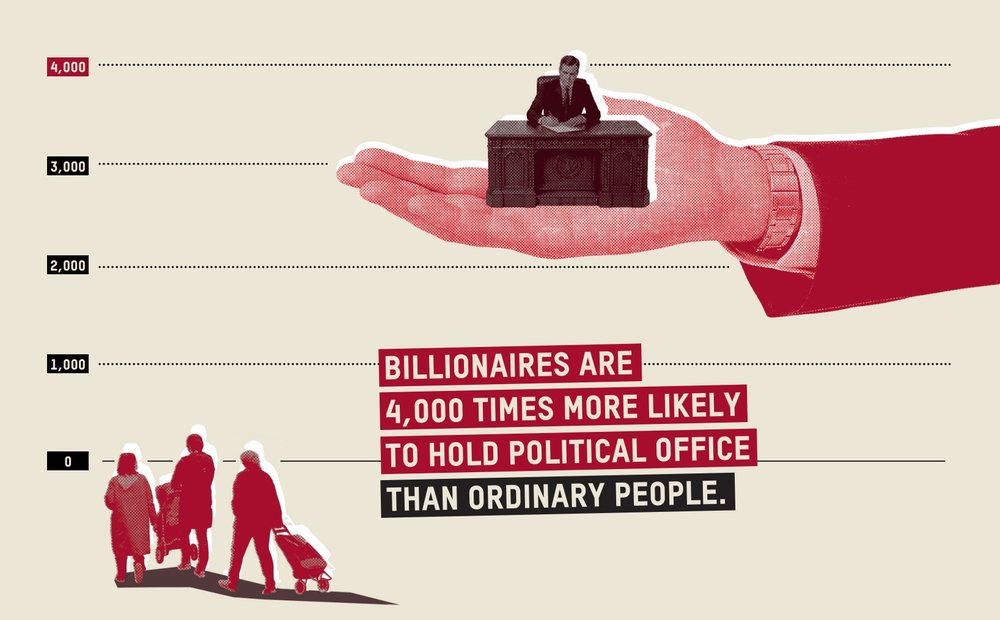
A graphic with a large hand holding a businessman at a wooden desk near the 4,000 line on a graph and ordinary people at the bottom near the zero line with the text "Billionaires are 4,000 times more likely to hold political office than ordinary people".

Protest, inequality and the erosion of democracy

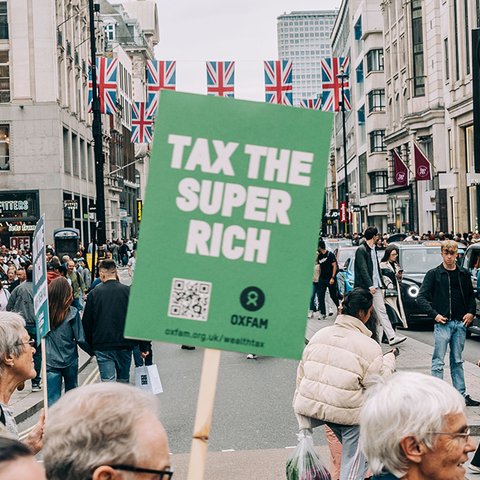
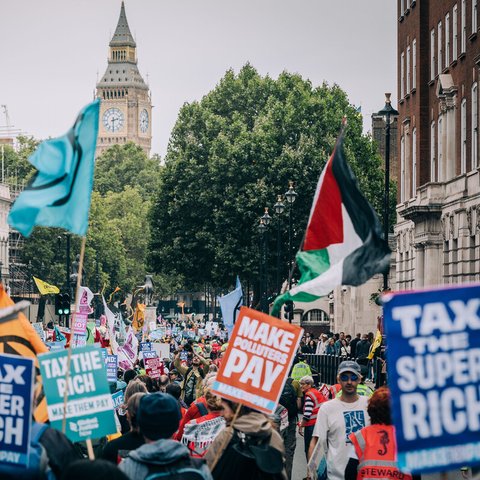
Whilst the super-rich around the world are shoring up their fortunes, governments are bending over backwards to accommodate them. Over the last year, 142 anti-governments protests have sprung up in response to economic inequality, rising costs for everyday people and corruption – to name a few of the reasons. As opposed to being listened to by their governments, protestors are facing harsh, often violent repression. Our report contains many of their stories, and documents their bravery.

Protests in Pakistan criminalised

Since 2024 in Pakistan, there have been widespread protests against tax increases, higher energy costs and inflation resulting from the country's debt crisis and IMF-imposed austerity. In response, the government has used anti-terrorism laws to target activists and peaceful protestors in a move that has been criticised by the United Nations.

Deadly repression of dissent in Kenya

Kenya offers a particularly stark example, with two years of protest against tax hikes; price rises; inequality embedded by debt and the government; being met with extreme repression and violence. The Kenya National Commission on Human Rights recorded that 39 people were killed at the protests and the Kenyan state has been accused of systematically killing or kidnapping those who were involved. 60 cases of extrajudicial killings are being investigated, along with 71 cases of abductions and forced disappearances.

This flagrant erosion of people's democratic right to protest around the world is inextricably linked to economic inequality. Countries with high inequality are seven times more at risk of experiencing democratic erosion than more equal ones.

We must make our choice. Either we can have extreme wealth in the hands of the few, or we can have democracy.”

Supreme Court Justice Louis Brandeis (13 November 1856 – 5 October 1941)

The global fight against the rule of the rich

So, what is the choice? It is a choice between redistribution of wealth, or repression of citizen's freedom to dissent. It is the choice between creating a world for the majority, not the millionaire and billionaire minority. It is a choice between defending wealth, or defending freedom.

The good news is a more equal world is possible, and already people are rising up to take it.

From South Asia to North and East Africa, Southeast Europe to Latin America protests have broken out. Many have been youth led, earning them the name "Gen Z' protests" to demand changes in policy, changes in administration and changes in the priorities of governments failing to meet the needs of their people and resist the insidious and unequal rule of the rich.

The cost of protest has been high – with protestors facing arrest, violence and in some cases death. But they have also resulted in a reversal of unpopular policies and even regime change. Now more than ever, governments need to listen to their citizens and resist the rule of the rich.

Oxfam's response to the report

Oxfam is calling on governments to:

  • Radically reduce inequality, through establishing National Inequality Reduction Plans, that include measures like taxing the super-rich and tackling corporate power and monopolies;
  • Curb the political power of the super-rich, through reducing their economic power, and building a wall between money and politics; regulating the revolving door between private interested and public office and protecting media independence; and
  • Build the political power of the many, through protecting and promoting freedom of expression, assembly and association, ensuing civil society organisations can operate free from interference and building citizen political participation in policy making.