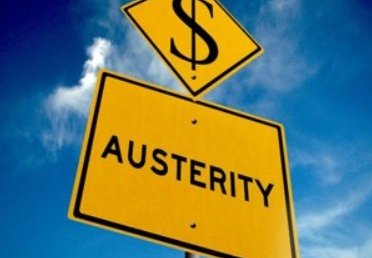
A yellow signpost with the word Austerity printed in black below another signpost of a dollar sign.

The World Bank and IMF must change to tackle poverty

After half a century of misguided policies it is time both the World Bank and the IMF abandoned the short-term fixes and austerity that have repeatedly failed people in developing countries. Oxfam sets out six ways both institutions can make real and lasting change: from debt restructuring to encouraging social spending and taxes on the wealthiest.

The role and the power of the World Bank and IMF

After half a century, the World Bank and International Monetary Fund (IMF) annual meetings were back on African soil.

The last time the annual meetings were held in Africa was in 1973 in my own country, Kenya. Many African countries had recently become independent, while a few were still under colonial and apartheid regimes. At that meeting, then World Bank President Robert McNamara coined the term "absolute poverty", which would guide the Bank’s twin goals of reducing poverty and accelerating economic growth for the years to come.

Created in 1944 the World Bank and the IMF are the world’s most important international financial institutions. Both have a hand in shaping virtually every aspect of the social, economic and political spheres in developing countries.

The IMF helps countries deal with the short-term balance of payments, while the World Bank supports medium- and long-term development.

At the mercy of the IMF

The huge power of the IMF does not emanate from the amount of money it lends countries, but from the stamp of approval it gives that comes in the form of loan "conditionalities" – a set of conditions that compel countries to manage their economy in particular ways.

What are IMF conditionalities?

If a country finds itself in a financial mess, a situation many African countries are in now, current and potential external creditors (including the World Bank) need assurance they will get their money back. That assurance will come from the IMF, so a country must adhere to the IMF conditionalities to unlock other loans and donor aid. These IMF conditions take three broad forms:

  1. Measures to reduce demand: expenditure cuts, indirect taxes etc.
  2. Policies to create efficiency in the economy such as import liberalisation and financial reforms.
  3. Countries turning their resources into "tradables" (goods and services that can be exchanged freely in the international market) through currency devaluation and removal of price controls.

The debt crisis facing African nations

Crises such as the COVID-19 pandemic and severe drought have left African and other developing countries desperate for IMF and creditor support as debt pressure piles up while revenues shrink.

Public debt in Africa has almost doubled over the last decade, from 32% of GDP in 2010 to 62% in 2023. Half of Africa countries are now in debt distress (unable to fulfil its debt obligations with debt restructuring required) or at high risk of debt distress, accounting for 60% of the global total. Of the ten countries in debts distress in the world, eight are in Africa.

Double-digit inflation in most of the African countries, and the raising of interest rates by central banks in rich countries to curb their own domestic inflation have accelerated interest rates and debt levels. Depreciating local currencies add salt to the wound as does the rising cost of imports whether it is food, fuel or medicines. In Africa, about 17% of government revenue is now spent on external debt servicing, the highest since 1999. African and other developing countries are also paying higher interest than rich countries.

Short term fixes and austerity cause harm

The problem is that the IMF is interested in the short-term balance of payments, so it often proposes urgent short-term fixes. Through its conditionalities, it urges countries to cut public expenditure, remove food and fuel subsidies, increase indirect taxes and, in some cases, institute reforms such as privatisation of loss-making public institutions.

The impact of austerity on inequality and public services

Such policies can cause significant harm to people, especially those on the lowest incomes and those facing marginalisation who rely on publicly funded social services. This contributes to widening inequality, rising poverty, preventable deaths, increased malnutrition and children being unable to attend school. Cuts to social spending also disproportionately affect women and girls, who are among the main users of these essential services.

Spending cuts, or austerity, also raise unemployment for two reasons. First, the public sector accounts for a sizeable share of employment in Global South countries. Second, austerity squeezes demand in the economy, which depresses economic growth and leads to job losses, including in the private sector.

Oxfam’s calculations show that 46 low and lower-middle-income countries will cut annual spending by about $46bn between 2024 and 2028 compared to their spending in 2023. Worryingly, nearly three-quarters of these countries are in Africa. Mozambique’s average annual spending cut is twice as high as the health budget.

International institutions need to work towards ending poverty

After 50 years of misguided policies that have worked mainly to impoverish the majority of people while benefiting the rich, it is time the Bretton Woods institutions changed their policies towards addressing countries’ medium- and long-term development, reducing inequality and ending poverty.

Six ways to make lasting change

  1. The IMF and the World Bank should take the lead in supporting debt restructuring, that forces creditors, especially private creditors to agree to cuts in what they are repaid, so that governments can have money to spend on public services.
  2. They should encourage and support countries to invest more money in social sectors such as education, healthcare, water and sanitation and social protection, where people experiencing extreme poverty will most benefit. This should be a central objective of their lending programs and not an afterthought.
  3. Loan programmes, conditionalities and policy advice should forgo austerity as the default go-to policy, instead they should be geared towards job creation, income and wealth redistribution and poverty eradication. It is impossible to expect employment to rise by reducing demand and increasing taxation on ordinary people.

    Countries should be encouraged and supported to introduce progressive revenue measures, including taxing the wealthiest more.
  4. Both the World Bank and the IMF should carry out a comprehensive distributional social and economic impact assessment of any intended programme, including its conditionalities and policy advice, to ensure that the proposed measures at least do no harm and ideally reduce inequalities rather than merely addressing the short-term balance sheet.
  5. The IMF and World Bank should ensure their programmes align with the country’s medium- and long-term economic development. In addition, governments should be allowed to identify which areas would be most beneficial for their long-term development priority.
  6. The IMF has some of the world’s top economists, which many low-income countries do not. This skews negotiation in favour of the IMF even when the country staff have the best intentions.

    There is an urgent need to strengthen countries’ technical capacity. In addition, the negotiation table needs to be widened to bring in other state and non-state actors, as current negotiations are held behind closed doors between IMF staff and the staff of the Central Bank and the Ministry of Finance, all concerned with macroeconomic stability and not socioeconomic development.

Conclusion

For decades, the IMF and World Bank have shaped economic choices across developing countries, often with consequences that deepen inequality and limit people’s access to essential services.

Both institutions have an opportunity to navigate a different path – one that prioritises people’s rights, supports long‑term development, and ensures the burden of adjustment does not fall on those already facing the greatest barriers. By driving fairer debt solutions, investing in social services, ending harmful austerity and strengthening a country's ability to make decisions for their own future, we call on the Bretton Woods institutions to help build more equal, resilient societies.