Atsede Bere meets with Nurse Bethlehem Feleke in the part of the health clinic Oxfam helped to rebuild, with funding from Global Affairs Canada. Photo: Petterik Wiggers/Oxfam
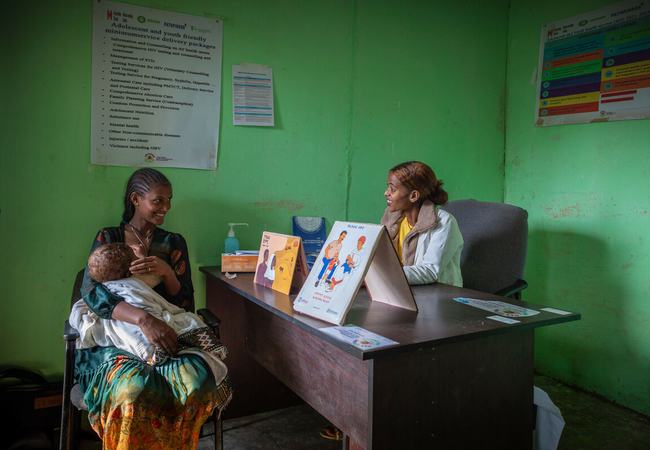
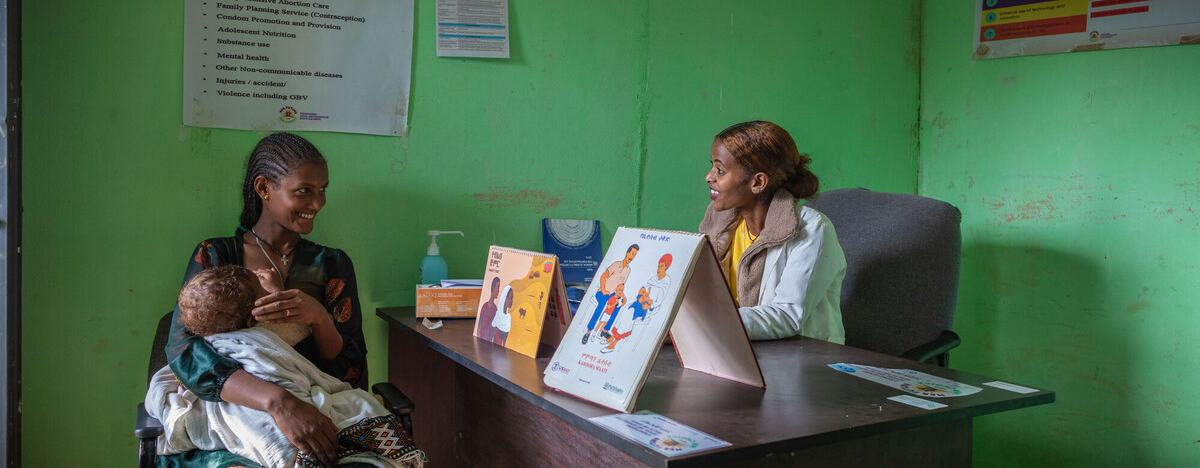
Atsede Bere is sat cradling her young child and smiling at Nurse Bethlehem Feleke who is sat on the opposite side of a desk. The clinic is bright green with posters on the wall and there are promotional healthcare leaflets on the desk.

Why the World Bank must tackle the hidden cost of illness

With the World Bank poised to replenish funds to back expansion of healthcare among the world’s poorest people, it needs to measure what matters – and what matters is that billions are being forced into poverty and hardship by the costs of care.

When getting ill pushes people into poverty

When Eva’s mother fell seriously ill in Odisha, India, she took her to a private hospital where her government health insurance was unjustifiably rejected. Her mother got access to treatment, but it cost Eva and her father the equivalent of seven years’ combined income.

I’m financially killed; I’m psychologically damaged; my family life has collapsed; my career is damaged. What else is there to fear?”

Eva explaining the wider impact of treating her mother's illness.

Eva joins 100 million other people in India alone, who are pushed into or pushed deeper into poverty each year by out-of-pocket spending on health.

Universal Health Coverage and financial protection

Widespread financial catastrophe caused by healthcare costs is a huge barrier to delivering universal healthcare.

That’s why when governments agreed to deliver Universal Health Coverage (UHC) by 2030 it was crucial that they agreed to measure progress in two different ways.

The two global targets for measuring UHC progress

  1. Do people have access to the full range of quality health services they need, when and where they need them?
  2. Are they are financially protected when they do?

So, alongside the Sustainable Development Goal (SDG) 3.8.1, about health service coverage, we also have SDG 3.8.2 about financial hardship, which targets “catastrophic health spending”, with associated indicators showing to what extent out-of-pocket health spending contributes to poverty.

Billions still lack healthcare access and protection

The global UHC monitoring reports produced bi-annually by the World Health Organisation and the World Bank make grim reading.

More than half of the world’s population – at least 4.5 billion people – still don’t have access to essential health services, and two billion people face financial hardship each year when they do.

Over the past two decades, financial protection has progressively deteriorated in 70% of countries.

Progress towards UHC is blocked when billions of people are pushed (or further pushed) into poverty, or forced to forgo treatment which can result in longer-term sickness or death.

Where does UHC funding come from?

The World Bank Group is the world’s largest external funder for health, in particular through its International Development Association (IDA), which provides grants and low-interest loans to low-income countries.

Funding from the IDA is in fact the most important source of concessional finance and grants for lower-middle and low-income countries to make urgently needed advancements towards UHC. These are the same countries that have seen the largest increases in catastrophic out-of-pocket health spending since 2000.

December 2024 will see the 21st replenishment of IDA (IDA21) and therefore marks a critical opportunity for the Bank and its donors to ensure everything is in place for IDA21 to both expand coverage of equitable and universal healthcare and reverse the rise in financial hardship for people who access it.

The World Bank’s commitments on affordable healthcare

In recognition of the abysmal progress on UHC the World Bank Group earlier this year made a welcome commitment to support countries in delivering quality, affordable health services to 1.5 billion people by 2030.

As part of this, there is a promise to work with governments to “cut unnecessary healthcare fees and other financial barriers”.

Neema Bahemuka, a trained VHT in Bwiriza Zone, Kyaka II Settlement, Uganda, is having a meeting with other VHTs before going to the community for an outreach. Photo: Muhumuza Joseph / Oxfam

A village health team in Kyegegwa, Uganda.

In a recent session on the new target, the Bank’s health team gave reassurance that financial protection for health is at the top of their agenda with increased capacity to translate what is being learnt through the global monitoring work into country dialogue and assistance. And, after years of troubling and regressive policy on healthcare user fees, there is now explicit World Bank guidance that primary healthcare at least should be free of charge and funded by government expenditure.

Unfortunately, despite these positive signs, we’ve spotted a major gap in the proposals.

The missing targets in the World Bank's proposals

A review of the proposed policy package for IDA21 reveals a critical omission when it comes to financial protection for health.

Despite the World Bank playing an important role in the analysis for, and production of, the UHC Global Monitoring Reports, involving careful tracking of the globally agreed measures of impoverishing and catastrophic health expenditure, there is no mention of using similar indicators to monitor the IDA’s role in expanding health coverage in those countries worst impacted by deteriorating financial protection.

Why tracking bad health spending is essential

While we understand the rationale for ‘simplifying IDA’ (SimplifIDA), it is crucial explicit actions and measurements are used to monitor the leading causes of impoverishment globally. This will ensure that donors’ money is working effectively to tackle it through IDA.

Good rhetoric and verbal reassurances from the World Bank are simply not enough.

Hardwiring accountability on financial protection is even more important given the World Bank’s own chequered history of exacerbating out-of-pocket spending on health through the introduction of user fees as well as inequitable and expensive health insurance schemes. Even the most recent World Bank ‘results narrative’ on health continues to celebrate World Bank supported health insurance programmes which often fail to improve financial protection, especially for women and other marginalised groups.

Better measurement could drive fairer health systems

Closer monitoring of financial protection could also help reveal contradictions between the Bank’s promotion of a greater role for for-profit healthcare providers in national health systems and its objective to protect people from healthcare costs.

Better measurement might also force a re-think on channelling IDA to the Bank’s private sector arm, the International Finance Corporation (IFC), that has been found to have been invested in expensive private hospitals that for example charged thousands of dollars for ICU beds during the COVID-19 pandemic.

What must IDA donors do now

Ahead of the IDA21 replenishment conference in South Korea, IDA donors should insist on the introduction of robust and explicit measures and incentives on financial protection for health that are fully aligned with the globally agreed SDG indicators: the number of people facing catastrophic and impoverishing health expenditure.

Specifically, IDA donors should ensure that the Policy Package:

  1. Contains concrete country-level commitments to publicly finance the removal of financial barriers to accessing healthcare, including elimination of fees at the point of use, and incorporate measures that track the equitable reduction in out-of-pocket health expenditure.
  2. Includes targets that incentivise IDA countries to establish equitable and appropriately governed tax-based financial protection mechanisms, over voluntary or inequitable contributory insurance models that inherently exclude or discriminate against women, low-income and other marginalised people.
  3. Ensure that countries are supported to guarantee access to comprehensive healthcare services that cover the full population including by urgently addressing the shortage of trained and qualified health personnel.

The big push for UHC

The world is moving closer to the 2030 deadline for Universal Health Coverage, but the stakes could not be higher.

Without clear accountability and strong financial protection measures, millions more people will continue to face preventable hardship when they seek healthcare.

The IDA21 replenishment is a rare chance for the World Bank and its donors to put equity, public financing, and meaningful measurement at the heart of global health progress.

By ensuring countries can remove financial barriers, strengthen publicly funded systems, and track whether people are protected from the costs of care, the Bank can help build health systems that leaves no one behind.