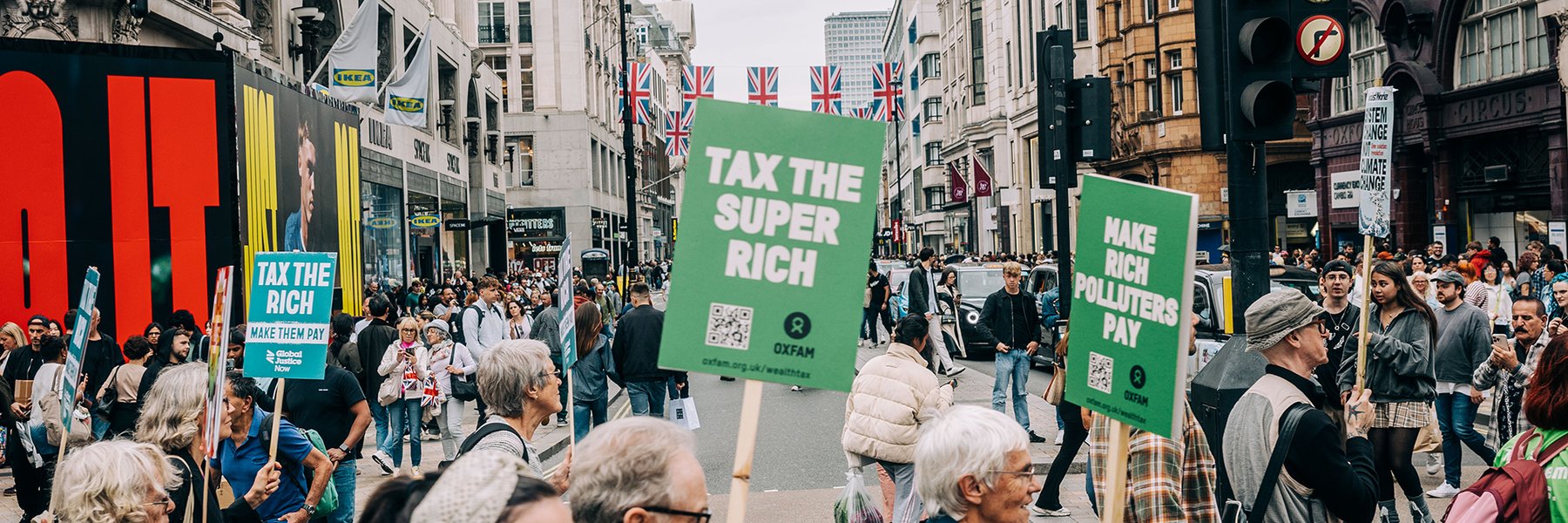
Oxfam's Global Inequality Report
Every year for at least the past 10 years, Oxfam has produced a report on the state of global inequality. As a global NGO we work together across all the countries in which we are based, to highlight and make a big noise about just how inequality and poverty are interlinked.
What was the highlight from Oxfam’s 2026 global inequality report?
A good decade for billionaires: The facts
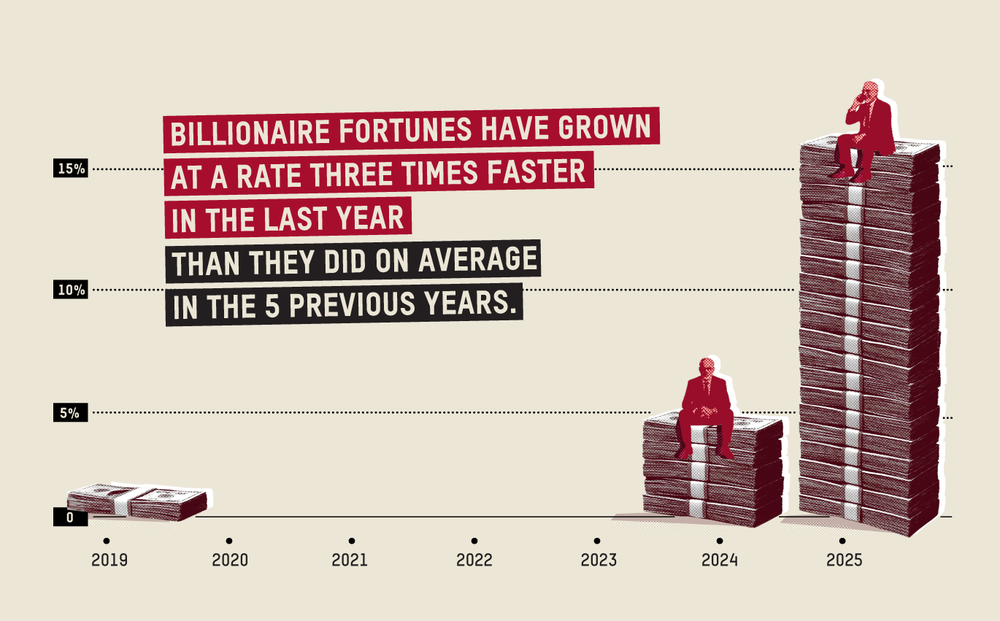
- In 2025, billionaire wealth increased three times faster than the average annual increase in the previous five years.
- Billionaires are over 4,000 times more likely to hold political office than ordinary people.
- The amount of wealth gained by the world’s billionaires over the last year is enough to give every person in the world US$250 and leave the billionaires more than US$500bn richer.
- The world’s 12 richest billionaires have more wealth than the poorest half of humanity, or more than four billion people.
“We must make our choice. Either we can have extreme wealth in the hands of the few, or we can have democracy. We cannot have both.”
US Supreme Court Justice Louis Brandeis, over 100 years ago
Did you see Oxfam in the news?
We've been everywhere during the week of the Davos meeting. There's been over 10,000 pieces of media coverage worldwide, including in The Guardian, The Independent, The Mirror and The Canary.
Oxfam also brought these inequality statistics to life through pie! We hosted an event called Pie Society, inviting people to a pie shop in East London to discuss what can be done about inequality – and to ask, over a piece of pie, who’s really getting the biggest slice today?
So, what can you do to help tackle inequality?
Listen to Oxfam's podcast
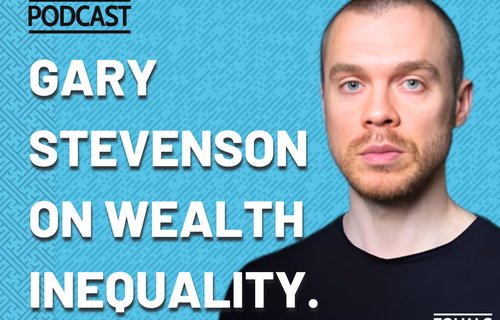
Oxfam podcast Equals has a conversation between our inequality report authors and Gary Stevenson from the YouTube and social media account ‘Gary’s economics’.
Listen on Substack, Apple Podcasts, and Spotify.
Take action
Demand a Wealth Tax now
Ask chancellor Rachel Reeves to tax 2% on wealth over £10m – it could raise £24 billion a year.
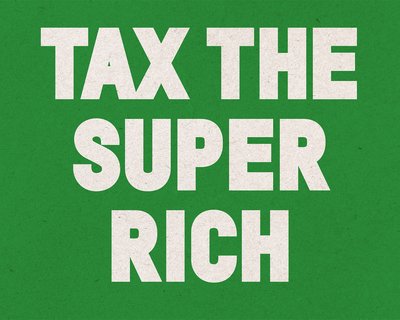
Display a poster
Let people know you want to tax the super-rich and keep the conversation going.
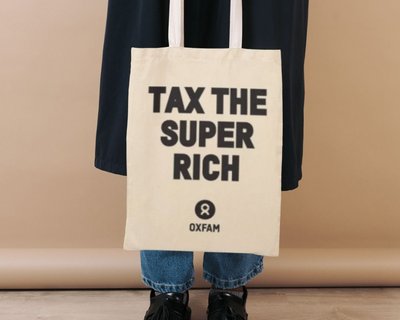
Wear your support
Buy a tote bag and wear the ‘Tax the super rich' message with pride.