Millions displaced as Sudan conflict marks three years

• Published:
• Short URL: https://www.oxfam.org.uk/mc/n72o6c/

As Sudan’s gruelling conflict enters its fourth year, a record number of people have now been displaced by the world’s worst humanitarian and displacement crisis, accelerating hunger and suffering.
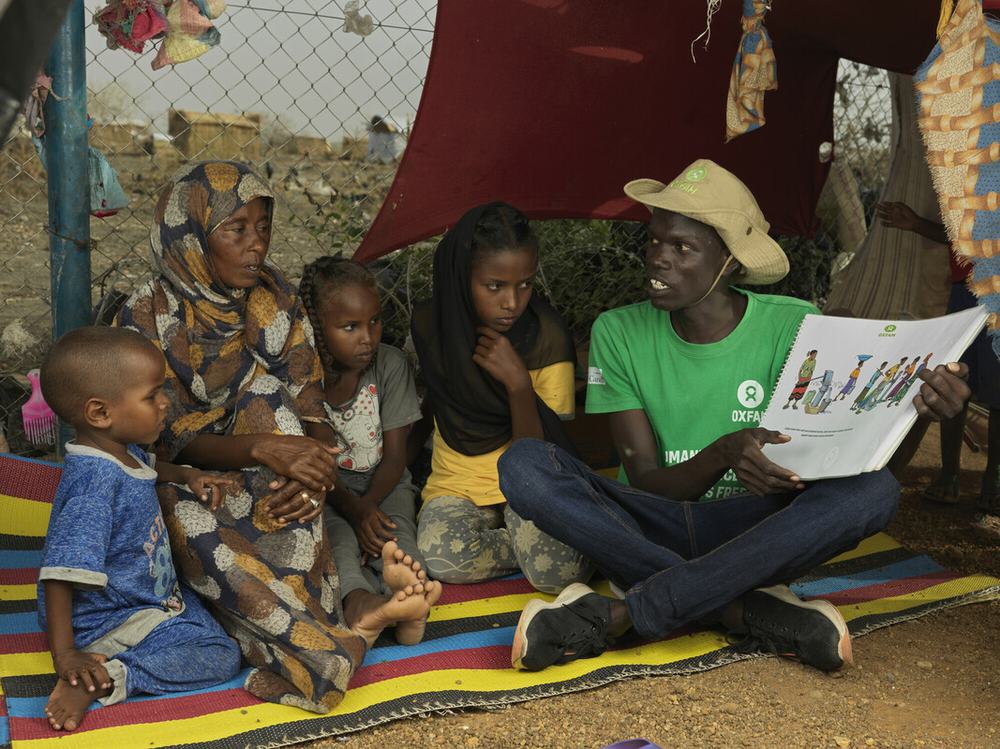
More than 30 million people – over half the population – in Sudan urgently need humanitarian support. Nearly 14 million people have been forced from their homes since the conflict began in April 2023. Almost a third - 4.5 million - fled to neighbouring countries Chad, the Central African Republic, Egypt, Ethiopia, Libya and South Sudan; countries already struggling with under-funded emergencies.

The crisis is compounded by the decimation of lifesaving support from the UN and humanitarian agencies, including Oxfam, who have been forced to either stop or scale back programmes across the region due to funding cuts. Some aid agencies have closed entirely, while those still operating are now able to assist only a fraction of those in need.

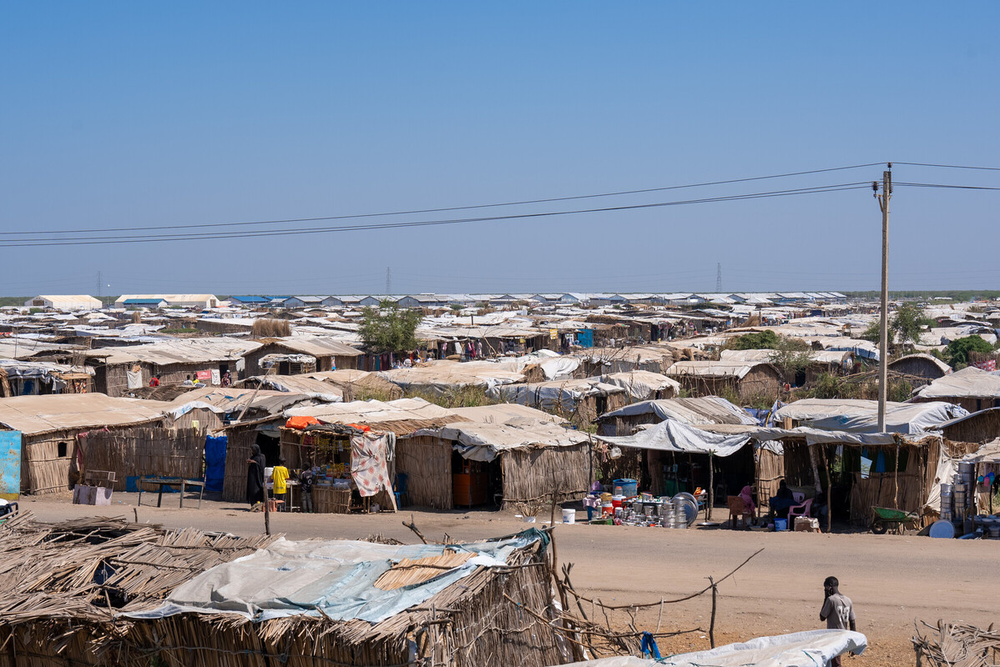
More than 1.3 million people have crossed the border to South Sudan, a country already grappling with hunger and insecurity with over 300,000 displaced by renewed fighting in Jonglei state. In Renk, the main transit centre is now operating at more than four times its capacity.

Photo: Herison Philip Osfaldo/Oxfam

An overhead shot of the tents and shacks that make up the Renk transit center in South Sudan.

Oxfam staff have reported that families are having to sleep out in the open areas as spaces run out. Water and food rations have significantly reduced with families receiving less than half of their monthly food rations while access to clean water has dropped leaving thousands to rely on unsafe water sources. Twenty-six deaths were also reported since January linked to severe malnutrition and shortages of medical supplies.

This is a damning political failure. It is devastating that millions of people are in desperate need across so many countries, at a time when aid cuts have drastically reduced support. It’s completely unacceptable. In Renk, before the funding cuts, Oxfam was supporting over 40,000 people with lifesaving assistance, including water, food and cash assistance. That number has dropped to just over 7,000 people and no longer includes food support. Families are having to survive on five litres of water a day and a latrine that once supported 28 people is now used by over 70, more than double the maximum standard.”

Hamdi, a mother of three who recently arrived in Renk

I lost most of my family to the conflict in Sudan. I walked for days to get to South Sudan but until now I have not managed to get a space for my three children in the transit centre. We had to set up a makeshift home in the open area which is not safe for us all. The food we are getting is not enough but at least we are safe from the war for now.”

Hamdi

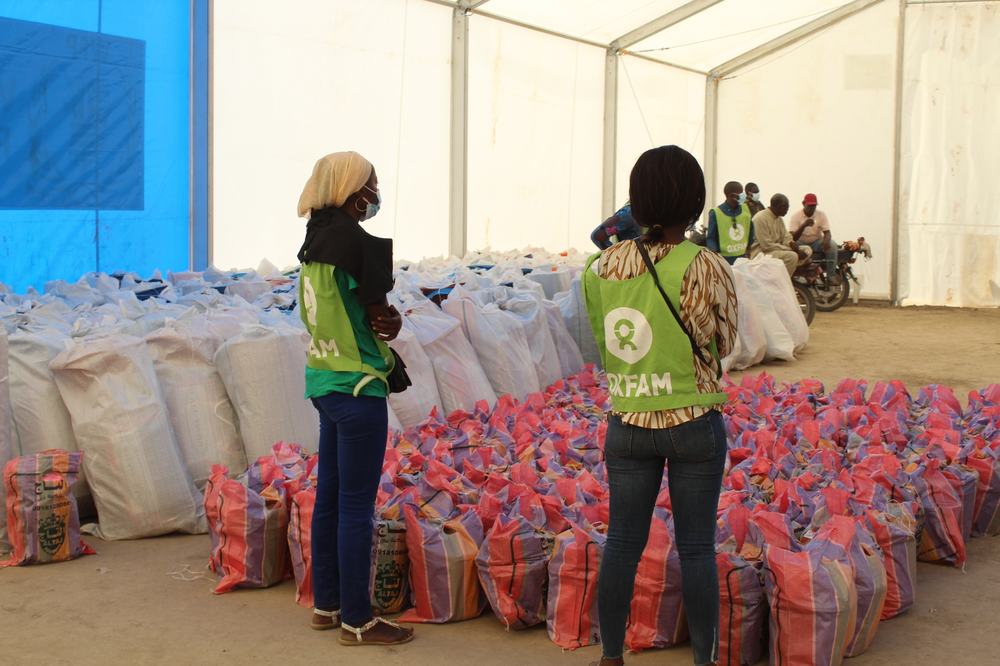
Chad alone has taken in over one million refugees from Sudan - more than in the previous two decades combined - while an estimated 3 million people in the country will need food assistance at the peak of the upcoming lean season from July to September with Sudanese refugees in the eastern province being the hardest hit.

Liga Nassandou/Oxfam

Oxfam staff in a tent in N'djamena, Chad looking at bags of food before distribution to the local community

Yet funding to Chad continues to drop. U.S. contributions to the refugee crisis dropped from $87.5 million in 2024 to $39.9 million in 2025 – covering only 9.8% of requirements in 2025 even as the number of refugees continues to increase, stretching the response.

With development budgets being slashed around the world, UK aid cuts - which are set to be the steepest of any G7 country this year - risk widening the gap between strategic ambitions and actual delivery of necessary and impactful work where it is most needed.

Press contact

For comments, interviews, or information please contact the Oxfam GB Media Team: