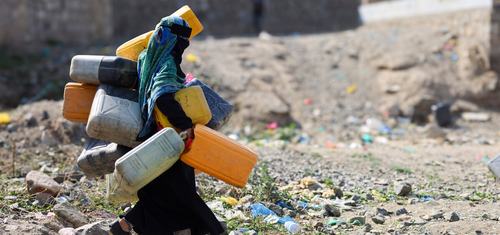
Members of RDC Nepal attending a Policy Revision Workshop in Chandrapur, Nepal funded by Oxfam's Partners Investment Fund.
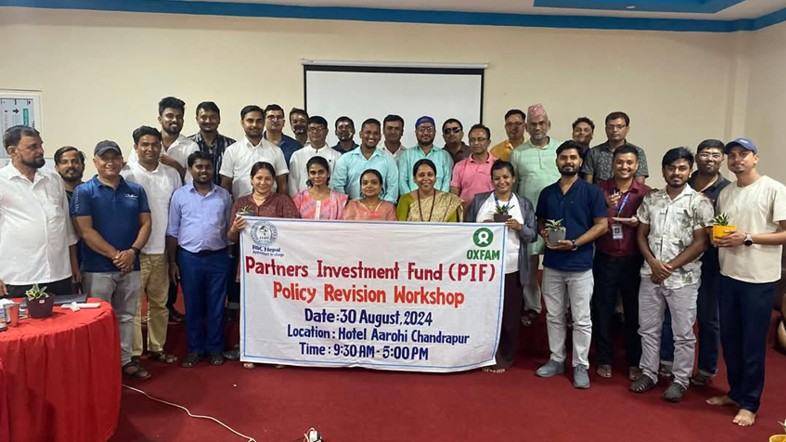
A group of men and women in a hotel function room in Chandrapur, Nepal standing around a white banner promoting the Partners Investment Fund and the Policy Revision Workshop on 30 August 2024.

Why trust-based, flexible funding delivers more effective partnerships

Trust-based, flexible funding is gaining attention as a more effective and respectful way of working with partners. This blog shares what Oxfam learned from the Partners’ Investment Fund, an initiative that tested multi-year, unrestricted funding across five geographic locations: Myanmar; Nepal; occupied Palestinian territory; Yemen and southern Africa.

The experience shows how shifting power, reducing bureaucracy, and trusting partners to lead strengthens civil society and improves programme impact. It also raises important questions about how aid organisations can partner differently to achieve lasting change.

Further findings on how Oxfam put trust-based flexible funding into practice and how trust‑based, flexible funding is changing Oxfam’s partnerships are available.

A different way of funding partnerships

Oxfam set up the Partners’ Investment Fund (PIF) using unrestricted funding from Oxfam GB. Through the PIF experiment, Oxfam tested a different way of working with partners. Across five geographic locations Oxfam country teams provided multi-year, fully flexible funding.

Forty-two partners were provided with flexible funding. They set their own priorities and adapted spending as contexts changed. Reporting requirements were minimal:

  • No bespoke reports were required – existing statutory reports were sufficient – additional reflections were voluntary.
  • Due diligence was tailored rather than standardised.

The PIF approach created the conditions for genuinely trust-based partnerships. The results suggest that trust-based, flexible funding can fundamentally reshape relationships between international NGOs (INGOs) and their partners – shifting power, improving programme quality, and strengthening the long-term sustainability of non-governmental and civil society organisations.

Flexible funding transforms relationships

Across all contexts, Oxfam and its partners reported significant shifts in how they worked together. Removing rigid controls and reporting requirements reduced the implicit mistrust that often underpins traditional funding and partnering models.

From compliance to collaboration

Instead of focusing on compliance – reports, spending rules, and approvals – partners and Oxfam staff engaged in more open, honest and useful conversations about progress, challenges, and impact. Decision-making became more collaborative and, in many cases, genuinely partner led.

Oxfam’s role shifted from controller to supporter. This strengthened relationships and fostered greater solidarity among partners. Organisations shared knowledge, policies, and practices more freely, and began to recognise how much more they could expect from donors – not just financially, but in terms of respect and partnership.

In some cases, partners made decisions collectively, prioritising shared interests over donor-driven agendas.

As one participant noted, Oxfam putting its values into practice strengthened partner visibility, leadership, and long-term sustainability.

Flexible funding shifts power

At its core, flexible funding changes power dynamics. Traditional models concentrate control with donors; flexible funding redistributes that power.

New expectations and freedoms were matched by shared responsibility. Decisions about priorities and spending were partner-led, rather than dictated by the funder. Partnership agreements evolved to reflect this, increasingly recognising partner autonomy and leadership.

Who controls decisions and systems?

Operational norms also changed. Instead of defaulting to INGO policies, partners and Oxfam jointly determined which systems to use, often adopting partners' processes where appropriate. This represents a meaningful shift in where authority and expertise are located.

Partners reported a stronger sense of ownership – flexible funds were seen as “their money,” not an externally owned and controlled resource. This enabled rapid adaptation in changing contexts and exemplary stewardship. In volatile environments such as Gaza and Myanmar, partners redirected funds immediately to respond to crises or meet duty-of-care needs without waiting for approval.

In Nepal, partners formed a consortium to collectively govern funds. They developed shared principles, decision-making criteria, and learning processes, with Oxfam acting primarily as a convenor rather than a director.

Flexible funding reaches organisations others miss

Trust-based, flexible funding enabled partnerships with organisations that traditional models often exclude.

In Zambia, Oxfam supported a grassroots movement of young women without formal legal status or a bank account. Through practical solutions – such as third-party fund management – combined with simplified reporting and trust-based decision-making, a long-term partnership became possible.

The movement delivered a project promoting young women’s political participation, demonstrating how flexibility can unlock new forms of impact.

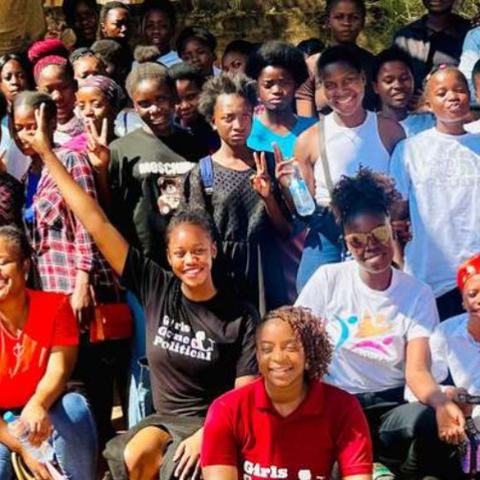
Girls Gone Political

She Votes, She Leads

An initiative implemented by Girls Gone Political (GGP) and funded by Oxfam's Partners' Investment Fund in 2024/25 across 10 provinces in Zambia. She Votes, She Leads was launched to empower young women through civic and voter education. The initiative engaged with over 500 young women from diverse backgrounds across the country.

In the West Bank of the occupied Palestinian territory, flexible funding enabled collaboration with small civil society organisations frequently excluded by stringent due diligence requirements. With the PIF model these organisations could be funded and were able to pursue their own mandates, rather than adopting donor priorities.

Investing in organisational strength, not just projects

A key insight from the PIF experiment is how partners chose to use flexible funding. Many invested in core organisational capacities:

  • governance
  • financial systems
  • staffing
  • digital presence
  • strategy.

These are critical to organisational effectiveness but are often neglected in project-based funding models. Flexible funding allowed partners to address these gaps directly.

Oxfam

How partners used flexible funding

As a result of the PIF experiment, funding functioned not just as project support but as an investment in civil society itself – strengthening the foundations organisations need to operate effectively over time.

Examples of what partners invested in

Yemen

Partner staff received training in video production. These skills became an income stream for their organisation as the trained staff were hired by other organisations to produce content for websites and other visibility products.

Bangladesh

In a forerunner to the PIF experiment a partner in Bangladesh used funds to build financial reserves – initially controversial internally, but ultimately vital for resilience.

Nepal

Partners invested in proposal-writing and donor engagement, with several securing new funding as a result.

Flexible funding improves programme effectiveness

Flexible funding improved programme effectiveness in several ways:

  1. It enabled rapid adaptation, increasing responsiveness and relevance.
  2. It reduced administrative burdens. Time and energy previously spent on compliance, in Oxfam and partner teams, could be redirected to implementation, impact and support.
  3. It allowed organisations to fill critical gaps – such as funding essential staff roles not covered by restricted grants – vastly improving programme quality.
  4. It supported small-scale, community-driven initiatives that fall outside donor priorities but address real needs. These projects delivered impact whilst also building trust and social capital between organisations and communities.

Case study: How flexible funding strengthened Keepers Zambia Foundation

With support from Oxfam’s Partnership Investment Fund (PIF), the Keepers Zambia Foundation (KZF) strengthened its capacity, governance, and visibility.

Investments included:

  • a communication strategy
  • procurement manual
  • risk management framework
  • financial management software
  • and an upgraded website.

Choongo Wycliff, a community based Supervisor Volunteer for Keepers Zambia Foundation in Chawama, is educating the community on hygiene awareness. Credit: Loliwe Phiri / Oxfam

The wider impact of flexible funding

PIF money also helped staff to build skills in humanitarian response and climate justice.

In January 2024, Oxfam and Keepers Zambia Foundation provided support with non-food items in response to the cholera outbreak affecting the marginalized community in Lusaka, Zambia.

As a result of receiving PIF money, KZF's income grew from USD 250,000 to USD 650,000, partnerships strengthened, and financial sustainability improved. The organisation is now widely recognised by INGOs, government, and local NGOs. Crucially, it was the flexibility – not the size – of the funding that enabled this progress.

Why flexible funding is a different way of working

Oxfam’s experiment shows that flexible funding is not just a different financing mechanism – it is a fundamentally different way of working. By embedding trust, it transforms relationships, redistributes power, and enables more responsive, effective, and sustainable programming.

It ensures partners lead. It strengthens organisations from within, and it reaches actors and initiatives that traditional funding and partnering models often miss.

What happens next?

The challenge now is how to scale and sustain this approach. But the evidence is clear: when trust is made tangible through multi-year, flexible funding, appropriate due diligence and reporting, partnerships – and their impact – can be fundamentally transformed.

About the Partner's Investment Fund

Oxfam GB allocated £1.5 million of unrestricted funding across five geographic locations, each receiving £300,000 over three years:

  • Myanmar
  • Nepal
  • Yemen
  • OPT
  • Southern Africa (Malawi, Mozambique, Zambia and Zimbabwe)

These were distributed as grants to 42 partners.