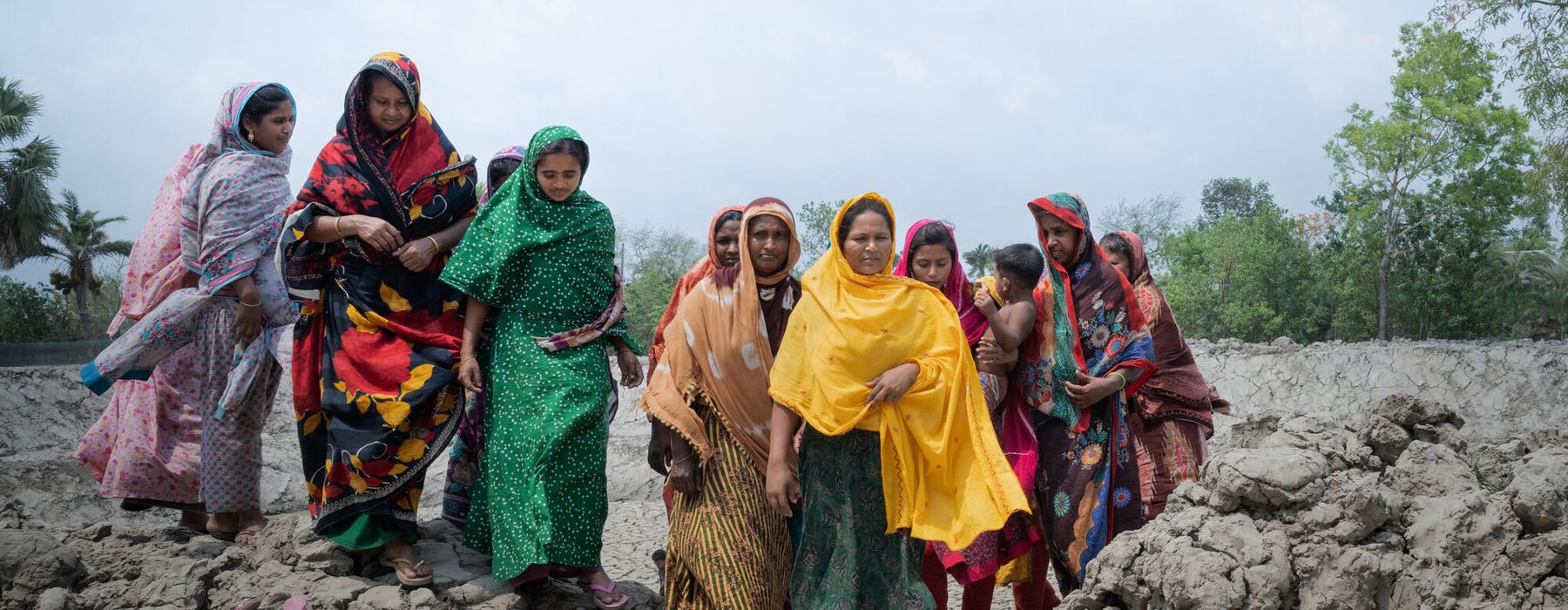
Fabeha Monir/Oxfam
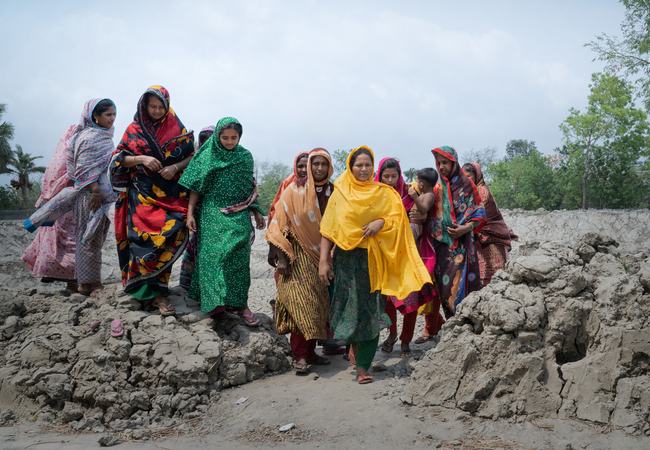
Unpaid care, climate change and loss and damage in Bangladesh
Alex Bush
25 Jun, 2026 / 3 mins read time
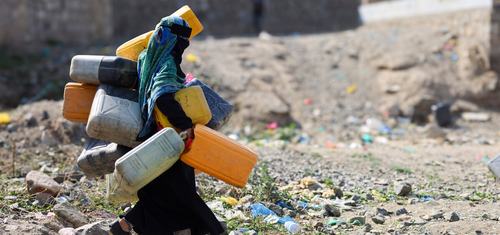
Around the world, women shoulder three-quarters of unpaid care workloads, providing care for children, older and disabled people, and carrying out domestic work like cooking and cleaning. This trend is even more pronounced in Bangladesh, where women carry out seven times more unpaid care and domestic work (UCDW) than men. A research report by Oxfam explores how these workloads are impacted by the climate and what this means for loss and damage responses.
The impact of climate change
Alex Bush / Oxfam
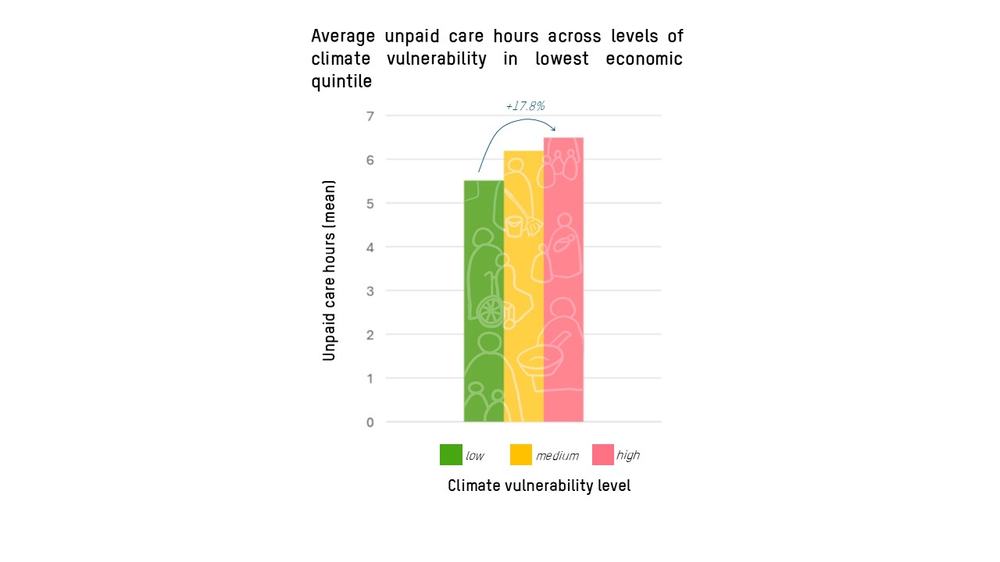
Women's average unpaid care hours are higher in high climate vulnerability areas.
Loss and damage – a response to climate change
Failure to consider impacts on unpaid care workloads
Alex Bush / Oxfam
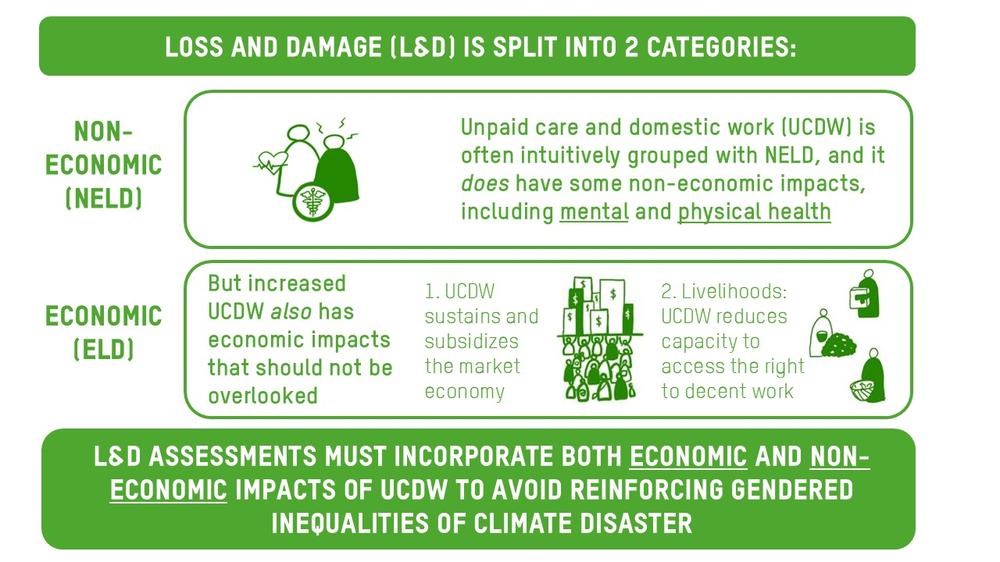
Loss and Damage assessments must incorporate both economic and non-economic impacts of unpaid care and domestic work (UCDW) to avoid reinforcing gendered inequalities of climate disaster.