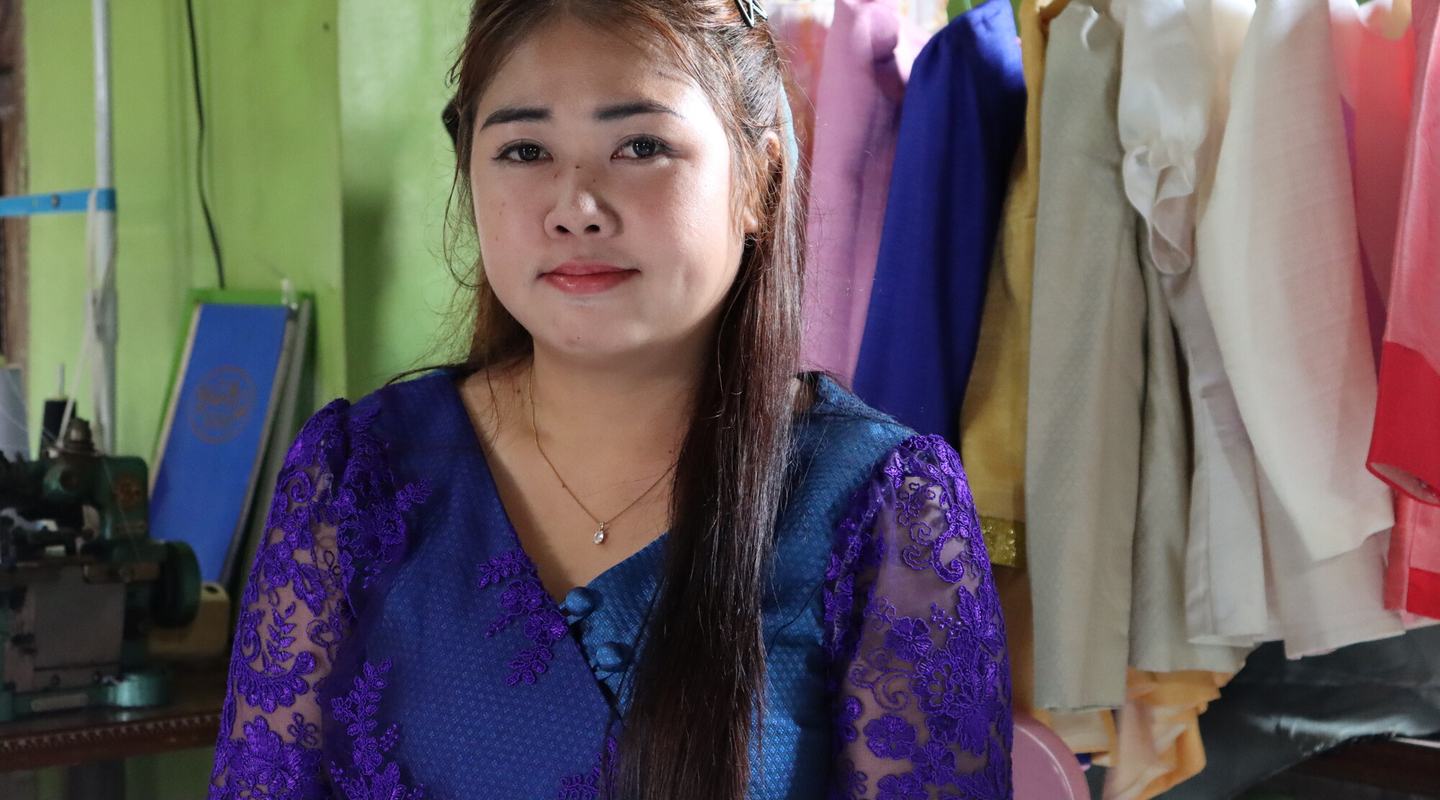
Xingxa in her tailoring shop. Credit: Rachel Schaevitz / Oxfam
Stories of hope
Stitching new futures in Laos
In rural Laos, rice farming is the primary source of income for many communities.
Where work is structured around physically demanding outdoor labour with few accessible alternatives, disabled people can find themselves excluded from economic participation.
Within this context, Xingxa has built a thriving tailoring business to fashion a new future for herself. And she's showing others in her community that they can do the same.
Rachel Schaevitz/Oxfam
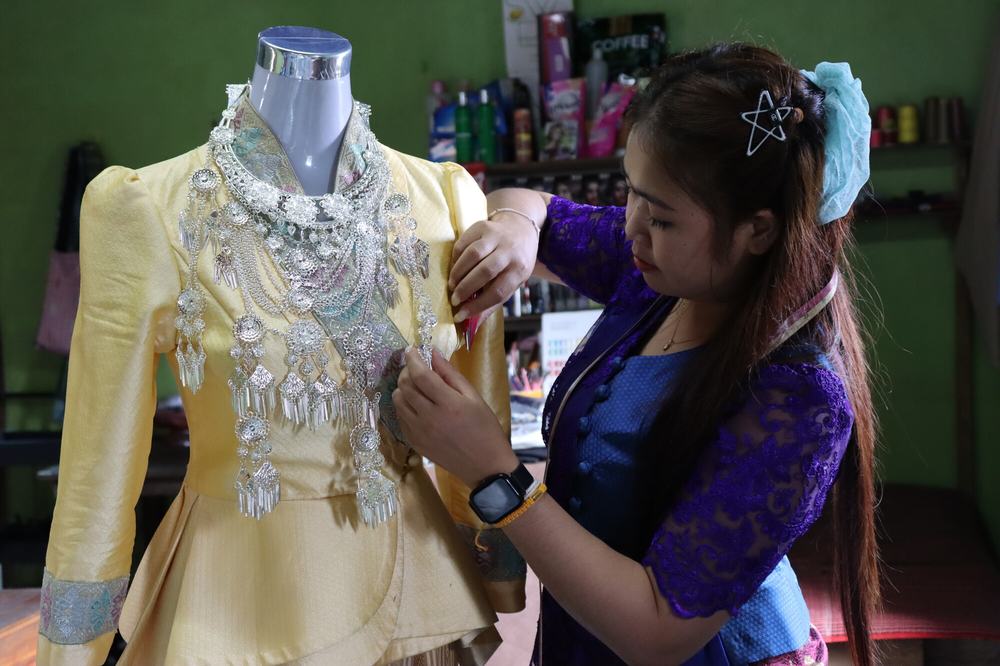
Xingxa works on a wedding dress she has made.
Xingxa's journey to entrepreneurship
Following a childhood injury, Xingxa has a physical disability that makes it difficult to walk.
Growing up in a family who relied on rice farming as their sole source of income, Xingxa had to walk miles each day as there were no alternative ways to earn a living.
After teaching herself to sew, Xingxa started a small hand-sewing business to earn additional income to support her family. Her designs are inspired by what she likes, and she's also inspired by other outfits that she sees in her community.
“Before the project, there were many difficulties. My livelihood, like that of everyone else in the village, was farming, and it was quite challenging. I worked growing rice like the other villagers.”
Xingxa in Namyot Village, Laos.
When community leaders in her village partnered with Lao Federation of Trade Unions and Oxfam to provide grants for small businesses, Xingxa was nominated to apply. She was asked what she needed to build her business, and received a sewing machine and tailoring supplies, which enabled her to pursue tailoring full time.
“After I received support from the project and got the sewing equipment, I stopped working in the fields, then I was able to start sewing.”
Xingxa in Laos.
Rachel Schaevitz/Oxfam
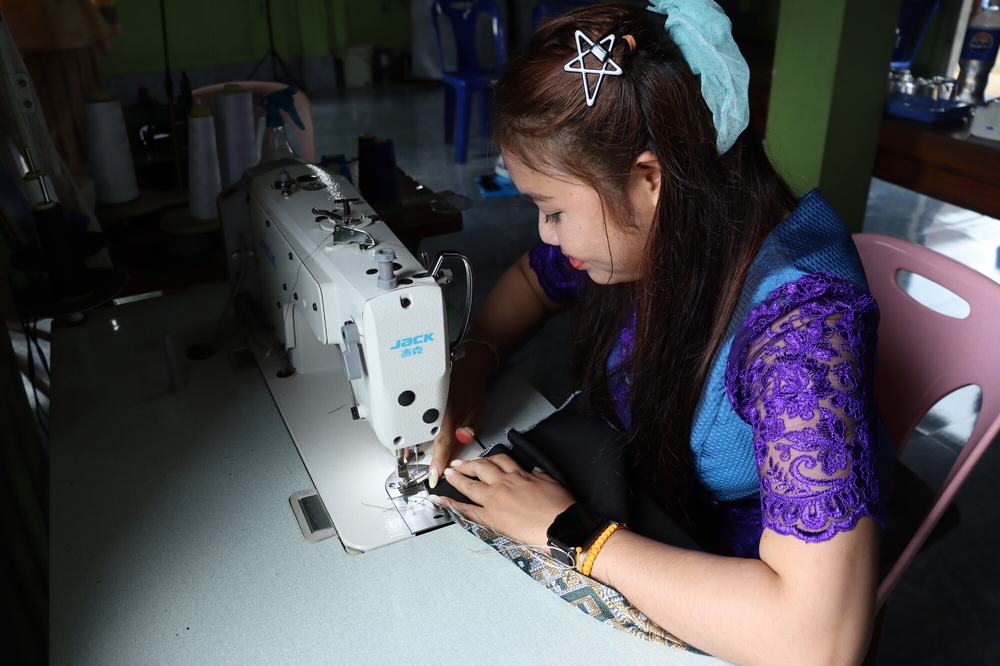
Xingxa works on her sewing machine, which she received through Oxfam's Small Business Grant.
A thriving business
Xingxa's business now offers a range of services in addition to tailoring, including gel manicures and hair washing. This strategy means that she can continue earning an independent income during periods where there is less demand for clothing.
Her tailoring shop has become a community space, and Xingxa's entrepreneurship has led other women in the community to consider setting up businesses of their own.
Working at her own pace has allowed Xingxa to manage her health while still contributing steadily to her family’s income.
Earning her own income has strengthened her sense of independence and given her greater control over her own future. Despite working on wedding dresses for others, she feels no need to get married herself.
“I feel very happy that I’m able to do this, that I’m able to do this by myself. Also, I’m able to do this at my own pace, nobody is pressuring me.”
Xingxa, on building her tailoring business.
The bigger picture
By supporting small businesses, rural communities are able to thrive on their own terms. With more ways to earn an income, communities are more able to respond to climate shocks and recover afterwards.
This project has now reached over 75,000 people across 16 districts in Laos, with 305 women-led groups being supported with small business grants and skills training. Community development funds have been set up in 109 villages.
Discover more
![A man sitting outside, wearing a t-shirt saying “forum disabilitas desa Taman Ayu” [translation: Taman Ayu Village Disability Forum]](https://staticassets.oxfam.org.uk/oxfamgb-production/images/Oxfam_InuruID_379735_Indonesia_202.2e16d0ba.fill-400x320.jpg)
Community Disaster Resilience
Mohidin is centring disabled people in his village's disaster response team.
Supporting queer entrepreneurs
The Queerpreneurs Expo creates a safe space and community support for LGBTQIA+ entrepreneurs in Fiji.
Donate to Oxfam
Give today for a more equal future. Together, we can end poverty.