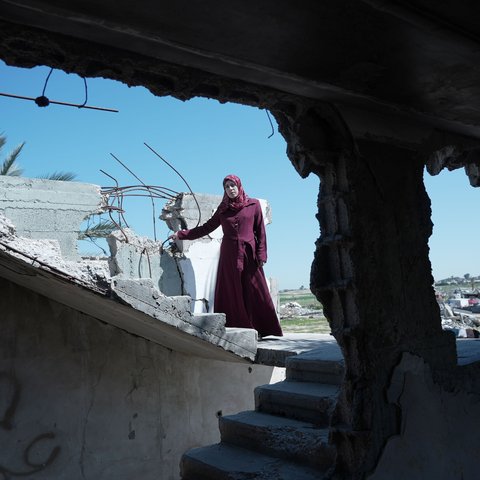
Running out of options: Yemen's families face a dangerous tipping point as hunger deepens and resilience erodes

Published on

Yemen is facing a dangerous new deterioration in hunger, with millions of people being pushed deeper into crisis just as humanitarian funding is collapsing and large parts of the country remain unmonitored. More than a decade of conflict, displacement, economic decline, and repeated shocks have pushed the resilience of Yemeni families beyond its absolute limits. People are not running out of resilience; they are running out of food, water, healthcare, and support.

The scale of this crisis is staggering. Right now, over 53 per cent of the total population, which is 18 million people, are estimated to be experiencing severe food insecurity. This includes 2.2 million children under five and 1.3 million pregnant and breastfeeding women who are acutely malnourished. Despite these catastrophic needs, the 2026 humanitarian response plan is currently less than 15 per cent funded. Because of this massive shortfall, food assistance has been sharply cut and will soon reach only 1.2 million people with a mere fraction of a standard ration.

Recent Integrated Food Security Phase Classification (IPC) data for Internationally Recognized Government (IRG) areas reveal that nearly 5 million people experienced high levels of acute hunger between March and May, with 1.4 million enduring deep emergency conditions. However, these figures are a warning sign from only the areas currently analysed. They do not capture the full scale of suffering across Yemen. Humanitarian organizations operating in northern Yemen consistently report that humanitarian needs are massive and that the situation is rapidly deteriorating. However, the lack of recent, comprehensive statistics and reliable data remains a major barrier to clearly demonstrating the scale and severity of needs.
The international community must not treat this as a localized crisis, but as a national deterioration.”

/

These data gaps translate into a severe operational reality on the ground. Recent mapping by humanitarian organizations found that out of 68 priority districts where populations suffer from both emergency hunger and extreme multi-sector needs, 31 districts remain entirely uncovered by active humanitarian programming. 40 per cent of health facilities across the country are non-functional or only partially functional, drastically reducing malnutrition screening and treatment capacities. Critical gaps in coverage across districts with severe acute needs remain a stark reality.

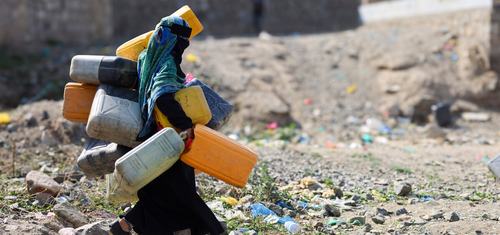
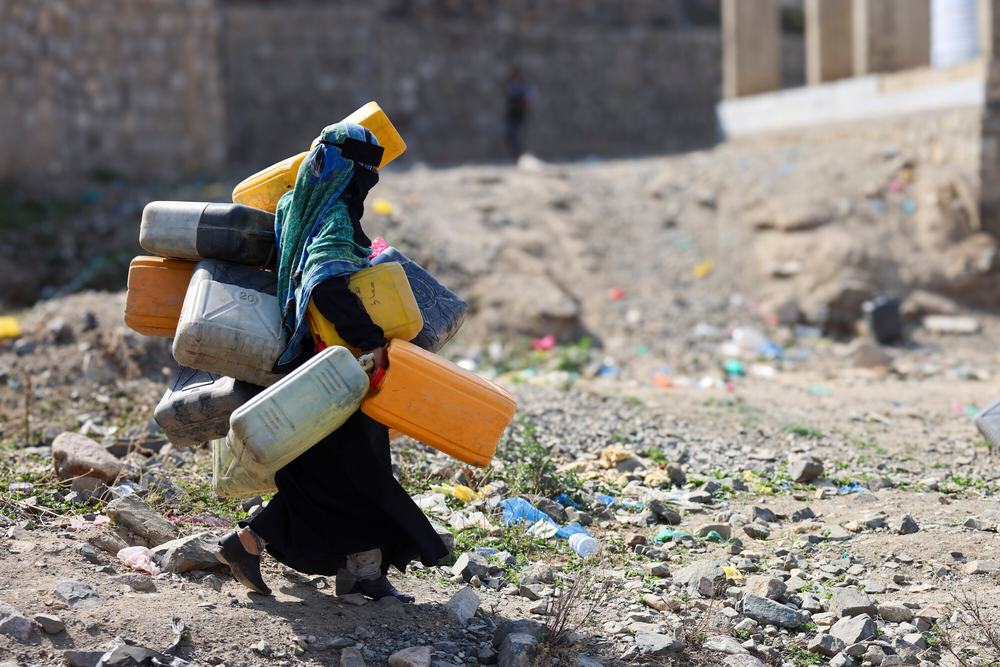
To survive, families are being forced into destructive, irreversible choices. They are selling off essential household assets, productive agricultural land, and homes, while skipping meals and taking children out of school to work. Women and girls are disproportionately impacted due to systemic inequalities that exacerbate food insecurity and inadequate nutrition. Women and girls tend to prioritize the needs of other household members, particularly in times of scarcity, and reduce their own food intake. As a result, women and girls may eat a lower quantity or poorer quality food, exposing them to greater risk of hunger and malnutrition. Furthermore, acute water scarcity, which is directly exacerbated by rising fuel costs that drive up the price of commercial water trucking, forces households to choose daily between safe water and basic food. The physical burden of collecting this water falls heavily on women and girls.

Ahmed Albasha/Oxfam

Taiz City, Yemen

Yemen remains highly import-dependent, leaving it dangerously vulnerable to price volatility in global markets. The recent escalation of conflict in the Middle East and the wider region has severely disrupted maritime shipping lanes and increased freight insurance costs, directly driving up the prices of essential food and fuel imports. These macroeconomic shocks are compounded by erratic climate events, including localized flash floods and pest outbreaks in early 2026 that have ravaged domestic crop yields just as international aid hits an all-time low.

We, the undersigned humanitarian organizations operating in Yemen, confirm that the humanitarian community possesses the ready capacity and local networks to immediately scale up operations into underserved and uncovered areas. Our recent joint operational mapping confirms that almost all active humanitarian partners are already positioned on the ground. However, the critical shortage of funding remains a significant barrier, alongside overlapping access and administrative constraints, preventing us from stepping into these 31 uncovered districts.

The world cannot say it did not see this coming. The warning signs are already here. Children are malnourished, food assistance is being cut, health services are collapsing, and millions of families are being left with no safety net. We are running out of time to prevent total collapse unless action is taken now.”

/

Our urgent demands:

To International Donors: Urgently fund the Yemen humanitarian response with flexible, multi-year funding. This food security assistance must be integrated with nutrition, water, sanitation and hygiene (WASH), health, livelihoods, and multi-purpose cash assistance to maximize impact.

To International Donors (Climate Action): Donors must urgently enhance climate preparedness and early warning systems. This includes funding the pre-positioning of emergency supplies, reinforcing displaced-person (IDP) shelters, and providing targeted agricultural support to protect remaining crops and livestock during forecasted seasonal floods.

To Parties to the Conflict: Guarantee safe, unhindered humanitarian access and protect aid workers so that life-saving assistance can safely reach the uncovered districts.

Signatory organisations

Over 65 international and national organisations, including Oxfam, Save the Children, International Rescue Committee and Norwegian Refugee Council

Press contact

For comments, interviews, or information please contact the Oxfam GB Media Team: