Donate now to help survivors in Nepal affected by the devastating flash floods.
Key points
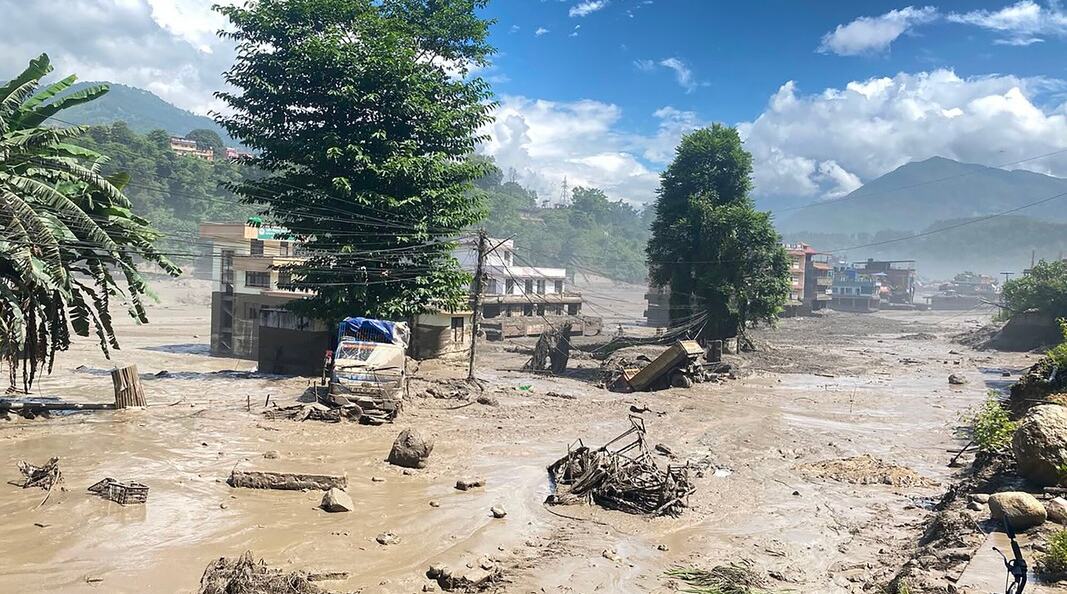
A major flash flood struck Nepal's Rasuwa District in August 2026 washing away villages and infrastructure project sites while damaging roads, bridges and hydropower infrastructure.
Over 1,000 people lost their lives and thousands of people remain missing or out of contact.
What's happening in Nepal?
At approximately 5.40am on Tuesday 26th August 2026 a major flash flood struck Nepal's Rasuwa District severely affecting Syapru Besi and Timure near the Tibet border.
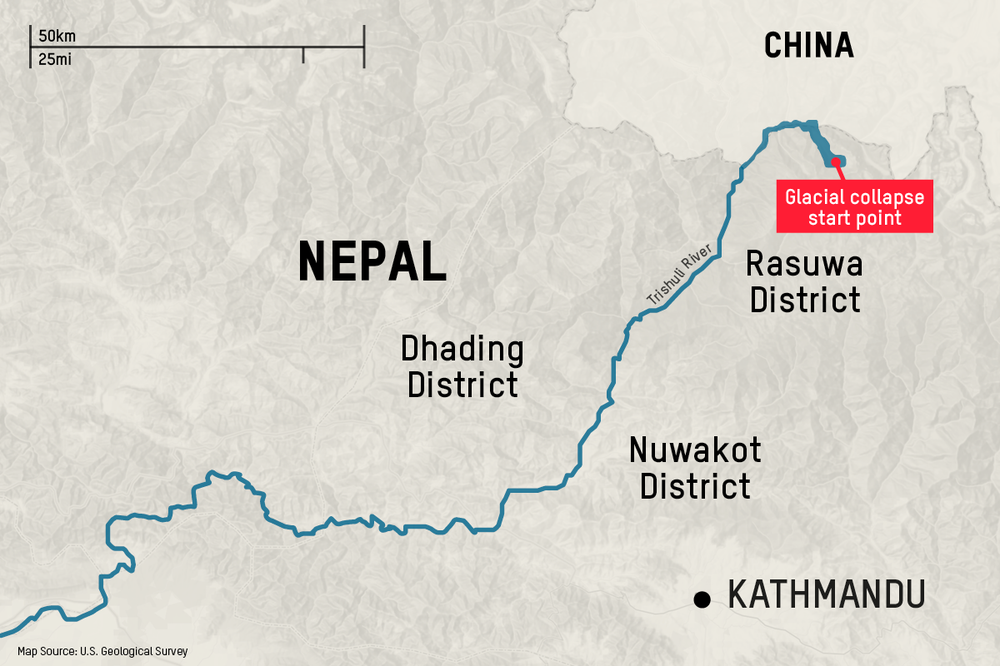
Flood water and debris surged through the Bhote Koshi river in Tibet causing widespread impact downstream to communities along the Nepali Trishuli river.
The death toll continued to rise and thousands of people lost their lives. Thousands of people remain missing or out of contact.
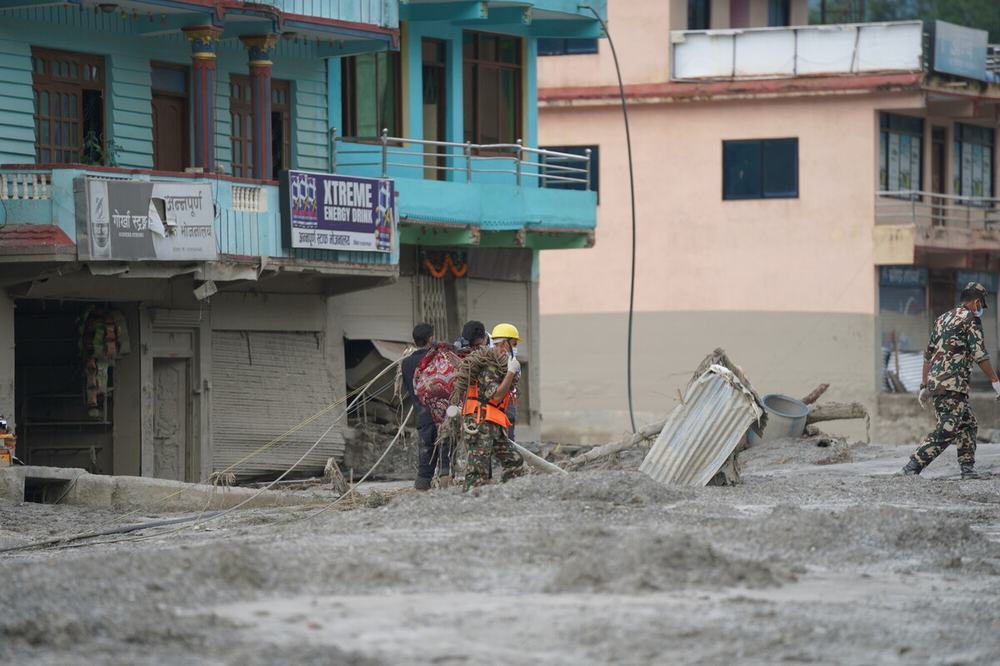
Despite access constraints caused by the flash floods and the difficult terrain, search and rescue operations continue by road and helicopter. More than 12,000 people have been rescued so far.
Nepal Photo Library
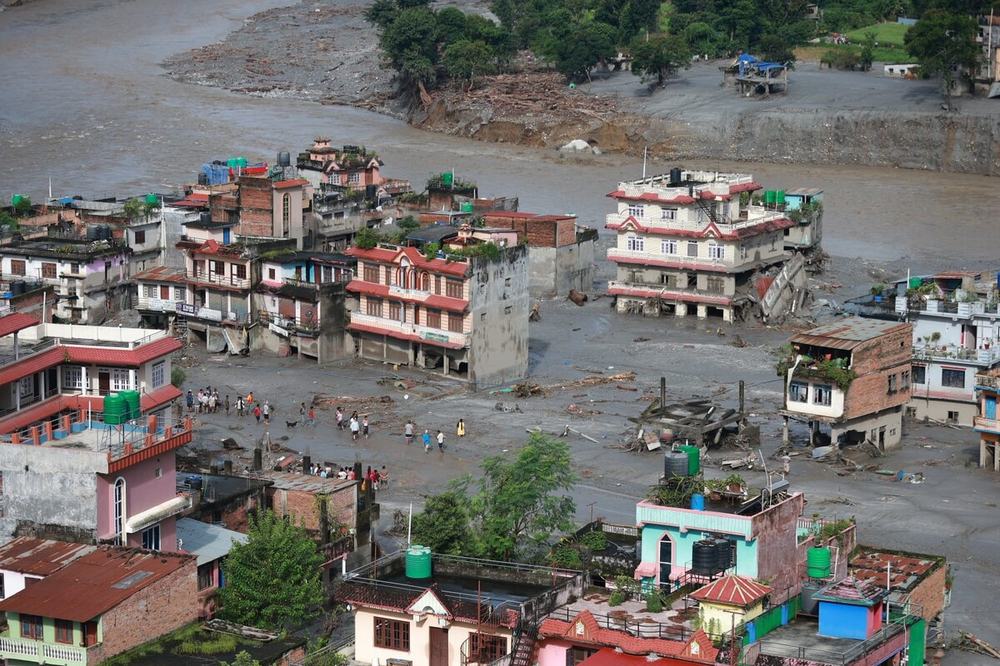
The morning scene in Devighat, Nuwakot District, Nepal reveals the aftermath of severe flooding. Residents are trying to salvage usable belongings from their homes damaged by the floods.
Some villages and roads along the Bhote Koshi river in Tibet have been washed away and there has been significant damage to bridges, market areas and critical infrastructure.
Communities living along the riverbanks downstream on the Trishuli river in Nepal have been urged to move to safer locations. Approximately 90,000 people have been displaced.
Oxfam GB
The glacial collapse occurred in the north which sent flood water surging downstream affecting communities along the riverbanks including the districts of Rasuwa, Nuwakot and Dhading.
The Government of Nepal declared Rasuwa, Nuwakot and Dhading disaster-hit zones.
A secondary flood wave struck Nepal on Sunday 30th August, compounding the devastation in the Dhading district. A major section of the vital Prithvi Highway collapsed due to a severe landslide and has cut off the main road link to the capital, Kathmandu.
It is estimated that anywhere between 50,000 to 157,000 people including children and vulnerable groups have been directly or indirectly impacted by the disaster. Many schools in the flood-devastated areas have been destroyed or damaged putting children's education at risk.
Nepal Photo Library
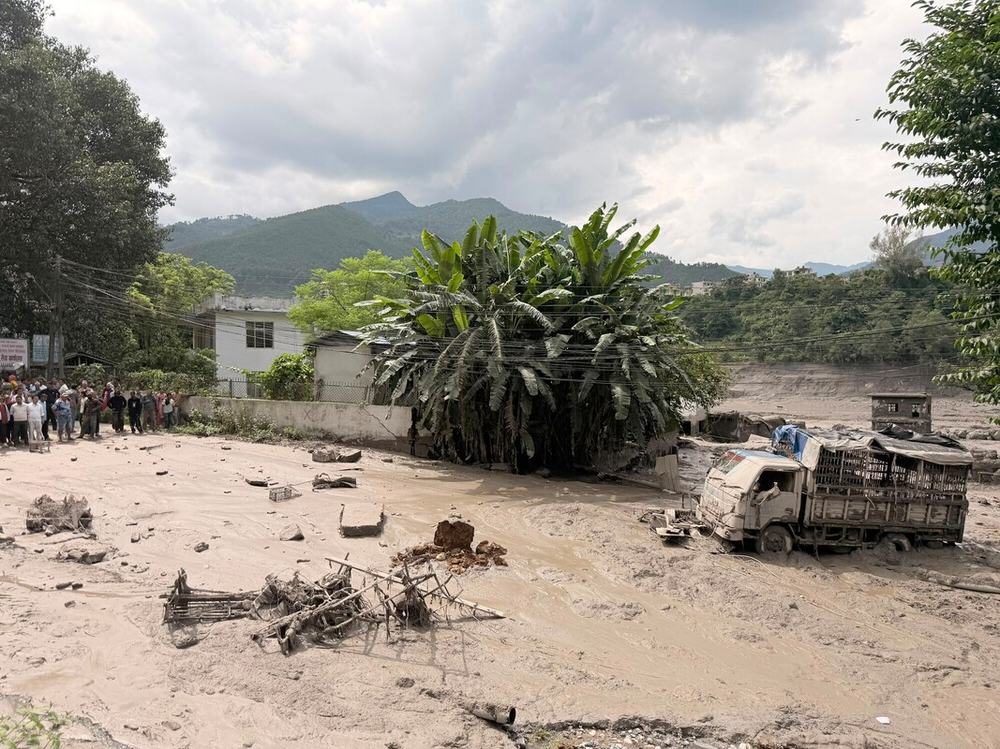
Dhungebazar, that lies in the banks of Trishuli River in Nuwakot district, Nepal has suffered extensive damage due to the flood, which has destroyed numerous houses and vehicles.
What caused the floods in Nepal?
Nepal is a vulnerable country in terms of natural disasters and earthquakes as it lies in one of the most seismically active regions in the world. Landslides and flooding is a recurring humanitarian and economic crisis for the country.
Accelerating climate change is compounding these vulnerabilities.
The flash floods that caused widespread devastation was caused by a major glacial-collapse event near the Nepal-China border. Debris plunged into the river below causing the major surge downstream.
Further flooding continues to be a risk.
Aryan Dhimal/Oxfam
Search and rescue teams are operating in the affected regions in Nepal after the major flash flood that hit on 26th August 2026.
How is Oxfam responding in Nepal?
Oxfam in Nepal has mobilised resources and partners to support the emergency response. Oxfam continues to monitor the situation and is in contact with our partners on the ground to support the humanitarian needs.
Water systems have been contaminated and thousands of people have been forced to leave their homes. Priorities include:
water, sanitation and hygiene (WASH)
food
kitchen items
protection and shelter
lighting equipment
Oxfam and partners have supplied emergency hygiene kits and water purification solutions to hundreds of households in the hardest hit Rasuwa district.
Temporary shelters and more emergency WASH and hygiene kits are being distributed through co-ordination with local partners.
How you can help the people of Nepal
Oxfam's Nepal Floods Appeal is supporting communities in the most affected areas including Dhading and Nuwakot districts and plans to support 2,000 of the most vulnerable affected households.
Please donate what you can today.
Your donation will help Oxfam and our longstanding partners in Nepal to continue delivering clean water, food and critical supplies to people of the affected areas.
Nepal Floods Appeal
Donate now to support communities affected by the floods in Nepal.
How we spend your donation
For every £1 you donate to this emergency appeal, we will allocate 9p of your donation to cover general support and running costs.
There is a small chance that we will raise more money than is needed for this appeal. If this happens, we’ll spend any additional funds on other Oxfam projects – wherever the need is greatest.