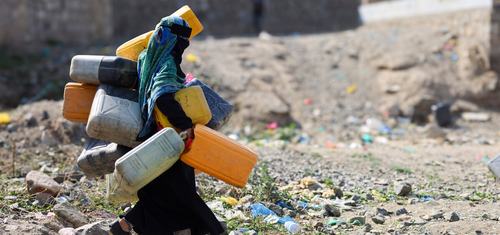
Oxfam partner SKS supports disaster risk reduction projects in Bangladesh. Credit: Elizabeth Stevens/Oxfam
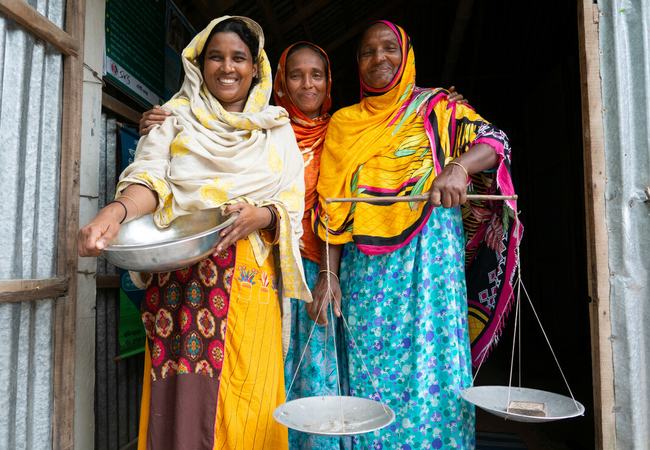
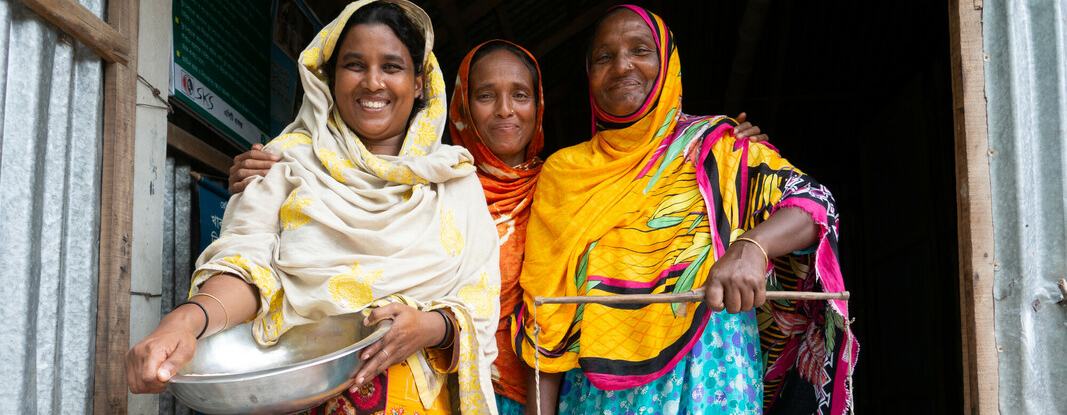
Three women standing in the doorway of their local foodbank in South Gabindi, Bangladesh. The woman on the left is holding a large metal bowl and the woman on the right is holding a large set of balance scales.

Localization (R)evolution: the evolution of local leadership

Namalie Jayasinghe

10 Aug, 2026 / 4 mins read time

This blog introduces a new series, Localization (R)evolution, that reflects on the achievements, challenges and debates that have shaped local humanitarian leadership and locally led development since 2016. Here we highlight some of the key themes explored so far, from funding cuts and women's leadership to refugee-led action and Global South perspectives.

Local organisations are leading change in humanitarian response

Local and national organizations are responding to challenges every day.

  • A woman-led organization supports communities after disaster in Indonesia.
  • Refugee leadership informs decisions around peace and security in Africa.
  • A Global South network calls for a fundamental mindset shift.

Yet most still remain on the sidelines.

Has localization delivered since the World Humanitarian Summit?

Ten years ago, the World Humanitarian Summit challenged the aid sector to move towards localization ie as local as possible, as international as necessary.

As of 2026, the conversation on localization remains as contested as ever. We still find that power sits largely with international institutions, while local and national organizations – particularly women-led, refugee-led, and marginalized-group-led actors – often remain unrecognized despite being first responders and agents of long-term, sustainable change.

Why Oxfam launched the Localization (R)evolution series

In 2026, Oxfam launched the Localization (R)evolution blog series. Why (R)evolution? Because we know that such a change towards localization will not evolve gradually on its own; we need a fundamental transformation of the system as those in power have often shown they are not willing or able to relinquish power.

We have been posting a series of reflections on the achievements and frustrations shaping local humanitarian leadership and locally led development over the past decade.

What have we learned so far?

Funding cuts are putting local humanitarian action at risk

We cannot talk about localization without recognizing the moment we are in.

Daryl Grisgraber of Oxfam speaks on the catastrophic impact of the U.S. government’s 2025 funding cuts which forced many local NGOs to suspend or close operations.

The key to success in localization is a critical mass of humanitarians who speak with one voice and who do not accept that the new funding reality makes change too difficult.”

Daryl Grisgraber stresses the importance of solidarity.

Progress since the Grand Bargain – and the challenges ahead

The series acknowledges that we have made progress since 2016, starting to learn what works and what isn’t working.

Oxfam’s Hannah Cooper reviews progress of the Grand Bargain since 2016, and finds that while the move towards localization has been slow and uneven, the Grand Bargain shifted what 'success' is meant to look like in humanitarian response. However, she notes the need for vigilance, warning that “as the humanitarian system faces unprecedented pressures, the risk is not only stagnation, but regression” on localization.

Elizabeth Stevens/Oxfam

Oxfam and partner SIKAT provided training sessions on mangrove reforestation to women’s community groups in the Philippines.

Women's leadership strengthens community resilience

At a time when women’s rights and gender justice are under attack as many countries have increasingly repressive governments, committing to feminist leadership in localization across the prevention-response-recovery spectrum of humanitarian action is essential.

Research by Oxfam and Notre Dame states this call: we must hold the line and stand with grassroots women leaders as they strengthen community resilience and fight this backlash.

The importance of women’s leadership is amplified by Flower Aceh, a women-led organization in Indonesia. In this post by the organization’s leader, Riswati, she challenges the persistent tendency of the humanitarian system to treat local women’s organizations as subcontracted implementers rather than strategic leaders.

When local women leaders are trusted to lead recovery, humanitarian action can move away from top-down approaches, strengthen community resilience, and support people to shape their own futures.”

Riswati, Executive Director at Flower Aceh

Refugee-led and Global South perspectives must be heard

An exciting part of the series has been hearing perspectives that are often absent from mainstream debates.

Oxfam’s Abbas Kigozi makes the case that refugee-led organizations deserve a far more central role in shaping humanitarian policy. He also argues that regional institutions are the overlooked bridge between global commitments and local action, sharing “if localization is about shifting power closer to affected communities, then regional mechanisms deserve far more attention.”

Meanwhile, Vijayalakshmi Viswanathan of NEAR shares insights from NEAR’s flagship research report on building more locally led aid ecosystems that are led by Global South civil society and governmental actors.

She concludes with a compelling reflection: “Walking a different path will require sacrifices and difficult decisions, but also an ability to dream. In the words of a community philanthropist, ‘the new systems must be built from the heart, as well as the head.’”

Why localization matters more than ever

These pieces reveal a common thread: localization leads to better support of communities, can be more inclusive of missing voices, and that additional transformative efforts towards change are needed, now more than ever.

Key questions for the future of locally led aid

Over the coming months we will be exploring some key topics:

  • What happens when local actors are able to lead flexible funding mechanisms?
  • What do local government leaders have to say in this era of hyper-prioritization of aid?
  • How can localization become more inclusive of LGBTQIA+ organizations and other communities whose voices remain underrepresented?

And so much more!

About the Localization (R)evolution series

The Localization (R)evolution series is a space for reflection on the achievements, challenges and debates that have shaped local humanitarian leadership and locally led development since 2016.

At a time of escalating crises, growing inequality and shrinking humanitarian funding, the series explores why gradual reform is not enough. Instead, it makes the case for transformational change that shifts power, resources and decision-making to local and national actors.

Through contributions from Oxfam colleagues, partners, advocates and allies, the series examines what is at stake for localization in today's political and funding landscape, and why locally led change remains essential for a more effective, accountable and sustainable humanitarian system.

About the author

Namalie Jayasinghe is a Senior Researcher at Oxfam America, specializing in research on humanitarian action, localization, and gender justice.