ILO / Ship to Shore Rights Project

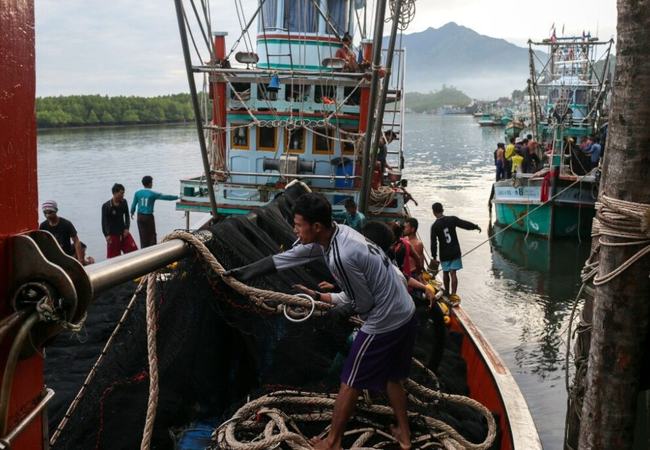
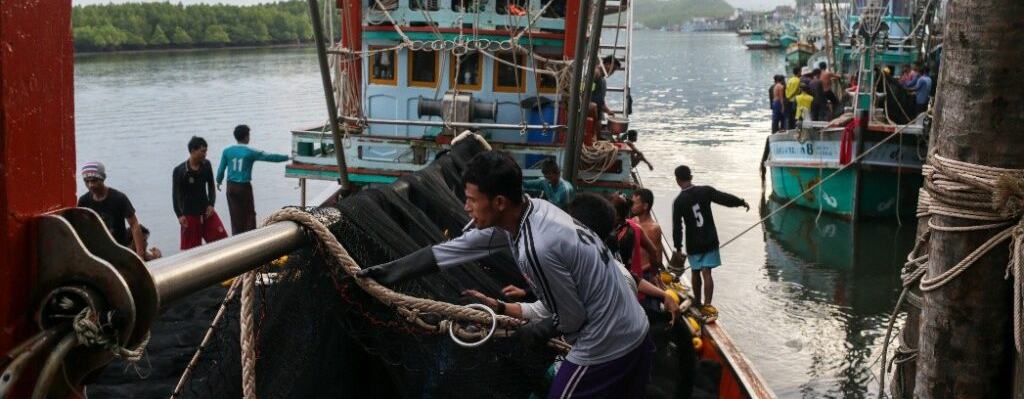
Fishing boats in a port. A man with a cigarette in his mouth is pulling on a thick piece of rope on board one of the boats.

Seafood supply chain transparency: why businesses should publish their fishing vessel lists

Ashley Aarons

24 Jul, 2025 / 6 mins read time

The global seafood industry is one of the riskiest when it comes to human rights. That’s why it's so welcome that a few firms are leading the way in being much more transparent about who caught the fish they sell, says Ashley Aarons.

Human rights risks in the seafood industry

Was the tuna in your sandwich caught using forced labour? Human rights abuses in the fishing and seafood sector have been well documented by Oxfam and others and it remains one of the riskiest industries for such abuses. Businesses need to put in place thorough human rights and environmental due diligence (HREDD) processes to address such risks.

A few businesses, such as Asda, Bolton and Hy-Vee, have begun using a powerful tool as part of their HREDD to tackle these abuses – transparency! Specifically, they started sharing exactly where the fish came from, right down to the precise boat that caught it.

This blog looks at how and why they are doing this. Vessel transparency offers many benefits, including being a comparatively low-cost tool to strengthen HREDD specifically for fishing vessels where risks are the highest. This in turn benefits businesses. The blog then busts the myths holding back other businesses from vessel transparency and calls on more businesses to follow suit.

Why supply chain transparency matters

Transparency is a vital part of business HREDD. It is needed to allow rightsholders, such as fishing vessel workers, to know that companies connected to them are identifying and addressing risks and violations. It allows other stakeholders, such as NGOs, to hold businesses accountable and to give constructive feedback.

It is encouraging to see more businesses publishing their human rights policies, assessments and action plans. However, progress has been slower when it comes to transparency around supply chain actors.

Seafood is falling behind other industries

While other sectors, notably the textile sector following the 2013 Rana Plaza disaster, have seen progress, seafood has lagged far behind. For instance, while Nestle publishes the names of its suppliers for most commodities, for seafood it only discloses fishing zones.

More broadly, although it is encouraging that some businesses have started to publish their tier 1 suppliers – and with support from Ocean Disclosure Project (ODP), provide greater insight into where in the oceans they source from, name the fishing vessels they buy from, where human rights risks are highest.

Which companies are publishing fishing vessel lists?

Three companies have led the way in publishing the vessels they source from on an annual basis:

  • UK supermarket Asda
  • US supermarket Hy-Vee
  • Italian tuna company Bolton.

For the fourth consecutive year, Hy-Vee Inc. and its wholly-owned distribution subsidiary, Perishable Distributors of Iowa (PDI), have collaborated with FishWise, a non-profit sustainable seafood consultancy, to produce a publicly available list of tuna vessels as part of the company’s commitment to seafood transparency.”

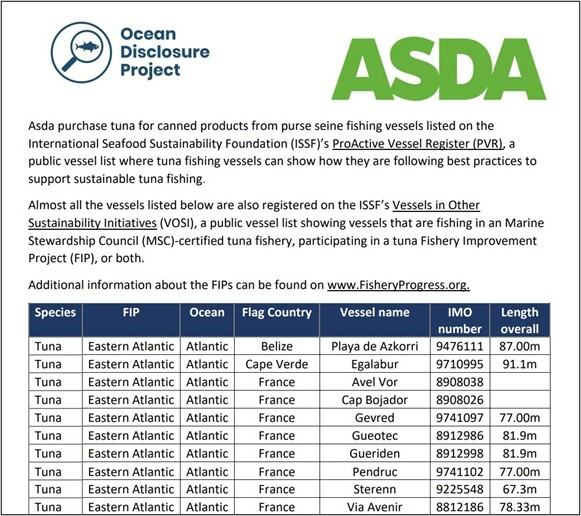
Asda says that it is "committed to publishing data regarding vessels that catch seafood for the business where this is practicable and not commercially confidential". On its ODP profile Asda provides a list of the vessels that catch its cod, haddock and tuna, including key information such as ocean, vessel name and IMO number.

Asda

An example of an Asda/ODP branded list of fishing vessels. The image shows a table of data that includes the name of the vessel, the ocean where the fish was caught and the IMO number.

Asda's fishing vessel list from 2023

Bolton states “Greater transparency contributes to the positive transformation of the entire industry towards ocean stewardship and to meeting international standards, national laws and the ever-increasing demand by consumers for reliable and transparent information about the origin of their products. For all these reasons, Bolton Food took another step towards full transparency in its tuna supply chain by providing yearly the complete list of vessels from which the company has received tuna.”

Challenges that still need to be addressed

Despite this progress, Hy-Vee and Asda vessels lists do not include all vessels, and publishing vessels that supply to them via some national brands remains a challenge.

Lack of transparency of beneficial ownership (i.e. who ultimately benefits from vessel operation, rather than just who has legal title) remains a major problem – in part as beneficial owners have responsibility for conditions of vessels, and vessels lists should include beneficial owners.

The business benefits of fishing vessel transparency

As Open Supply Hub (OS Hub) stresses, supply chain transparency is not an end but a means to other ends.

Customers increasingly want transparency, and it can help build their trust.

Asda notes ‘In the last 10 years’ sustainability has gone from being a niche concern to a national conversation. Customers want greater visibility of where their food comes from, how supermarkets process this and how their farming and fishing methods impact on the environment.

It is also a way to differentiate businesses from their competitors with other stakeholders. For instance, Hy-Vee has been recognized by Greenpeace as the only US retailer to make this commitment to vessel transparency, and has been highlighted in the sector press.

How transparency helps identify human rights risks

Supermarkets have a clear interest in avoiding human rights violations in their supply chains, yet identifying such issues can be challenging.

Providing transparency can be a relatively low-cost way of helping identify abuses, as it allows workers or groups representing or supporting them to inform retailers of abuses in their supply chains, which can then be dealt with. This is after traceability systems have been set up, which do require more resources.

Asda notes that they when they published their supply chains across commodities on the Open Supply Hub, it “saw an uptick in how often they were contacted by civil society directly about potential issues in their supply chain, and invited to the table to remediate collaboratively, rather than having to reactively engage after a public story had broken. Operating under a “no news isn’t good news” principle, this not only helped Asda resolve individual issues, but also better understand systemic risks in their supply chain and which organizations are available to collaborate with them on solutions.”

Asda’s new Transparency and Supply Chain Monitoring Policy requires in-scope sites to publicly ‘claim’ their profile on the Open Supply Hub platform to ensure they are aware of Asda policies, and to support site level resolution or remediation of issues.

Using vessel data to strengthen due diligence

The three companies have also found that the traceability that underlies transparency is by itself of high importance, in particular as new technologies have emerged to track vessel behaviour.

Hy-Vee have started to run their vessel data “through a powerful new FishWise risk assessment tool, the Vessel Risk Dashboard. The analytics on the Vessel Risk Dashboard provide Hy-Vee with greater insight than ever on how and where to engage its supply chain to address risks for illegal fishing activities and social issues.”

Similarly, Asda have engaged with Global Fishing Watch on their vessel list and used their data analytics tools to understand what they can learn about vessels and their risk profiles.

Lessons from businesses already publishing vessel lists

It has taken Asda, Hy-vee and Bolton some time and cost to publish their vessel lists, including just cleaning up data coming in. They have dealt with this through taking a step-by-step process, incrementally adding more information into reports as they have been able to.

For instance Hy-Vee initially focused on private label tuna suppliers then has started to add some national brand suppliers.

Asda first published vessels for cod, haddock and plaice, then more recently added tuna.

Working with suppliers and civil society partners

These efforts, and in places the underlying traceability analysis, have been carried out in partnership with civil society organizations, whose support has been vital:

  • Hy-Vee has worked closely with FishWise.
  • Bolton worked with WWF.
  • Asda has worked with Open Supply Hub and ODP.

Each year the process has become easier as suppliers better understand what is required, and improvements in technology make data collection and analysis easier. These three businesses are clear that the benefits significantly outweigh the costs.

Transparency is a positive step

Based on their experiences, transparency has not harmed relations with suppliers as many could fear. In fact, transparency is one part of a broader approach to develop long-term and trusting relations with their suppliers, who are then more willing to test providing this data.

Where suppliers have struggled to provide this data, companies have supported them and given them more time to provide it.

Bolton noted that it is progressively working towards including, in its supply contracts, provisions requiring suppliers to disclose public information about the vessels they source from.

Why transparency does not increase business risk

Because of international standards like the United Nations guiding principles (UNGPs) and increasing HREDD legislation, businesses increasingly need to know about risks in their supply chain – ignorance on suppliers is no defense.

None of the companies feels transparency has created any risks for themselves. Rather as Open Supply Hub notes the fact it helps to identify and address abuses reduces long term risk to businesses.

It leads to stakeholders being able to reach out to businesses directly with concerns, and if they are addressed, avoids more public scrutiny that creates more risk to the business.

Vessel lists are not highly sensitive commercial data for businesses to share. Quantities sourced from vessels and locations of vessels are more sensitive – but they aren’t included in vessel lists.

Why more seafood businesses should publish vessel lists

There is a strong case today for more seafood buyers to publish the vessels they source from.

Looking at the examples of Asda, Bolton and Hy-Vee, there are clear benefits to businesses, such as building customer trust and differentiating themselves from competitors – while fears about publishing have proved unfounded.

Most importantly, supplier transparency can play an important role in business human rights and environmental due diligence, reducing risks to businesses and improving the lives of fishers.

It’s time for more firms to test the waters! If you and your business want to get involved, contact Oxfam for more information.

About the author

Ashley Aarons is a senior private sector advisor at Oxfam America where he oversees work influencing US retailers to adopt human rights due diligence. He previously managed the Oxfam GRAISEA program, supporting farmers and workers in agricultural value chains across South East Asia. His background is in investment finance.