Oxfam warns funding cuts put lifesaving services at risk as Rohingya crisis enters tenth year

Published on

Short URL: https://www.oxfam.org.uk/mc/dpsjak/

As the Rohingya crisis in Bangladesh enters its tenth year, Oxfam is warning that shrinking humanitarian resources risk undoing years of progress and placing already stretched essential services in Cox’s Bazar under even greater pressure.

Mallika, 36, has lived with her family in Camp 19 in Cox’s Bazar since arriving in Bangladesh in 2017.

When we first came, there was hardly any support, and we suffered a lot. Later, NGOs helped with different lifesaving support and services. But now support is decreasing. I used to buy better food for my children. Now I borrow money for basic needs. It is very difficult to survive.”

Mallika

Since the mass displacement of 2017, Bangladesh, host communities and international partners have sustained one of the world’s largest humanitarian responses, providing food, safe water and sanitation, shelter, healthcare, protection, education and disaster preparedness to Rohingya refugees. What began as an emergency response, however, has become a prolonged crisis.

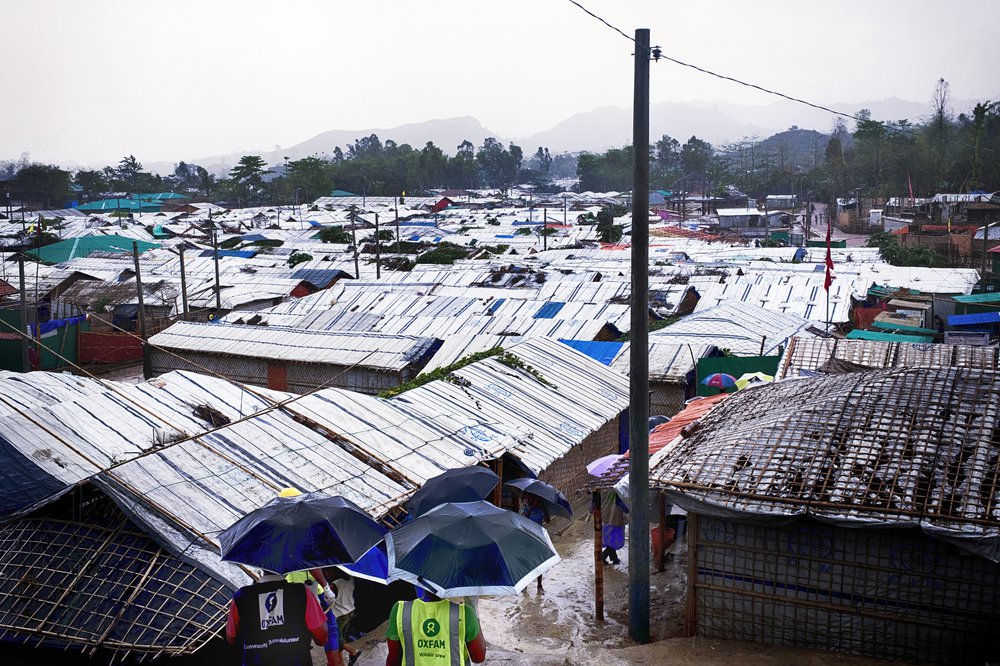
Fabeha Monir/Oxfam

Oxfam staff walk down a path through the middle of the refugee camp

Nearly 1.2 million Rohingya refugees are living in Bangladesh, including some 150,000 who have fled renewed violence in Myanmar since early 2024. The recalibrated 2026 Joint Response Plan (JRP) asks for $710.5 million – 26 percent below last year's – covering little more than the minimum needed to sustain lifesaving assistance.

The greatest danger is becoming accustomed to this crisis. Funding pressure now threatens systems built over nearly a decade. We must protect lifesaving services, strengthen resilience and local capacity, support host communities, and renew collective action towards sustainable solutions.”

Anil Pant, Country Director of Oxfam in Bangladesh

Funding gaps remain substantial. In 2025, the first year of the 2025–26 Joint Response Plan, donors met just 46 percent of the $934.5 million appeal. The shortfall is now compounding. The cuts have already gutted vital services in the water, sanitation and hygiene (WASH), food, health and protection sectors.

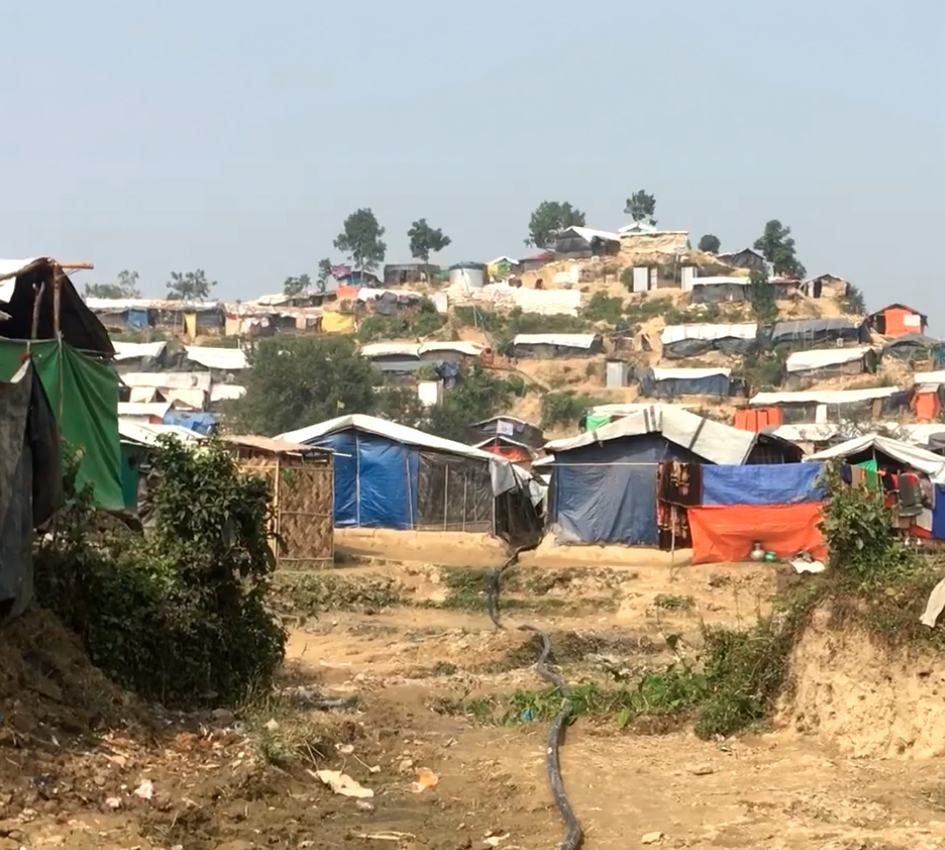
Photo: Oxfam in Bangladesh

Cox's Bazar Camp in Bangladesh

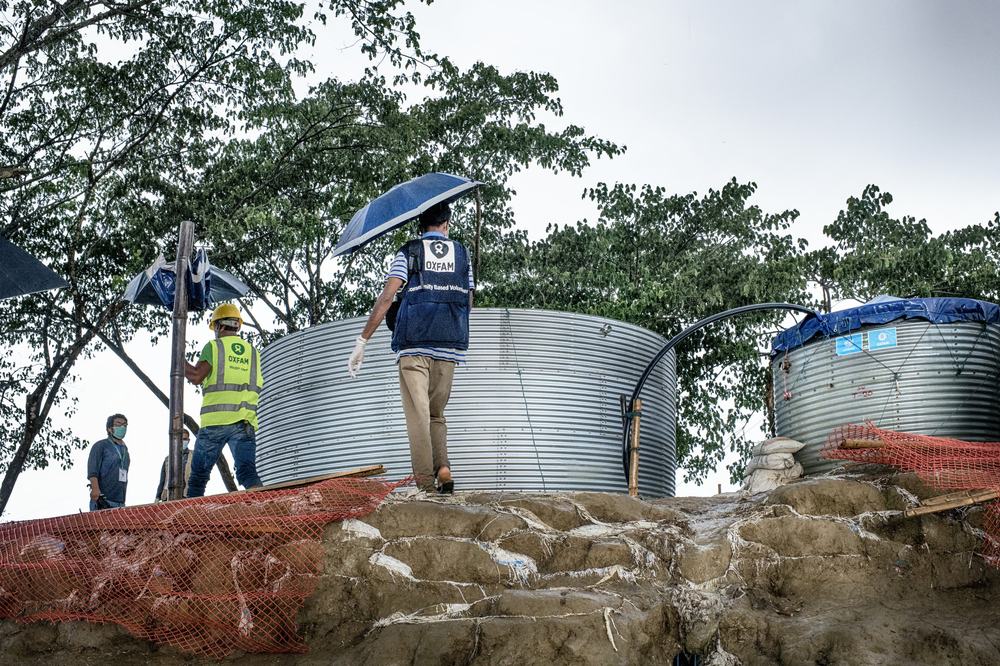
Oxfam’s new report, Holding the Line: WASH Systems, Risk and Resilience in the Rohingya Response, shows what is at stake. Across Cox’s Bazar, emergency WASH interventions have evolved into a vast humanitarian public-health system, including 298 water networks, 320 production boreholes, 768 reservoir tanks, more than 7,000 tapstands, nearly 49,500 latrines, and 167 faecal sludge treatment plants. Yet the publication cautions that scale can hide fragility: ageing assets, dry-season water stress, monsoon exposure, uneven operational control and funding compression are increasing risk.

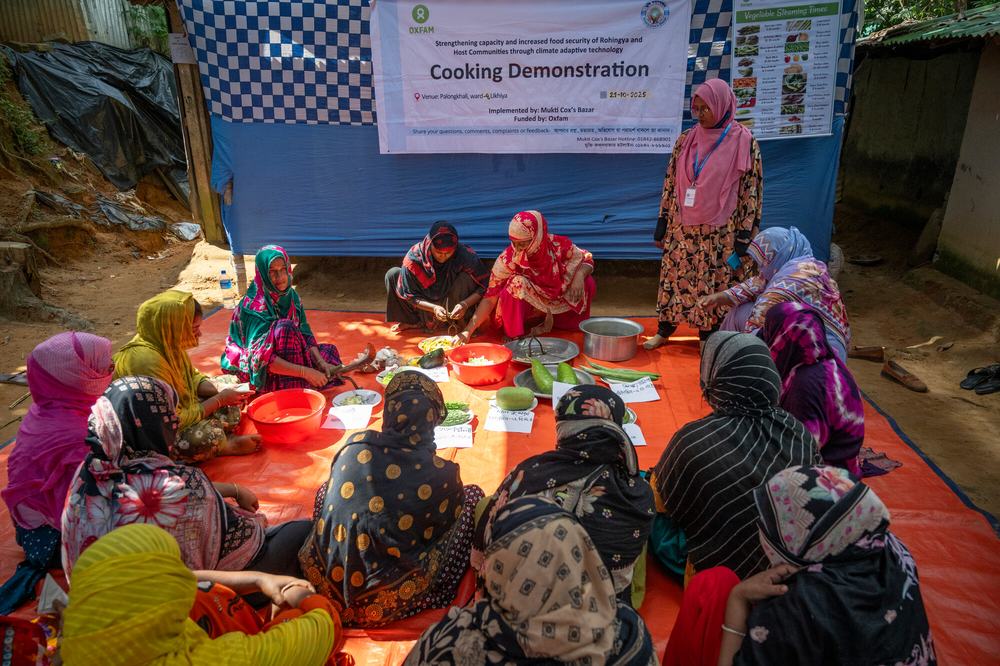
Salahuddin Ahmed/Oxfam

A group of women are sat on a large orange rug with bowls and sheets of paper participating in a practical cooking demonstration.

For women and girls, that strain is a question of safety and dignity as much as sanitation. Asmat Ara, 24, who lives with six family members in a Rohingya camp in Teknaf, said hygiene supplies have dwindled and safe facilities are scarce, making daily life harder.

If it gets very late, I feel afraid to go outside. Sometimes boys gather outside and make comments. I never go alone at night; I take my mother with me.”

Asmat Ara

She also described the growing pressure on menstrual hygiene support.

The pads should be provided again, and the material could also be improved. We also need more soap.”

Asmat Ara

Holding the public-health line, the report argues, now depends on steady financing for critical work, such as maintaining and repairing assets, controlling water quality, treating sewage, clearing waste and drains, keeping access safe, and acting fast when disease emerges.

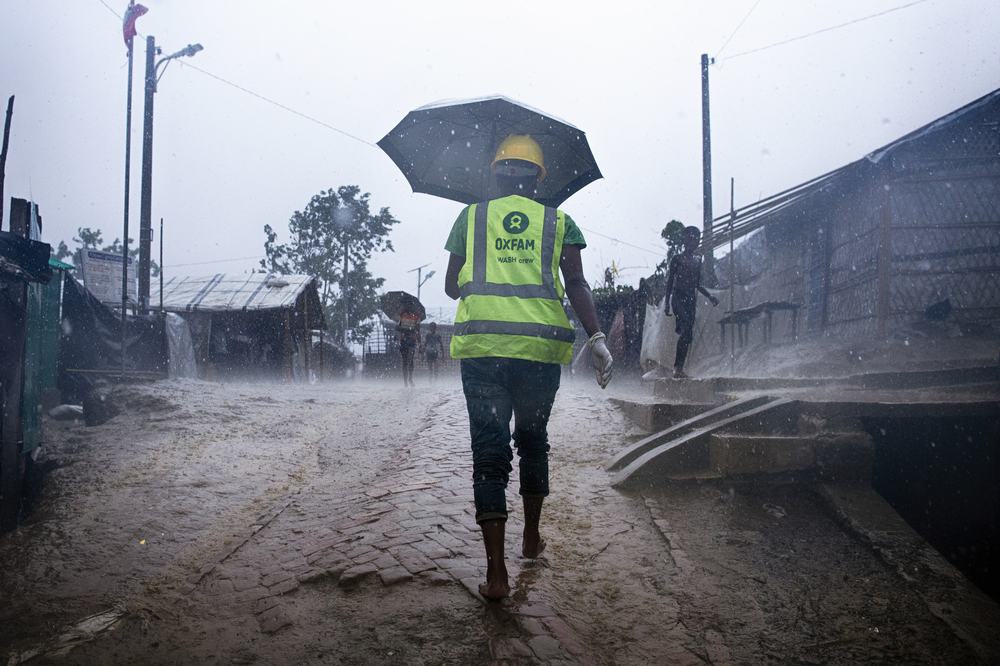
Fabeha Monir/Oxfam

Rohingya Refugee Camp Coxsbazar, Bangladesh

Since 2017, Oxfam has worked alongside Rohingya and host communities, local partners, government institutions, UN agencies and donors across WASH, protection, livelihoods, food security, gender and community engagement. This work ranges from surface-water treatment and faecal sludge management to solar lighting, solid-waste systems, food production for dietary diversification, and skills development.

Fabeha Monir/ Oxfam

Two men walk past two water tanks holding umbrellas

Oxfam is calling on the international community to provide predictable financing, protect essential services, strengthen locally led responses and build host-community resilience.

Oxfam continues to work with its local partners to distribute kits to families that include essential hygiene items, train up health care promoters to share information in their communities on how to stay protected. People can support this work by donating to Oxfam’s emergency response fund.

Press contact

For comments, interviews, or information please contact the Oxfam GB Media Team: