
Rescuers search for survivors in damaged government staff housing buildings following an earthquake in Naypyidaw, Myanmar. Photo: CHAN NAING/EPA-EFE/Shutterstock.
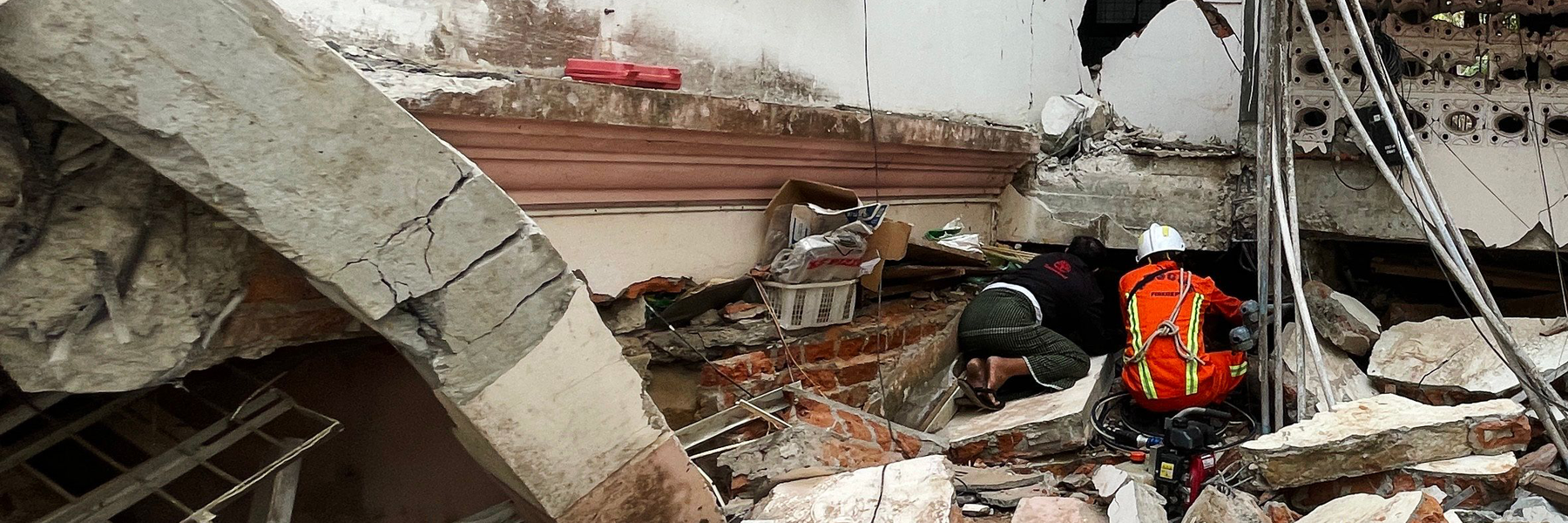
Rescuers search for survivors in damaged government staff housing buildings following an earthquake in Naypyidaw, Myanmar.

Please give what you can today

Myanmar Earthquake 2025

Last updated: 26 November 2026

Oxfam, together with local partner organisations, worked with people affected by the 2025 earthquakes in Myanmar. Thank you for your support.

We are no longer raising funds for this appeal, but you can donate to Oxfam's Emergency Response Fund, which helps us respond immediately when a crisis strikes.

In March 2025, a powerful 7.7 magnitude earthquake struck Myanmar, with its epicentre 10 miles northwest of Sagaing, near Mandalay. The quake occurred at 12.50 p.m. local time and was followed by a 6.4 magnitude 12 minutes aftershock.

The tremors caused extensive damage in multiple cities, leading to the collapse of buildings, bridges, and other infrastructure. Myanmar declared a state of emergency and appealed for international aid.

Countless lives were affected by the earthquake, adding to the existing humanitarian needs of nearly 20 million people.

Photo: Thu Zar Lwin/Oxfam

Devastation of a religious place in Mandalay

Devastation of a religious place in Mandalay.

More about the situation in Myanmar

  • The disaster claimed the lives of over 3,800 people and injured more than 5,000. Aftershocks caused further fear and devastation.
  • Before the earthquake, around 20 million people in Myanmar were already in need of humanitarian assistance. The earthquake added another layer of suffering to an already fragile situation.
  • The earthquake led to more destruction of infrastructure, including homes, hospitals, and schools.
  • Communication networks in Myanmar were also significantly impacted by the earthquake. Many areas, especially rural ones, experienced disruptions in phone lines and internet connectivity, making it difficult for people to access vital information.

How did Oxfam and partners respond in Myanmar?

Your donations helped get lifesaving and dignity-giving supplies to earthquake survivors in Myanmar.

Together with local partners, Oxfam in Myanmar set up an immediate emergency response underway in the aftermath of the earthquake, to reach those most affected. This included:

  • First-response supplies including hygiene kits, dignity kits, and family kits dispatched to the worst-affected areas to meet immediate needs and support survivors through the critical period.
  • Food, water, and cash assistance across Mandalay, Sagaing, and other areas, as well as support with early recovery efforts.
  • Setting up communal kitchens in some affected areas to deliver meals and provide shelter supplies such as tarpaulins, blankets, and mosquito nets.

Local partners, team members, and volunteers were key in this emergency response and recovery, ensuring no one was left behind.

Why donate to Oxfam's Emergency Response Fund?

The Emergency Response Fund helps us respond immediately when a disaster strikes anywhere in the world.

Donations from supporters like you help us get humanitarian supplies and support to people quickly, wherever they may be.

We work in partnership with many local organisations so we are able to adapt our response quickly when a disasters strikes.

It is vital that we can spend the Emergency Response Fund where the need is greatest, at any given time.

Please donate today to help people in crisis around the world. Thank you.