Fatima Mian

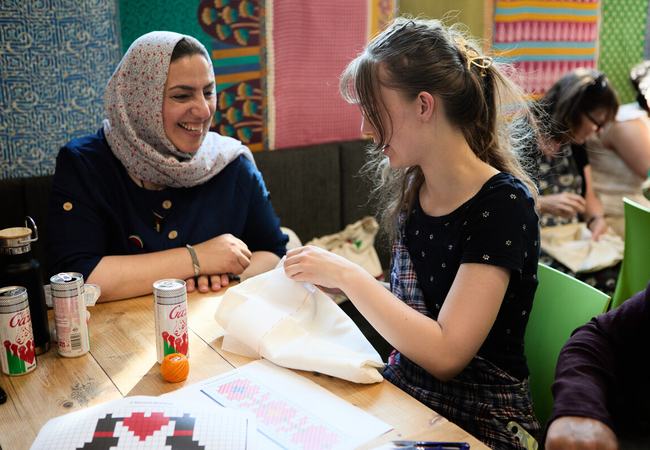
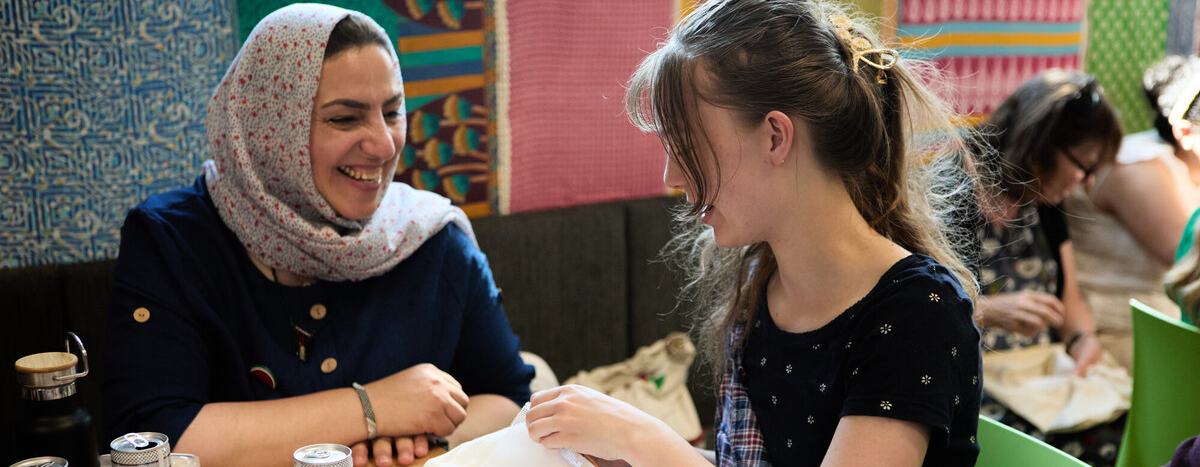
Two women are sat at a table. One of the women is doing some embroidery and the other woman is watching and smiling.

Learning about Palestinian culture and life through tatreez

Shaista Aziz and Reem Daas

1 Oct, 2026 / 3 mins read time

In July, Oxfam’s Oxford Superstore hosted, Tatreez: Threads of Palestinian Culture and Life. This stunning community event brought together sixty people from across the country to attend a tatreez workshop and panel discussion. We explored the history of tatreez, Palestinian culture, and how we can come together in solidarity to support justice for Palestine and connect with Oxfam’s work.

What is tatreez?

For centuries, tatreez (the Arabic word for embroidery) has been a vivid expression of Palestinian life, identity and heritage – carrying stories of dignity, joy, cultural resilience and the enduring pursuit of freedom.

Traditional motifs, colours and patterns can be associated with different regions and communities across Palestine, with each stitch carrying layers of meaning and memory.

Tatreez has long provided Palestinian women with a way to express identity, heritage and history. The embroidery and designs found on a woman’s thobe (traditional dress) can also offer clues to the region or community she comes from.

Fatima Mian

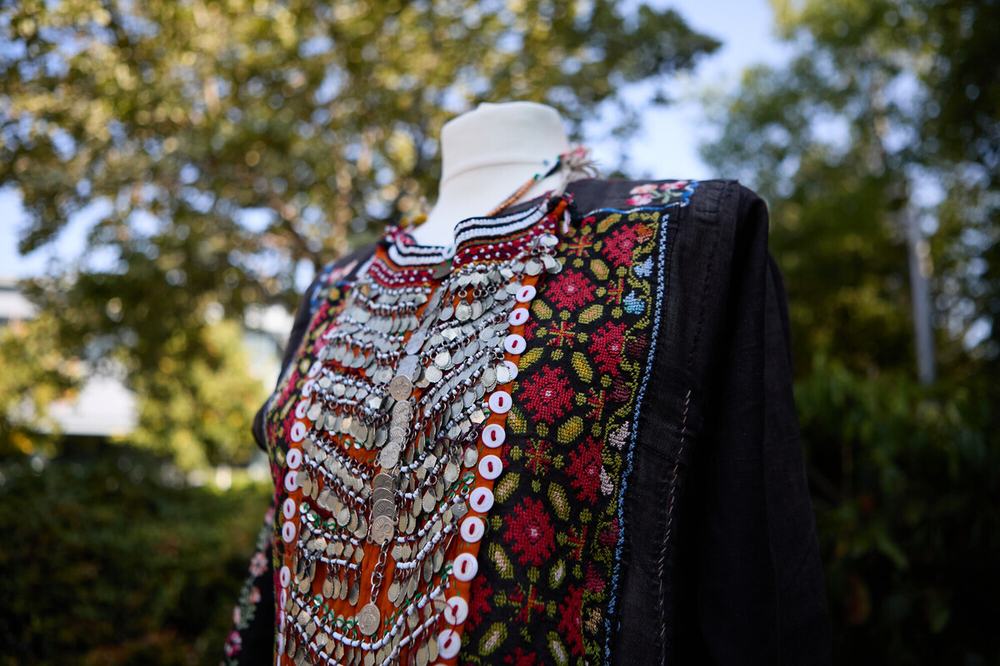
A black dress from Palestine with traditional tatreez embroidery depicting large red flowers and smaller flowers in blue and white.

Every pattern within tatreez holds a piece of village, family, and homeland.

During the government of Israel’s ongoing genocide in Gaza, which has killed tens of thousands of Palestinians, and the deepening of the unlawful occupation and state-backed settler violence in the West Bank (including East Jerusalem), every aspect of Palestinian life including culture has been under sustained attack, facing erasure and erosion. And still, tatreez remains at the centre of Palestinian life and cultural resistance.

A community event for Oxfam supporters

In July this year Oxfam’s Oxford Superstore hosted Tatreez: Threads of Palestinian Culture and Life. Attendees at this stunning community event took part in a tatreez workshop and panel discussion to explore:

  • the history of tatreez
  • Palestinian culture
  • how we can come together in solidarity to support justice for Palestine and connect with Oxfam’s work.

Fatima Mian

Panel discussion contributors

Marwa El Ansary, Oxfam’s Senior Humanitarian Policy Advisor for Gaza as part of Oxfam’s team in the occupied Palestinian Territories

Reem Dass, Sales Lead and Induction Manager, Oxfam Oxford Superstore

Samia Shibli, Oxford Ramallah Friendship Association

The event was co-curated along with The Tatreez Collective and the Oxford Ramallah Friendship Association (ORFA).

The city of Oxford is twinned with Ramallah in the occupied West Bank, thanks to the many decades of tireless work by ORFA. The event was rooted in community: locally, nationally and in Palestine.

Fatima Mian

Attendees at the community event were given the opportunity to create their own traditional tatreez designs.

Three thobes, three stories

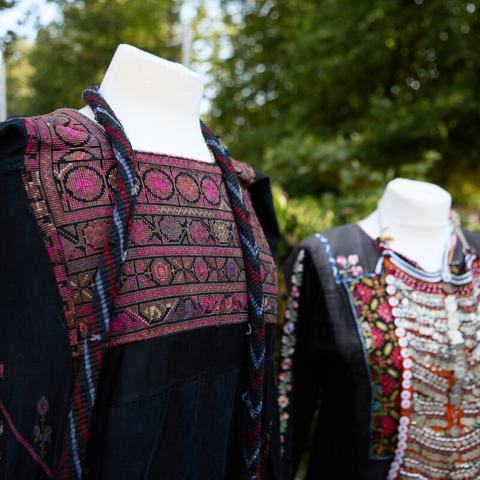
At the centre of the event were three thobes (traditional dresses) that were donated to the Oxford superstore: two believed to be from the 1960s-70s and one suspected pre-Nakba thobe from pre-1948 Palestine, before the creation of the State of Israel in 1948.

The superstore's Fashion team decided to explore the subject further, reaching out to members of the Palestinian community for guidance on how such donations should be handled.

Bringing Palestinian voices to the centre

A panel discussion was curated centering Palestinian women’s voices, alongside other Arab women participating in solidarity.

We are deeply grateful to:

  • Samia Shibli from ORFA
  • Dina Asfour, founder of the Tatreez Collective
  • Marwa El Ansary, Senior Humanitarian Policy Advisor, Oxfam in the occupied Palestinian territory
  • Reem Daas, from Oxfam’s Oxford Superstore, and a key driver of this project and event.

Fatima Mian

The panelists offered powerful insight into:

  • the art and history of tatreez
  • Palestinian culture
  • the reality of the Israeli government’s ongoing genocide in Gaza
  • the acceleration of state-backed settler violence
  • the tightening of the Israeli government’s unlawful occupation in the West Bank

Building a lasting bond

Oxfam supporters who attended the event, including customers, donors and volunteers, approached us after the panel discussion to explain how being in this space made them feel connected to Oxfam’s wider work.

It was especially moving to hear this from some of our shop volunteers, who, after listening to Marwa outline Oxfam’s work on the ground in Palestine, described how motivated they felt because they realised the impact of their support and time in Oxfam shops.

We would like to thank Lorna Grafton and team for the beautiful food they created, Zaytoun and Gaza Cola for their contributions to the event, and all the staff at the Oxfam Oxford Superstore.

About the authors

Shaista Aziz

Shaista is Head of Strategic Communications for Oxfam GB.

Reem Daas

Reem is Sales Lead and Induction Manager at the Oxfam Oxford Superstore.