Fatima Mian

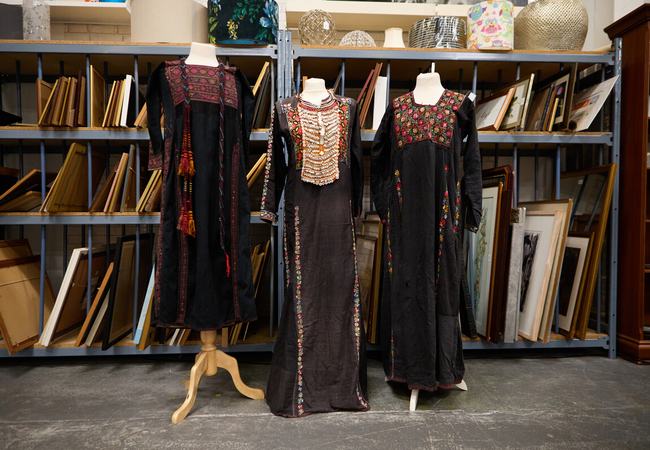
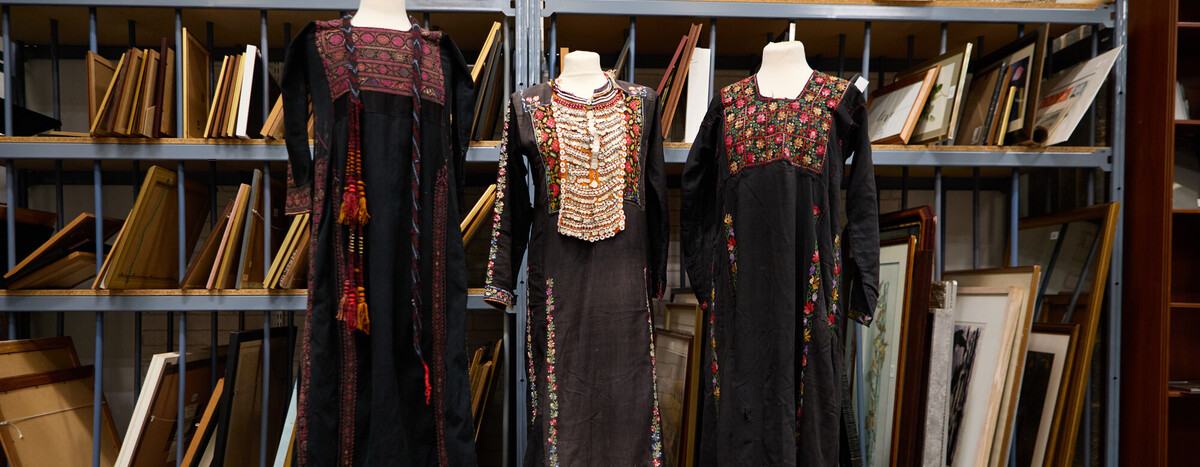
Three traditional Palestinian dresses in black fabric that feature brightly coloured tatreez (embroidery) in intricate designs on the upper part of the dresses.

Tatreez: a living archive of Palestine

Shaista Aziz and Reem Daas

2 Oct, 2026 / 6 mins read time

Palestinian tatreez (traditional embroidery) is rooted in the land of Palestine, in the deep relationships generations of Palestinians have with agriculture, the sea, nature, and the identity of Palestinian people. In short: tatreez is woven into the fabric of Palestine and represents a living archive of Palestine, historically to present day.

We spoke with experts from the Palestinian community to understand more about the ethical considerations around charity organisations selling culturally significant garments, the heritage of tatreez and its importance to Palestinian culture.

Three thobes, three stories

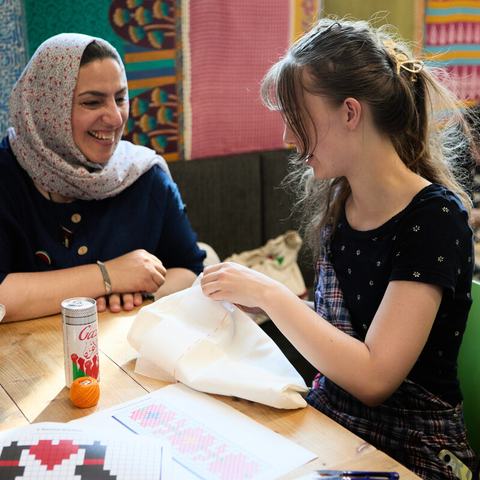
In July, Oxfam supporters and volunteers came together to learn more about Palestinian culture. Three thobes (traditional Palestinian dresses) that were donated to the Oxford Superstore were on display as part of the event.

Two of the thobes are believed to be from the 1960s-70s. One is suspected to be a pre-Nakba thobe from pre-1948 Palestine (before the creation of the State of Israel in 1948).

During the Nakba, which took place before and after the creation of the Israeli state, more than 750,000 Palestinians were forcibly displaced from their homes, lands and communities. A cycle of dispossession which has unfolded over decades and is still happening today.

The pre-Nakba thobe was bought in Jerusalem in the 1970s, with the knowledge that it was at least 30 years old at the time, and was given to the superstore with the donor’s specific request for it to be used to support Palestinians in Gaza during the Israeli government's ongoing genocide, through Oxfam's work in Palestine.

Fatima Mian

The Palestinian thobe is much more than just a traditional dress. It carries stories about where someone comes from, their family, their community, and sometimes even important moments in their life.”

Dina Asfour, founder of the Tatreez Collective.

The pre-Nakba thobe

The superstore’s Fashion team decided to explore the subject further, reaching out to members of the Palestinian community for guidance on how such donations should be handled.

We spoke with Wafa Ghnaim, Palestinian dress historian, researcher and founder of The Tatreez Institute, who shared the ethical considerations around charity organisations selling culturally significant garments like this thobe, and why their preservation matters. You can find out more in the community guidelines on The Tatreez Institute's website.

We also spoke with Palestinian thobe consultant and founder of Thobnah, Bisan Al Haj Hasan, who examined the pre-Nakba thobe and offered fascinating insights into its embroidery, origins and the story it may hold.

We then spoke with Dina Asfour, founder of Tatreez Collective, a cultural organisation that aims to preserve Palestinian culture through the lens of embroidery. Dina provided us with the below analysis of the donations, in her own words:

"The Palestinian thobe is much more than just a traditional dress. It carries stories about where someone comes from, their family, their community, and sometimes even important moments in their life. Embroidery was traditionally taught from a very young age, usually passed down from mother to daughter. Girls would learn the patterns and techniques as they grew up, often with the understanding that one of the most important dresses they would eventually make would be for their wedding.

Fatima Mian

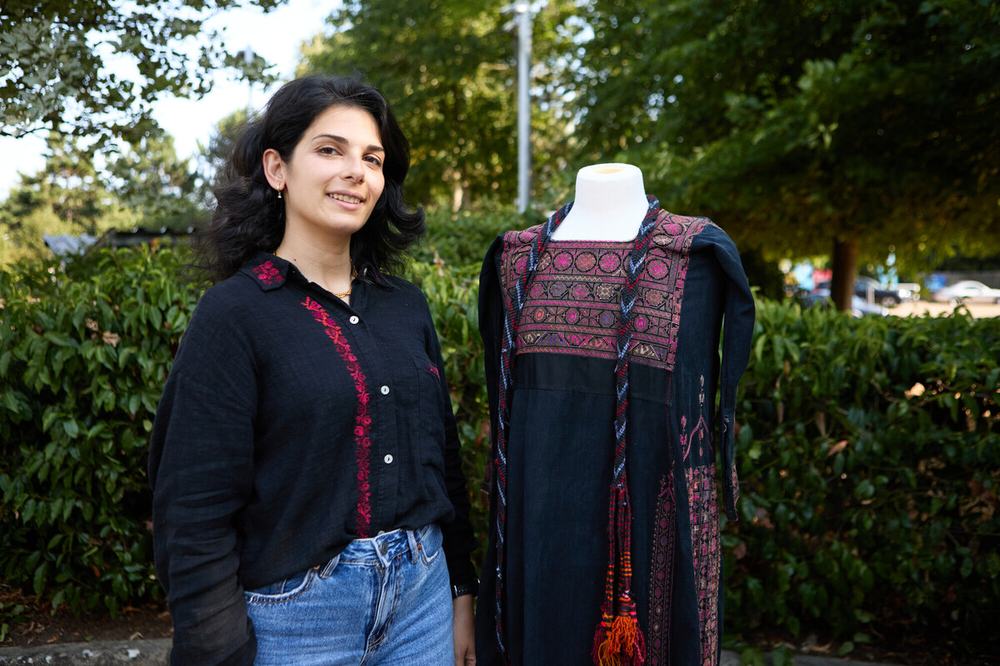
Dina Asfour of The Tatreez Institute is stood outside next to a pre-Nakba thobe in black with pink, orange and blue embroidery known as tatreez.

Dina explained to Oxfam the traditions of the thobe and how the one made before the Nakba is representative of Gaza and its surrounding area.

"Before 1948, the embroidery on a thobe could tell you a lot about the person wearing it. Different villages, towns, and areas of Palestine had their own patterns and styles. A lot of the designs came from the landscape around them, so you can find flowers, birds, plants and other forms of nature appearing in the embroidery. These patterns were not chosen randomly. They were connected to the place where women lived and became a way of showing where they belonged.

"The embroidery could also become very personal. Women would sometimes add new patterns or change existing ones to reflect something happening in their own lives. For example, a woman might introduce a particular pattern after getting married, almost like sewing her own story into the dress. Colours could also have different meanings. In some areas, black fabric with blue embroidery was associated with widows, while different colours could be used when a woman was ready to remarry and was being introduced again as a bride.

"The pre-Nakba thobe is believed to have been made around the 1920s or 1930s. It has very bright pink colours and is representative of the Gaza area and its surroundings. Looking closely at the embroidery, you can see different types of motifs, including amulets, flowers and small birds. These designs show how much meaning could be put into what might, at first, look like decoration.

Fatima Mian

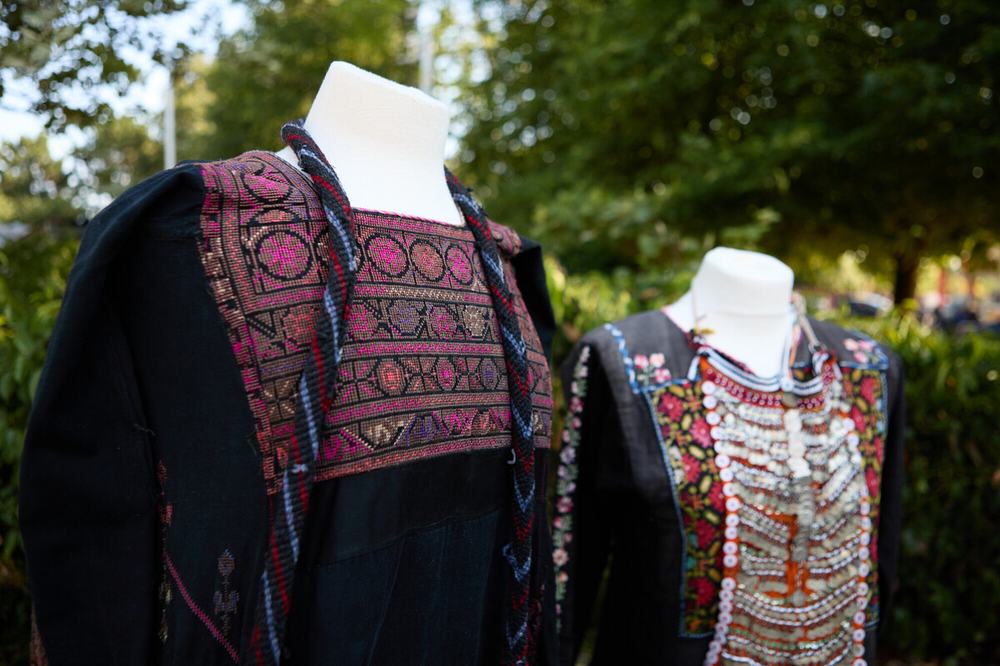
Two traditional Palestinian dresses (thobes) in black fabric with traditional embroidery (tatreez) in pink, blue, yellow and orange threads.

Two of the three thobes donated to the Oxfam Oxford Superstore.

"There were also differences in where the embroidery was placed on the dress. Traditionally, a lot of the embroidery was concentrated around the sleeves and the chest panel. However, in some areas of Palestine, including the Gaza region, the embroidery could be much heavier on the back of the dress as well. You can see large embroidered sections on both the front and back, making the garment particularly detailed.

"Making a thobe like this was also a social activity. It wasn't necessarily something one woman would sit and do completely by herself. Women would often gather together outside someone's house or in a shared space, embroidering while talking and spending time together. So the practice of embroidery was also about community.

Knowledge, patterns and stories were shared between women, which helped keep the tradition alive."

Tatreez after the Nakba

"The second thobe is very different and is believed to date from around the 1960s. What is interesting about this dress is that you can see different styles and patterns coming together. This is partly connected to what happened after 1948. Following the Nakba, many Palestinians were displaced from their homes and villages and ended up living together in refugee camps.

Fatima Mian

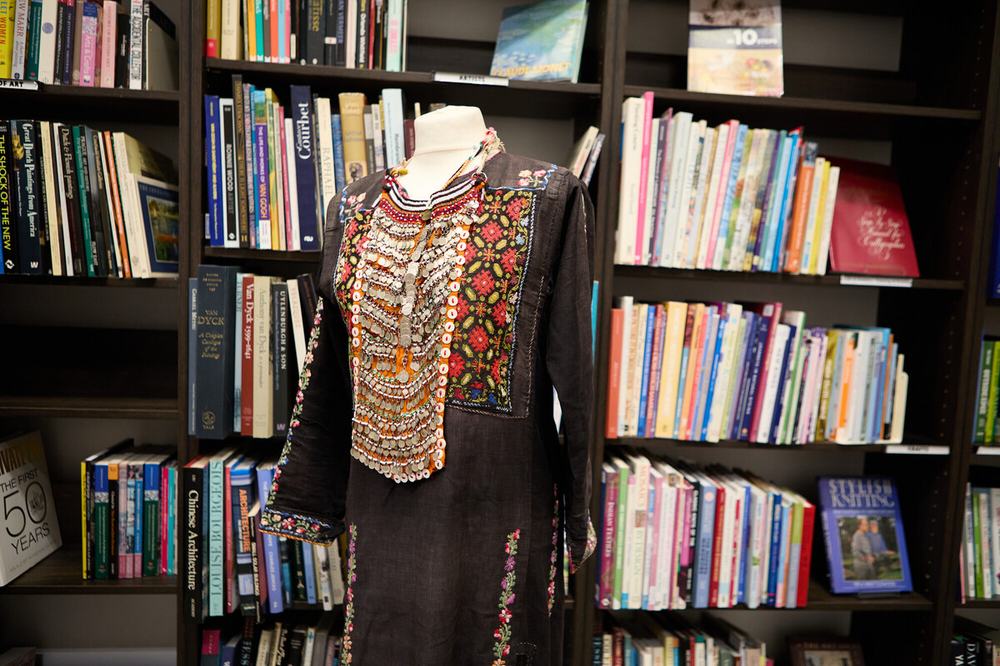
A black thobe thought to have been made in the 1960s-70s with bold red and green embroidery and shiny white and silver buttons embellishing the design.

Thobes made after the Nakba sometimes show tatreez designs from different parts of Palestine reflecting the displacement and coming together of different communities.

"During the years immediately after 1948, there was much less time and opportunity for embroidery because people were trying to survive and rebuild their lives. But as communities came together, women from different parts of Palestine began sharing their knowledge with each other. This meant that by the 1960s, you could see different regional patterns being combined within the same dress.

"For example, one thobe might contain a pattern associated with Ramallah alongside a motif similar to one traditionally found in Bethlehem. The dress therefore becomes a reflection of displacement. Instead of representing only one village or one area, it can represent several places and communities at once."

Fatima Mian

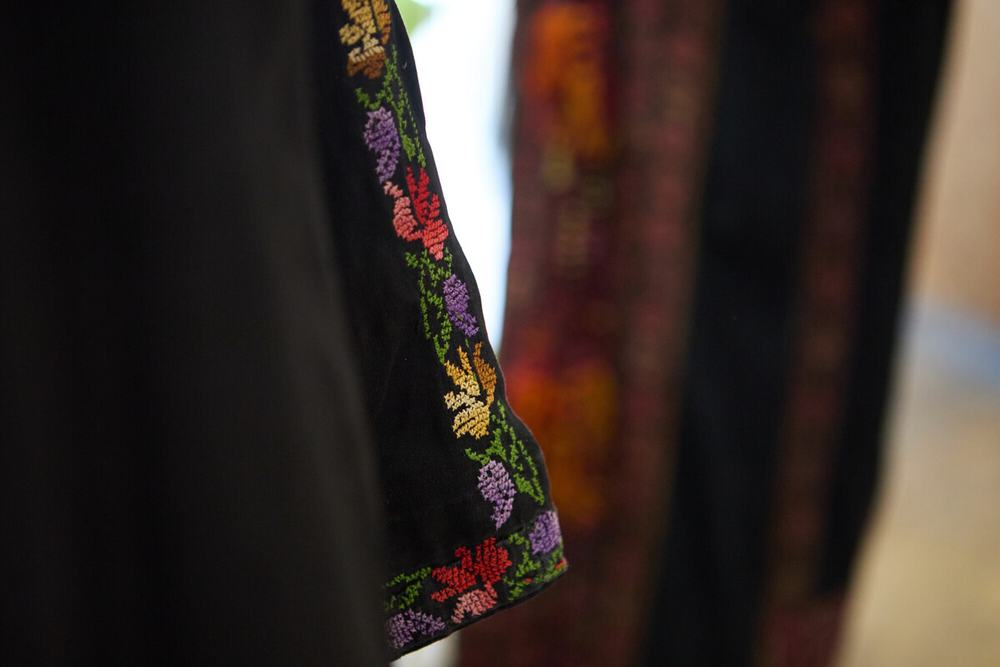
A close up of the sleeve of a black thobe to demonstrate the detail in the stitching of red, gold and purple flowers with green leaves.

The tatreez designs can be very intricate capturing details of the village or surrounding areas of the maker.

From regional identity to cultural resistance

"After 1948, Palestinian embroidery also began to take on a much stronger political meaning. The thobe became a way of expressing Palestinian identity and resistance. Women began incorporating symbols and colours connected to Palestine, including the colours of the Palestinian flag. Embroidery became a way of saying that Palestinian culture and identity were still present, despite displacement and attempts to erase that history.

"This is one of the reasons Palestinian embroidery is so important today. Some of the patterns found in these dresses come from villages and communities that no longer exist in the same way they once did. By preserving the patterns and understanding where they came from, we are also preserving the memory of those places.

"The thobe can almost be seen as a historical document. It tells us about geography, family, community, displacement and resistance, but it also tells us about ordinary life. It reminds us that Palestinian history is not only a history of conflict and loss. These dresses also represent creativity, celebration, love, nature and joy.

"Preserving Palestinian thobes and the embroidery that comes with them is therefore a way of keeping those stories alive. It allows people to remember the places and communities that the patterns came from, while also showing that Palestinian culture continues to exist and evolve. The embroidery becomes a form of memory – something that can be carried, worn and passed on from one generation to another.”

Preserving culture in the face of erasure

A major aspect of the erasure of Palestinian identity over the decades has been the destruction of cultural heritage. Over the past three years, Israeli forces have destroyed or damaged Palestinian cultural heritage sites and institutions across Gaza, including sports facilities.

In October 2023, the Israeli government's bombardment damaged the Rafah Museum, where many dresses and other items of Palestinian heritage were held. UNESCO has documented the damage to cultural heritage sites in Gaza, including the Rafah Museum.

At a time when Palestinian identity is attacked and cultural centres being destroyed, Oxfam agreed that this was an opportunity to platform and amplify Palestinian voices to shine a light on this beautiful and precious piece of Palestinian history.

What happens next: preserving the thobes

There are plans for Palestinian-led groups and spaces to exhibit these thobes and hold more creative workshops to help amplify Palestinian voices and stories.

Our focus is to highlight the Palestinian community’s voices, as well as the preservation of these precious pieces of history.

We hope to eventually place the three thobes with a Palestinian-led cultural heritage collection or museum. Any decision about their future stewardship will be led by recognised Palestinian heritage experts and institutions and, where possible, people connected to the communities of origin.

About the authors

Shaista Aziz

Shaista is Head of Strategic Communications for Oxfam GB.

Reem Daas

Reem is Sales Lead and Induction Manager at the Oxfam Oxford Superstore.