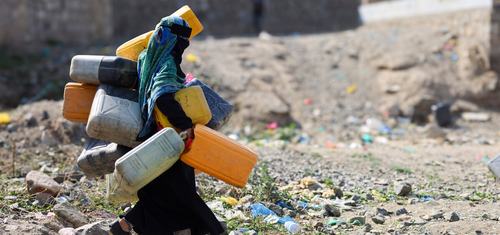

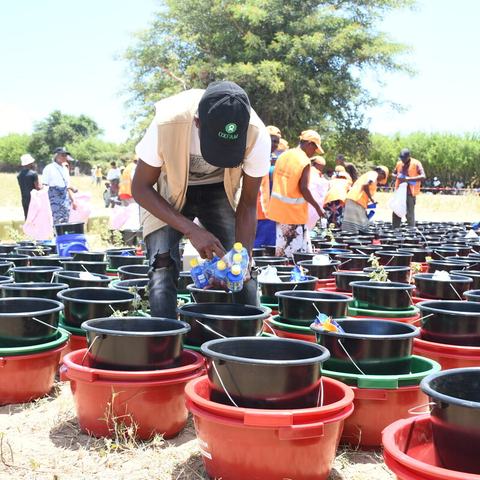
Photo: Oxfam in Cambodia
Corporate responsibility
Oxfam GB is committed to ensuring that its business practices align with its missions and values.
Oxfam GB recognises its responsibility for managing the environmental and human rights impacts in its operations and supply chains.
We seek to be transparent about progress against our standards and commitments. This allows us to be held accountable for the impact our work has on the environment, the people and communities we aim to support, and the people who deliver that work.
We are committed to listening to our stakeholders and continuously learning how to improve our impact.
Key reports
Oxfam GB continually monitors, evaluates and learns from our stakeholders with the aim of continuously improving the outcomes of our work.
The main reports through which we share this information are:
The UK's Modern Slavery Act 2015 requires organisations with an annual turnover of £36m or more to make a public statement about the steps they are taking to identify and prevent modern slavery and human trafficking in their operations and supply chains.
Oxfam GB’s annual statements describe those steps and share examples from our work.

Oxfam’s Environmental Sustainability Report provides an overview of our environmental impact, including our greenhouse gas emissions, progress against targets and a range of the environmental measures we take across our UK operations.
The streamlined energy and carbon reporting (SECR) is presented in our Annual Reports.

The gender pay gap shows the difference in the average pay between all men and women working for an organisation. Oxfam always pays all genders the same wage for the same work.
All organisations in the UK that employ more than 250 workers are required to publish a report on their gender pay gap.
Oxfam GB is committed to strengthening our accountability, being transparent and judging the impact of our work on the people and communities reached by our programmes.
We continually monitor, evaluate and learn from our stakeholders to review the outcome achievements and challenges of our work on the people and communities reached by our programmes.
Oxfam's key corporate responsibility policies
Ethical and environmental policy
Oxfam GB recognises the importance of sustainable development for people living in poverty, and the long-term benefits of becoming a more sustainable organisation. This policy outlines Oxfam GB’s standards for working with its suppliers to take responsibility for the ethical and environmental impacts of our operations and supply chains.
Our procurement falls into four main categories: central procurement, Sourced by Oxfam (retail), humanitarian and international programmes.
Download the Oxfam GB Ethical and Environmental Policy (PDF, 303.8 KB)
Anti-slavery policy
Oxfam GB is a complex organisation, with operations and supply chains which span multiple countries. The nature of the work we do and the countries we source from and operate in, mean that despite our best efforts, there is a risk that various forms of modern slavery could exist.
This policy sets out OGB's anti-slavery standards for our operations, supply chain and implementing partners as well as our approach to remediation.
Read the OGB Anti Slavery Policy & Human Trafficking Policy Oct 2024
Ethical standards for partnerships
Working with partners is integral to achieving our mission to find lasting solutions to poverty and injustice.
As part of this, Oxfam GB will accept donations (including cash and gifts in kind) from any source that contributes towards Oxfam's mission, unless there is reason to believe that by doing so risks harm to people living in poverty, might compromise the independence, or the perception of the independence of our advocacy, campaigning or programme work, or will cause significant damage to Oxfam GB's integrity and/or reputation.
Oxfam GB carries out due diligence on our partners in line with our approach to corporate responsibility – balancing potential conflicts with our campaigning priorities and ensuring integrity on core issues relating to our mission to end global poverty.
We do not accept funds from companies manufacturing arms, tobacco or pornography, or companies with commercial activities in Israeli settlements in occupied Palestinian territories.
Retail sustainability
Integrity at Oxfam
Key external commitments
UN Global Compact
In July 2018, Oxfam GB became a participant of the world's largest corporate sustainability initiative, the UN Global Compact (UNGC). Our third Communication on Engagement was published in November 2025.
The Ethical Trading Initiative
Oxfam GB is a founder member of Ethical Trading Initiative (ETI), with active Board and NGO caucus representation. This leading alliance of companies, trade unions and NGOs promotes tripartite collaboration, with the aim of respecting workers' rights around the globe. We align with the ETI Human Rights Due Diligence Framework.
The Living Wage (UK)
Oxfam has been an accredited Living Wage Foundation employer since 2013, which means we pay at least the Living Wage Foundation rate for all UK employees. We believe that fair wages, along with more secure and predictable work that encourages progression, are instrumental in addressing the high levels of poverty in working households across the UK.
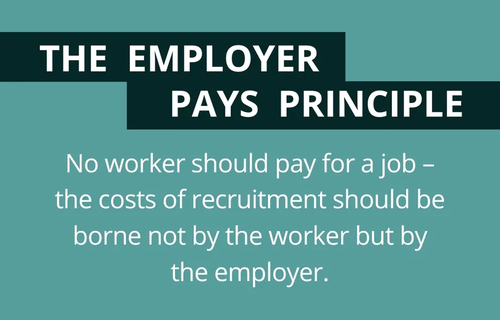
The Employer Pays Principle
Oxfam GB applies the Employer Pays Principle – the principle that no worker should pay for a job. All costs of recruitment should be borne by the employer (not the worker).