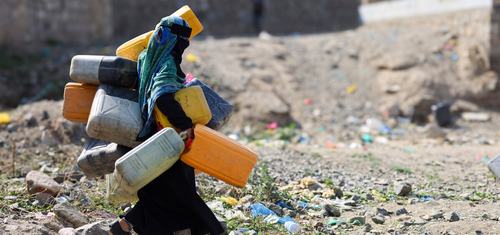
Climate chaos deepens inequality and makes the richest richer

Published on

Oxfam’s new Disaster Divide report finds that the UK’s richest 0.1 percent produce 46 times more carbon pollution per person than someone in the poorest half of the population.

Khaula Jamil/OxfamAUS
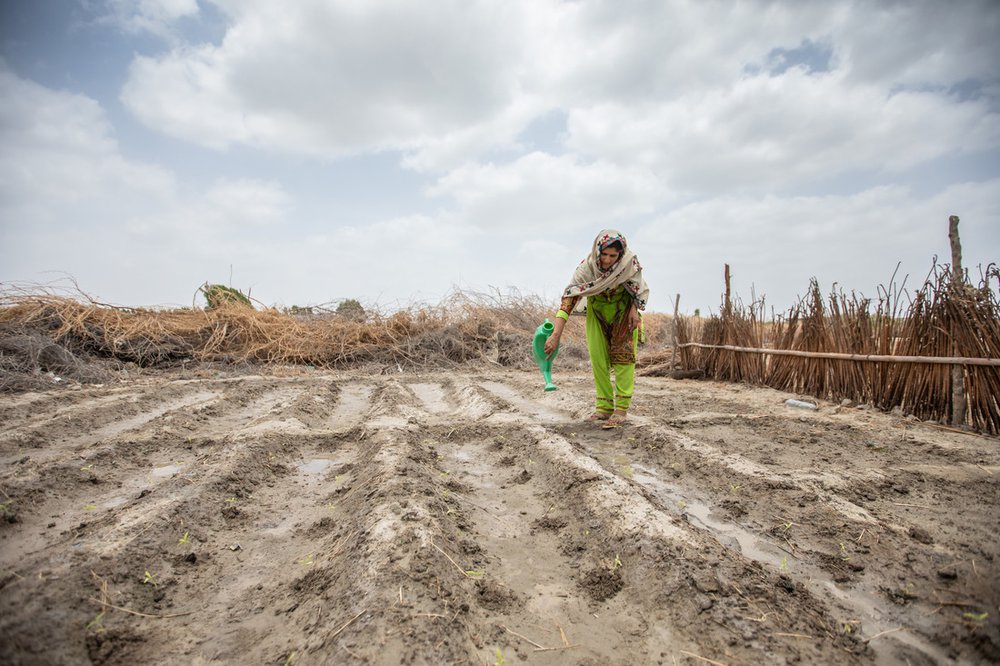
A farmer waters crops in Pakistan. Oxfam has worked with partners in Pakistan to provide training to help people adapt to the impacts of climate change.

Published ahead of the UN climate summit (COP31), the Disaster Divide report exposes how the world's super-rich are driving climate breakdown through their outsized emissions, while shielding themselves from the consequences and, increasingly, profiting from the destruction. Globally, the ultra-rich 0.1% produce more carbon pollution than nearly half of humanity.

Oxfam’s findings demonstrate that the impacts of climate change are not distributed equally. Wealth can allow some people to protect themselves through private insurance, second homes and access to safer locations, while people with fewer resources can face destroyed homes and livelihoods, lost savings and greater difficulty recovering from climate disasters. This gap only widens over repeated disasters.

“

The populations who contributed least to the climate crisis are absorbing its worst consequences, while those who caused it are best equipped to protect themselves.”

Jean McLean, Oxfam’s Chief Influencing Officer

Eleanor Farmer/Oxfam
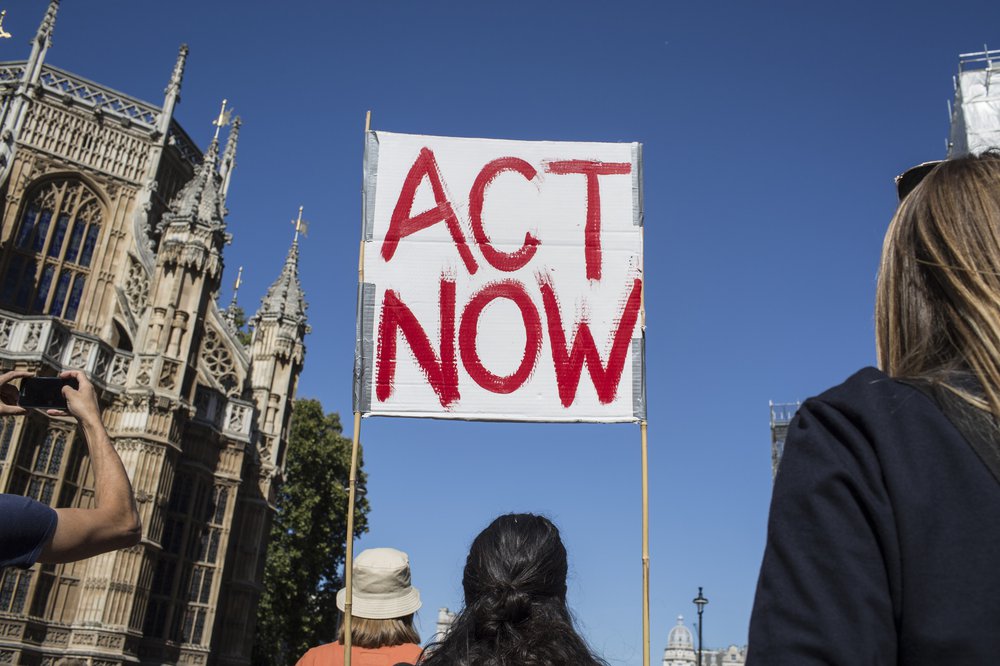
A placard at the London climate strikes in September 2019

Jean added: “Those most responsible for the crisis, wealthy individuals, corporations and countries, must bear the greatest cost of adaptation and recovery, including through climate finance to those least responsible but most exposed.

“Instead, the super-rich benefit at both ends of the crisis: first, through continued investment in polluting industries, and second, through investment in the booming ‘adaptation economy’ - recovery and rebuilding services are sold back to a warming world.”

Those who are most responsible for climate change are now seizing the opportunity to turn chaos into profit. The report shows how the super-rich and their corporations are profiting from disaster relief and adaptation, as well as from the twin crises of food price volatility and food scarcity caused by global warming.

The global disaster recovery market is projected to grow from $70 billion to $92 billion annually by 2029.

Oxfam’s new Destroy & Rebuild Index identifies 217 corporations profiting from industries that fuel climate breakdown as well as disaster preparedness, recovery and reconstruction. BlackRock and Vanguard are invested in 92 percent of the corporations in the index. Their combined investments total more than $1 trillion.

Used exclusively by the super-rich, private aviation remains one of the clearest examples of extreme carbon inequality.

Oxfam analysis finds that 66,931 private jet flights departed the UK during 2025, producing around 424,000 tonnes of CO2. The flights spent more than 155,000 hours in the air – equivalent to more than 17 and a half years of continuous flying – and covered around 85 million kilometres, equivalent to more than 2,100 trips around the globe.

Oxfam’s analysis also examines the contribution of the super-rich to heatwaves. Combining carbon inequality data with cutting-edge climate attribution models, Oxfam has found that:

  • The world’s richest 1 percent are responsible for 20 percent of global warming since 1990 – 100 times more, per person, than someone in the poorest half of humanity.
  • Just one year of emissions by the world’s richest 1 percent will cause 1.9 million excess heat-related deaths. 78 percent of these deaths will occur in low- and lower-middle-income countries, despite these countries being responsible for 8 percent of global emissions.

The report also suggests that the unequal impacts of climate breakdown can be significantly reduced, and sets out a progressive agenda, based on greater equality.

Ahead of COP31, Oxfam is calling on the UK government to:

  • Make polluters pay their fair share for climate action. This must include introducing a permanent excess profits tax on oil and gas companies, once the existing Energy Profits Levy expires, set at a meaningfully high level, alongside permanent wealth taxes and stronger taxation of high-emitting luxury items like private jets.
  • Improve the quality and quantity of its international climate finance commitments, prioritising grant-based finance rather than loans that deepen debt. The UK should commit to ensuring 50% of its international climate finance is spent on adaptation.
  • Champion a just transition towards a fairer, greener future. At COP31, the UK should advocate for a strong Just Transition Mechanism to support just transitions on a global scale, whilst setting out national plan for a just transition at home which makes reducing inequality a key aim.
  • End profiteering from climate disasters. Governments need to curb corporate power in emergency response, reconstruction, and food systems during disasters.

Press contact

For comments, interviews, or information please contact the Oxfam GB Media Team: