Flood deaths hit 13-year high and more than 100 countries break monthly temperature records

Published on

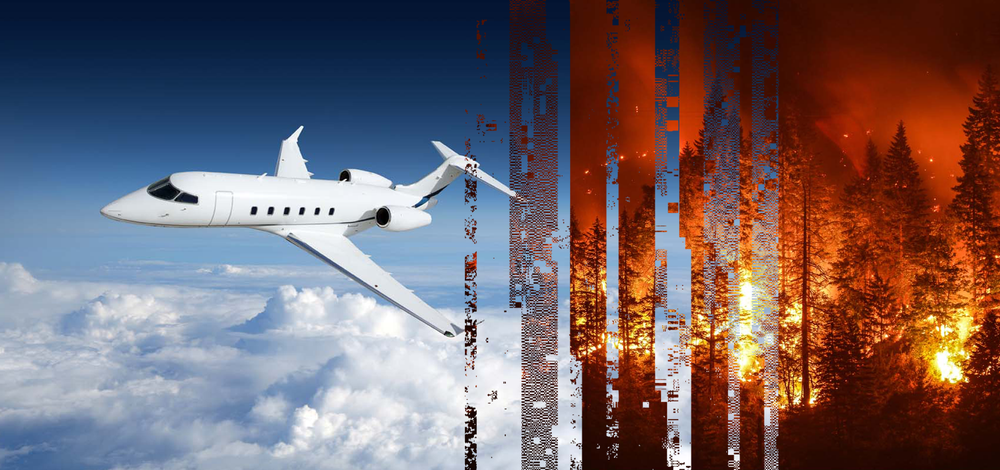
Flood deaths this year have reached their highest level since 2013, while monthly temperature records have been broken in more than 100 countries, reveals new analysis by Oxfam. The findings come as 87 private jets have so far landed at Antalya Airport in Türkiye during the UN climate summit (COP31).

Shankar Giri/Oxfam
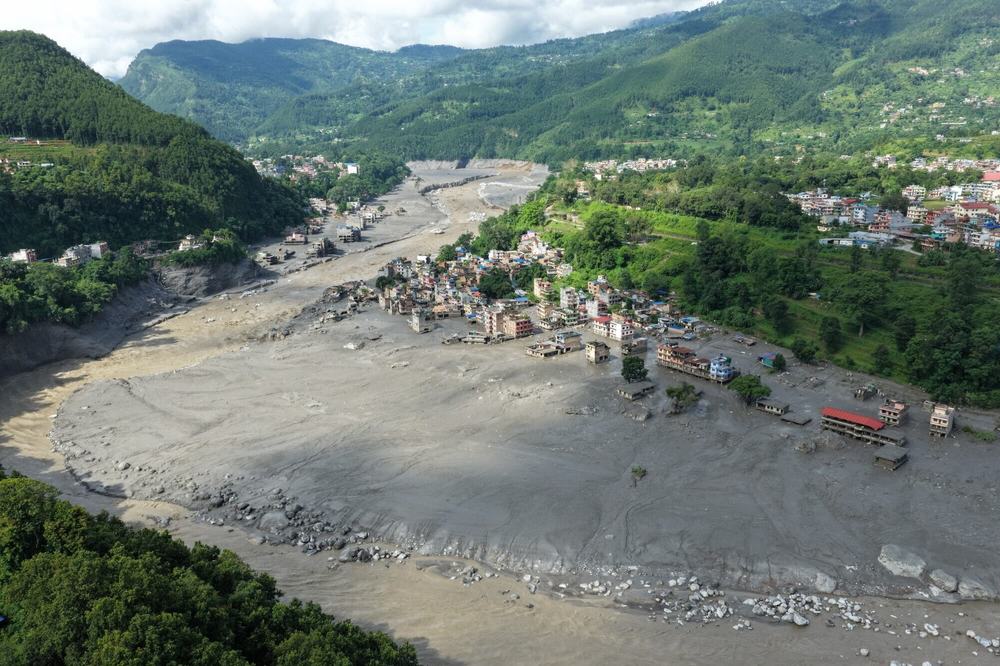
Aerial view of flood-affected areas along the Trishuli River, Nepal.

On Tuesday 26th August 2026 a major flash flood struck Nepal's Rasuwa District severely affecting Syapru Besi and Timure near the Tibet border.

Key points

  • Flood deaths have hit a 13-year high this year, while 106 countries have broken monthly temperature records.
  • The carbon pollution of someone in the richest 1 percent has contributed 100 times more to today’s extreme heatwaves than that of someone in the poorest half of humanity.
  • Since 7 November, 87 private jets have so far landed in Antalya, nearly 22 times more than during the same period last year.

At least 8,000 people have died in floods this year, around three-quarters of them in Nepal, where flash flooding caused the highest number of flood-related deaths on record. Deaths from flooding are seven times higher in more unequal countries.

Between January and September 2026, monthly temperature records were broken in 106 countries. 

The carbon pollution of a person in the richest 1 percent has contributed 34 times more to today's extreme heatwaves than the average person, and 100 times more than someone in the poorest 50 percent.

“

The populations who contributed least to the climate crisis are absorbing its worst consequences, while those who caused it are best equipped to protect themselves. Those most responsible for the crisis, wealthy individuals, corporations and countries, must bear the greatest cost of adaptation and recovery, including through climate finance to those least responsible but most exposed. Instead, the super-rich benefit at both ends of the crisis: first, through continued investment in polluting industries, and second, through investment in the booming ‘adaptation economy’ - recovery and rebuilding services are sold back to a warming world”

Jean McLean, Oxfam Chief Influencing Officer

Oxfam

Green banner with the words 'Together we say rich polluters must pay'.

Oxfam is at COP31 in Türkiye, calling on the UK government to:

  • Make polluters pay their fair share for climate action. This must include introducing a permanent excess profits tax on oil and gas companies, once the existing Energy Profits Levy expires, set at a meaningfully high level, alongside permanent wealth taxes and stronger taxation of high-emitting luxury items like private jets.
  • Improve the quality and quantity of its international climate finance commitments, prioritising grant-based finance rather than loans that deepen debt. The UK should commit to ensuring 50% of its international climate finance is spent on adaptation.
  • Champion a just transition towards a fairer, greener future. At COP31, the UK should advocate for a strong Just Transition Mechanism to support just transitions on a global scale, whilst setting out national plan for a just transition at home which makes reducing inequality a key aim.
  • End profiteering from climate disasters. Governments need to curb corporate power in emergency response, reconstruction, and food systems during disasters.

Oxfam's analysis of data from Polluterjet reveals that 87 private jets have landed at Antalya Airport since 7 November, emitting an estimated 777 tons of CO₂, and equivalent to flying around the world more than 3 times. Nigerian billionaire Aliko Dangote’s private jet flew approximately 4,370 kilometres from Lagos to Antalya, emitting an estimated 30 tons of CO₂, roughly as much as the average person emits in six years. During COP30 last year, 66 private jet journeys were recorded. 

Private jets are among the most carbon-intensive ways to travel, and their use and ownership has grown alongside the extreme concentration of wealth. About 250,000 people use private jets, equivalent to 0.003 percent of the world’s population.

Key points

New analysis by Oxfam of private jet data finds that in 2025:

  • On average, each private jet flight emitted as much carbon pollution as the average person does in an entire year. 
  • 68 percent of private jets departed from the US, home to four percent of the world’s population.
  • Collectively, private jets flew four billion kilometres, equivalent to circumnavigating the Earth 105,000 times.

The Global Solidarity Levies Task Force estimates that taxing private jets could raise approximately $45 billion per year, nearly 12 times the amount rich countries gave to UN climate funds in 2025. 

Background

  • Temperature data are monthly average surface temperatures from 1940 to September 2026 from the Copernicus Climate Change Service and sourced via Our World in Data. For each country, the maximum temperature value for each month from 1940 to 2025 was compared to the monthly temperatures in 2026. 106 countries (out of 194 where data was available) had at least one monthly temperature that broke the previous record.
  • Flood data are from EM-DAT, a global mass disaster database. According to EM-DAT, between January and September 2026 (the most recent data available) floods caused 8,123 deaths. This is the highest toll for the same period since 2013 and the second highest since 2000, when reliable records began. According to EM-DAT, the August floods in Nepal killed 6,250 people.
  • Oxfam's analysis of private jet data is sourced from Polluterjet, a live tracker monitoring private jets arriving in Antalya during COP31. Not all passengers on these flights will necessarily be attending the summit.
  • Oxfam's analysis of data sourced from the Private Jet Accountability Project finds that 66 private jets landed in Belem, Brazil (114 tons of CO₂) during COP30.

Press contact

For comments, interviews, or information please contact the Oxfam GB Media Team: