Hassona Aljerjawie/ Alef Multimedia/ Oxfam
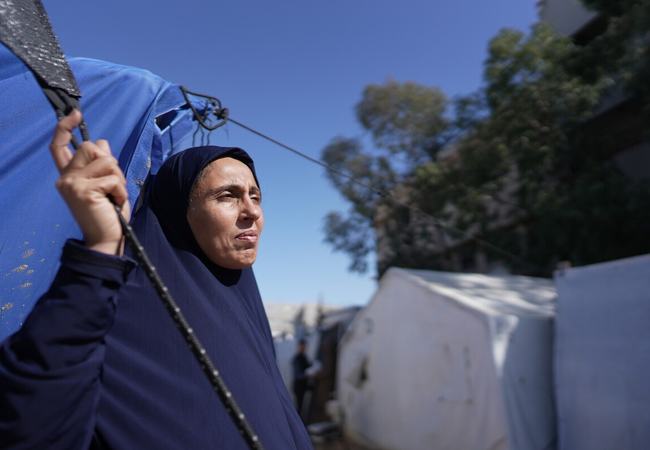
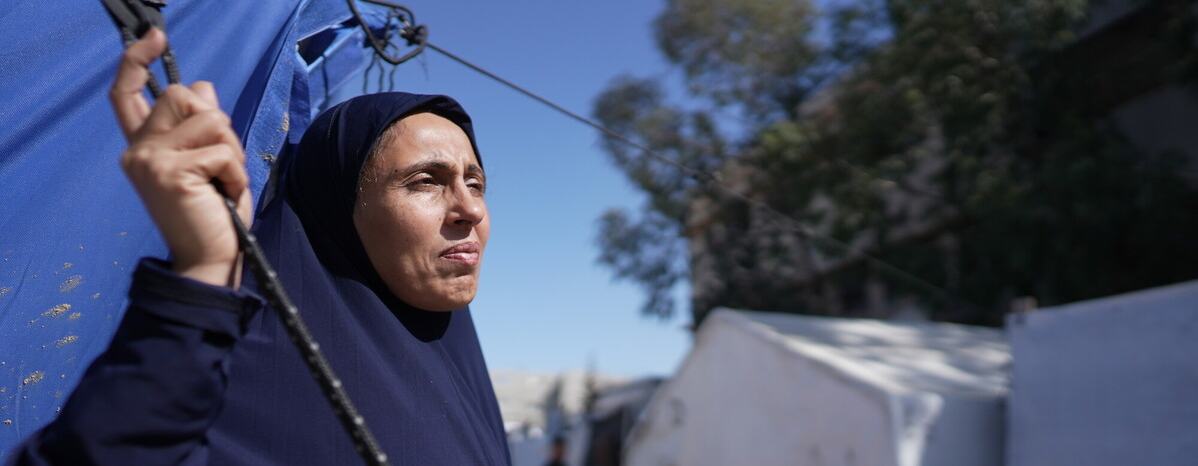
A woman standing outside a blue tent looking out to the distance in the Occupied Territory of Palestine

Rethinking humanitarian diplomacy through gender

Yasmine Chawaf and Aurélie Rime

24 Jun, 2026 / 5 mins read time

People most affected by conflict and inequality are often shut out of the spaces where decisions are made. In this blog we challenge how the system currently works and make the case for real change – not just inclusion in name, but a meaningful shift in power, resources and decision making.

Find out how a more equitable and effective approach is already being led by women within their communities around the world. And, discover 11 gender-transformative first steps to redistributing power, resources and decision making control.

Why humanitarian diplomacy needs to change

We, the authors of this blog, could not come from more different worlds. One of us is a humanitarian practitioner and protection advocate working with local and national actors. The other comes from a diplomatic background, working between Geneva-based diplomatic spaces and frontline humanitarian negotiations. And yet, we reached the same conclusion: something is wrong with how humanitarian diplomacy is often practiced, and it needs to be rethought.

The problem is not the absence of women or a lack of capacity. It is a system that continues to deny them influence, legitimacy, and resources.

The problem is unequal power

The system still operates as if diplomacy belongs to a narrow group, too often dominated by the same profiles, the same institutions, the same power holders.

Who holds the power in today's system?

Spaces continue to be dominated by those who present themselves as champions of human rights and protection, while rarely relinquishing control. We cannot continue to accept a model where power remains concentrated in rooms filled with the same profiles, speaking about communities they do not live in, and gender dynamics they do not experience, and calling it representation.

What needs to change?

If humanitarian diplomacy is about people, then it must make space for people. Real space. Because right now, even so-called participation is restricted and tokenized.

Shifting power means moving beyond symbolic participation toward real influence over resources, agendas, and solutions.”

Hayat Mershad, FeMale Executive Director

The barriers to meaningful participation

At a global event, we both had to secure funding equal to, if not more than, a person’s monthly salary just to get an online link for a speaker – a woman leader from Lebanon – who could not travel because of the war. Even her remote participation came at a great cost.

So what inclusion are we talking about? What space are we claiming to open?

When participation depends on money and presence in specific circles

If participation itself is gated by cost, geography, language, and bureaucracy, then the system is not inclusive, it is exclusion by design.

This is, among other factors, why the current approach is not working.

We have spent years trying to “include” women in international humanitarian diplomacy spaces. And yet, if we are honest, the system has not delivered the change it promised.

Women are leading – but are not recognised

Women are not absent from humanitarian diplomacy. They are already negotiating access, mediating conflicts, protecting communities, and sustaining social cohesion, often in the most dangerous conditions; however, their efforts are rarely recognized or even acknowledged by the system as humanitarian diplomacy.

The myth of ‘neutral’ humanitarian diplomacy

Humanitarian diplomacy has long been framed by some as a technical, neutral process led by international actors and mostly focused on humanitarian access, more specifically international organizations’ access. But this is a convenient myth.

Diplomacy is political. It determines whose lives are prioritized, whose voices are heard, and whose risks are taken seriously.

The issue is not that humanitarian diplomacy is political, it is the fact that it is captured by existing power structures instead of challenging them.

Why representation alone is not enough

Similarly, for too long, gender has been reduced to tokenized representation, whether in meetings, statistics, program ‘beneficiaries’ etc. We celebrate when there are more women in the room or among our reached population. But presence is not influence.

Women are often consulted in the international system without influencing decisions, tasked with implementation without meaningfully influencing or controlling its resources, and invited into spaces that remain fundamentally unchanged.

If we continue like this, we are not transforming the system, we are reproducing inequality in a more inclusive language.

Moving beyond inclusion to sharing power

What is needed is not better apparent inclusion. It is a redistribution of power.

This requires international actors – diplomats, UN agencies, donors, INGOs – to reflect on a difficult truth: meaningful inclusion requires sharing more power, resources and decision-making influence.

Not symbolically, but materially. Not temporarily, but structurally.

Inclusion cannot be conditional only on compliance with international frameworks or comfort with institutional norms. It must also mean allowing women-led and feminist actors to define priorities, shape strategies, and control resources. It means accepting that they are political and so is change.

What gender-transformative diplomacy means

Ceding power to women is not enough if we do not also rethink what we mean by gender.

Gender-transformative humanitarian diplomacy requires not only increasing the participation and leadership of women and feminist actors, but also transforming the gendered norms, power relations, institutions, and intersecting system.

11 gender-transformative first steps to redistributing power, resources and decision making control

Fund women-led organizations directly, flexibly, and long-term. End subcontracting models that strip them of agency.

Guarantee real decision-making power for women-led actors in coordination bodies, policy platforms, and negotiations, not just participation or consultation. Ensure affected communities, especially women and other people of diverse gender identities and expression, directly shape humanitarian diplomacy priorities, advocacy positions, and response decisions.

Include women-led organizations from the start, not as an afterthought, in:

  • needs assessments
  • strategy design
  • priority-setting.

Recognize women-led and feminist actors as leaders and political actors. Treat their expertise as central, not auxiliary. Free up the space you occupy and recognize that humanitarian diplomacy cannot be restricted to topics of international organizations’ access and cannot avoid engaging with questions of power, exclusion, and injustice.

Invest in and back feminist alliances and coalitions to build collective power and stronger negotiating influence.

Reform donor systems and behaviors: align funding with local realities and dismantle biases around credibility and control. Establish measurable accountability for gender equality and power redistribution within humanitarian organizations, donor agencies, and diplomatic processes.

Open and resource access to international diplomacy spaces while investing in negotiation capacity where needed, interpretation, and removing administrative barriers.

Actively protect civic space and frontline feminist actors.

Redesign coordination systems to share/cede power, ensuring local actors, women and other marginalized gender groups have dominant voice and influence in shaping responses.

Enforce accountability without double standards, consistently uphold international humanitarian law, and prioritize protection of civilians over political convenience.

Use humanitarian diplomacy to address structural drivers of crisis and systemic gendered:

  • exclusion
  • discrimination
  • violence
  • harmful gender norms
  • unequal power relations.

Do not respond only to their consequences. Apply an intersectional approach and transform the institutions and cultures that sustain these inequalities.

Gender is about power and systems

Gender is not a box to tick, nor a category to balance. It is about power.

It is about the structures that produce violence, exclusion, and inequality. Gender-transformative action means addressing:

  • root causes (yes, that is a legitimate, and maybe one of the most important legitimate humanitarian goals)
  • patriarchy
  • conflict economies
  • racism
  • political systems that sustain harm, not just adapting services to their consequences.

Why intersectionality matters

It also means rejecting simplistic notions of “women” as a homogeneous group. Intersectionality is not optional, it is essential. A young displaced woman, an older widow, a woman with a disability, or a woman living under occupation experience power differently. If humanitarian diplomacy does not account for this, it cannot be effective.

Ultimately, we need to move beyond a 50/50 mindset.

Equality in numbers is not the goal. Nor should women’s inclusion be justified only because they represent “half the population” or are expected to speak solely for women and girls.

For national and women-led actors, shifting influence means moving from being seen as implementers to being recognized as leaders and political actors in humanitarian response.”

Hayat Mershad, FeMale Executive Director

The future of humanitarian diplomacy

Transformation is about recognizing women as political and humanitarian actors whose leadership, analysis and contributions strengthen outcomes for entire communities. A gender-transformative humanitarian diplomacy is one that broadens whose voices shape decisions, and what outcomes are pursued. It is one that values local, relational, and community-rooted diplomacy as much as high-level negotiations.

It is one that is accountable not to institutions, but to the people it claims to serve.

Women are already leading this transformation on the ground. The question is whether the system is ready to follow.

About this blog

This blog was developed by Oxfam in collaboration with the Centre of Competence on Humanitarian Negotiation (CCHN) as part of broader reflections on gender and humanitarian diplomacy. Read Gender and Humanitarian Diplomacy, the companion piece to this blog written by CCHN that explores how to strengthen your diplomatic practice.

Fur further reading you can also explore Oxfam's policy note titled Humanitarian Diplomacy Re-Imagined.

About the authors

Yasmine Chawaf

Yasmine is Protection Advocacy Coordinator for the Global Humanitarian Team, Oxfam.

Aurélie Rime

Aurélie is Diplomatic Adviser for the Centre of Competence on Humanitarian Negotiation (CCHN).