Anete Lusina / Pexels.com

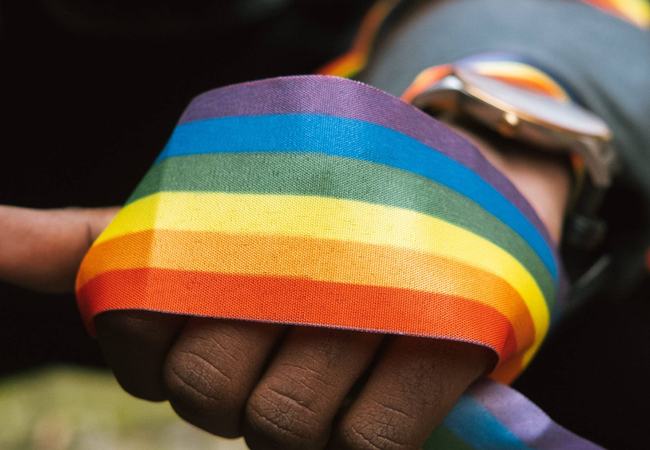
A thick band of rainbow coloured ribbon wrapped around the fist of a person of colour.

Solidarity without exception: Pride, backlash, and standing up for each other

Rebecca Shadwick

27 Jul, 2026 / 5 mins read time

From global spaces intended to progress gender equality, through to Pride, we take a look at how anti-rights actors work across causes to roll back human rights, and explore why that makes cross-issue solidarity so vital right now for anyone who cares about human rights.

What happened at CSW70 and why it matters

Every year, the United Nations hosts the Commission on the Status of Women (CSW), the biggest international space for feminists and women’s rights defenders to gather and discuss progress, challenge members' states and policy makers to do better and work together to advance gender equality across countries. In March 2026 it was the 70th session of CSW.

A quieter, more restricted global gathering

CSW70 was not what I expected. I’d heard so much about the incredible energy and inspiration of having thousands of feminists in one space.

For many reasons – chiefly, that the expanded US visa ban that came into effect January 2026 severely limited the attendance of feminists from the majority of the world. But also, I saw the emboldened presence of anti-rights activists, both in civil society spaces and in the halls of the UN itself.

https://www.congress.gov/crs-product/IN12631
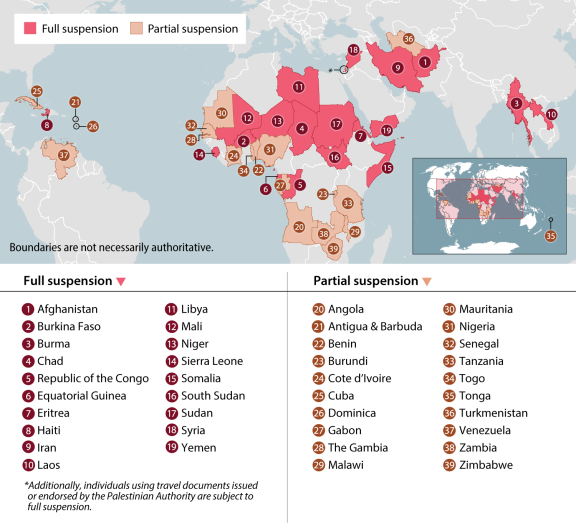
Map of the world showing countries in red that have a full travel suspension to the USA and countries in orange that have a partial suspension.

Countries subject to entry restrictions to the USA. Source https://www.congress.gov/crs-product/IN12631

The expanding reach of anti-rights actors
The entire CSW felt subdued and wary. Feminist joy existed in small, careful pockets rather than running riotous as I’d heard previous years described.

Even in explicitly feminist workshops and discussions, anti-rights actors felt comfortable showing up, disrupting discussion and taking space and time from feminists who had travelled miles and often had fundraised hard to be able to attend CSW.

Creating safer spaces for feminist organising

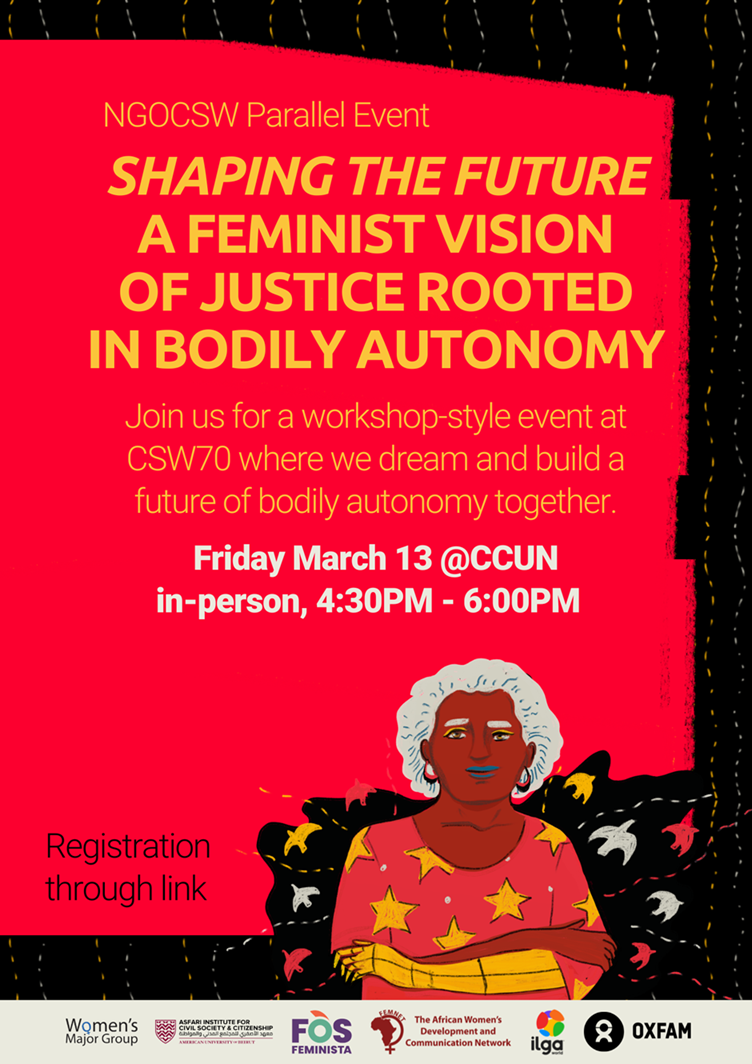
With allies from ILGA World, Fòs Feminista, Femnet, Women’s Major Group, and the Asfari Institute for Civil Society & Citizenship, we held a feminist workshop space as an official CSW civil society parallel event, designed to be a more participatory dreaming and planning space for feminists working on and concerned with bodily autonomy. Having been ambushed by anti-rights actors at CSW69, we did our best to make the space safer for feminists attending. We asked for pre-registration, we checked people in and we opened the event by clarifying that the space was specifically:

  • pro-reproductive justice
  • pro-choice
  • pro-queer
  • pro-Palestine
  • decolonial feminist space.

We asked anyone who couldn’t respect that to kindly find a different session. Yet a handful of young white women from North America proved determined to derail conversations, and persisted in taking up space from global feminists who had come to build a future of bodily autonomy for all.

Red and black event poster featuring a cartoon person with their arms folded. The name of the event is "Shaping the future: a feminist vision of justice rooted in bodily autonomy".

Flyer for the NGOCSW Parallel Event at CSW70.

A glimpse at wider global inequality

As both a first-time attendee of CSW and the event organiser and facilitator, it was a very mixed experience. It was extremely positive to see and hear feminists from many countries and regions talk about the future of bodily autonomy they wanted; and deeply depressing to see this interrupted time and again by people who felt their beliefs and race entitled them to derail the clearly stated aim of the workshop.

However, it was also a grim microcosm of the global state of affairs for gender justice: that a few people, mostly from or funded by rich white nations, are working twice as hard to force their restrictive beliefs onto the rest of the world, to force regressive and punitive policies on women and queer people the world over.

Connected human rights under threat

It’s not just our rights to sexual and reproductive justice they want to dismantle. The same movements are also working to push back human rights for queer people – to participate as equal members of society, to love who they love, to even exist as who they truly are without fear of discrimination or coercion.

Afterwards, I found myself the focus of one of these participants, who was keen to extend her earlier remarks to add her views about preventing healthcare for trans youth.

It was a stark reminder of just how under threat queer communities are too.

Why Pride and gender justice struggles are linked

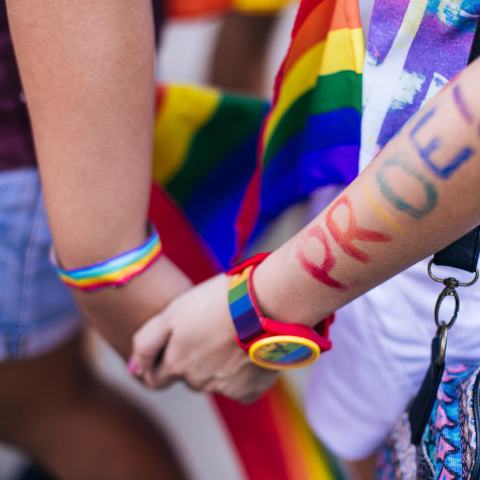
During the months of June, July and August Pride is celebrated in several countries. It’s a globally known moment for support of LGBTQIA+ rights and liberation, and to honour those leading that struggle.

I can feel the sense of urgency more than ever.

These well-funded, well-organised anti-rights movements are targeting queer communities, trans ones in particular, to ‘divide and conquer’. They position trans rights as in conflict with women’s rights, or suggest that queer rights are the enemy of women or families.

But women’s rights and access to reproductive justice and queer rights are being threatened by the same actors simultaneously.

Funding imbalances driving inequality

The anti-rights movement is organised and well-funded, from national to the global level. Global Philanthropy Partnership reported that in 2021-22, just three anti-LGBTI organisations got more funding than over 8,000 LGBTI rights organisations globally.

The attack on queer people – their rights and their very lives – is another facet of the attack on women’s rights and yes, women’s lives. It is a systemic attack, and it requires a systemic solution: global decolonial feminist solidarity. Just as they are organised across themes and borders, so must we be.

Why solidarity across movements is essential

Human rights are universal. They have to be guaranteed for all.

Sacrificing one group to this rapidly-advancing fascism is absolutely NOT going to save anyone (as some seem to think it will). Everyone has the right to be safe and free from violence, fear, and coercion. Everyone should be able to make decisions about their bodies. If it’s ‘only some of us’ have rights, then truthfully none of our rights are safe.

Our shared responsibility to defend human rights

Feminist and queer movements for lesbian, gay, bisexual, transgender, queer, intersex and asexual rights are leading the way to a future where everyone, no matter their gender or identity, can truly be free and equal. But defending queer rights, defending human rights, cannot be the domain of queer people or queer movements alone. We need solidarity.

How you can show solidarity and take action

During Pride and every day, we insist on everyone’s right to make their own choices about their lives without pressure or discrimination. We can shift the rising anti-rights and anti-gender narratives by reinforcing universal human rights in solidarity with queer movements. That’s where YOU come in.

What does an ally look like in practice?

No matter where you live or how you identify, we can all improve our allyship and solidarity.

We all need to push for more support and funding to back the leadership of those around the world already putting themselves on the line to save us all from this wide-reaching rights rollback.

We all need to demand better of our leaders in standing up to these anti-rights narratives and those bankrolling them.

We need more and more people outside the queer community to see the deep-rooted connections between all our struggles and our rights; and we need everyone to demand change at every level, starting where they are.

Start being that change now, stand in solidarity and pass it on.

Freedom without fear. Solidarity without exception.