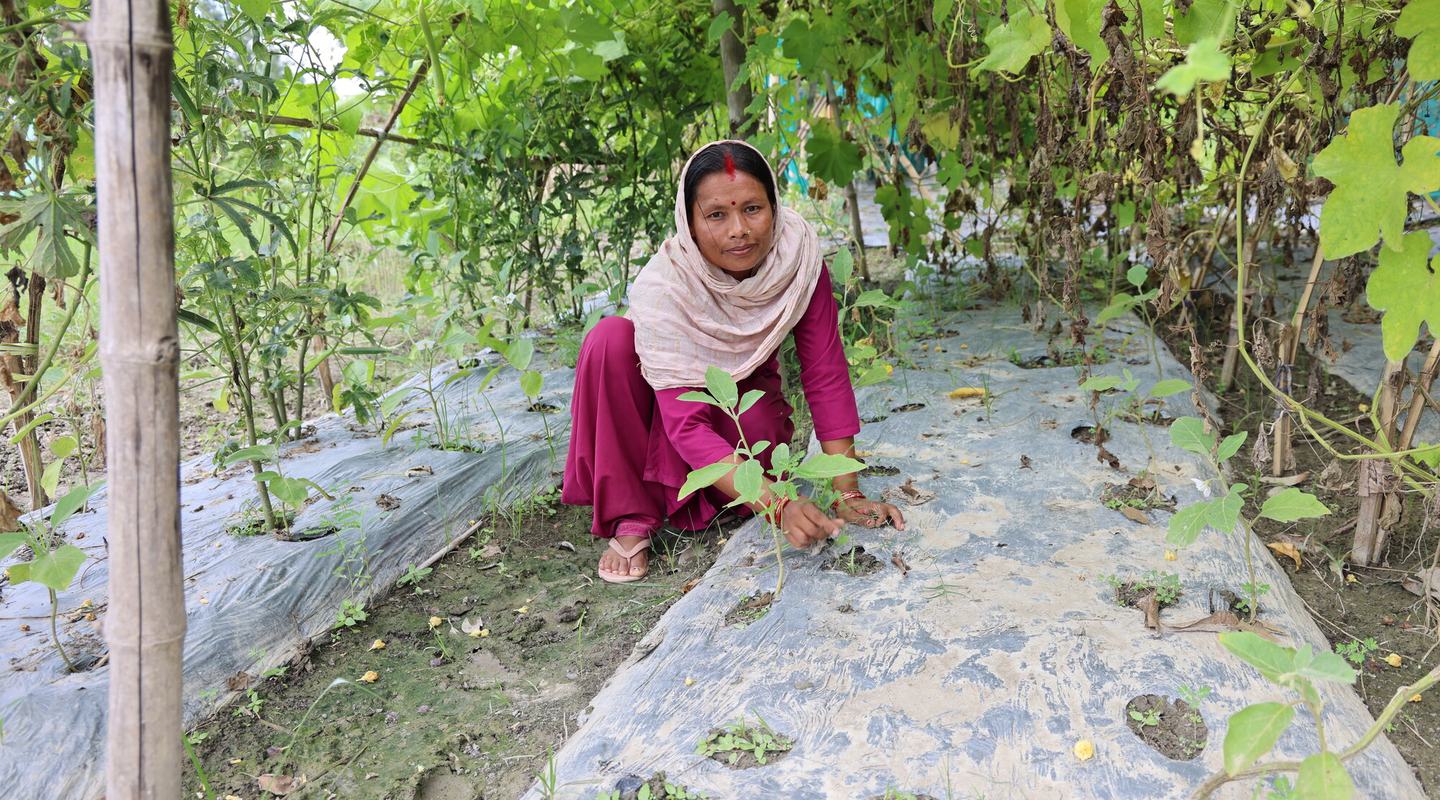
Gita tending to her vegetable plot in Bishrampur, Nepal. Credit: Rachana Mukhia / Oxfam
Stories of hope
Harvesting new futures in Nepal
In the southern plains of Nepal, communities face frequent climate catastrophe such as floods, landslides and droughts.
This is why local partners NEEDS Nepal and the Rural Development Centre are working with rural women, who are among the most impacted, to strengthen their livelihoods in the face of the climate crisis.
Gita's story
Gita is a farmer in Bishrampur, Nepal. Before starting her farming business, she relied on her husband’s income to support their children.
Rachana Mukhia / Oxfam
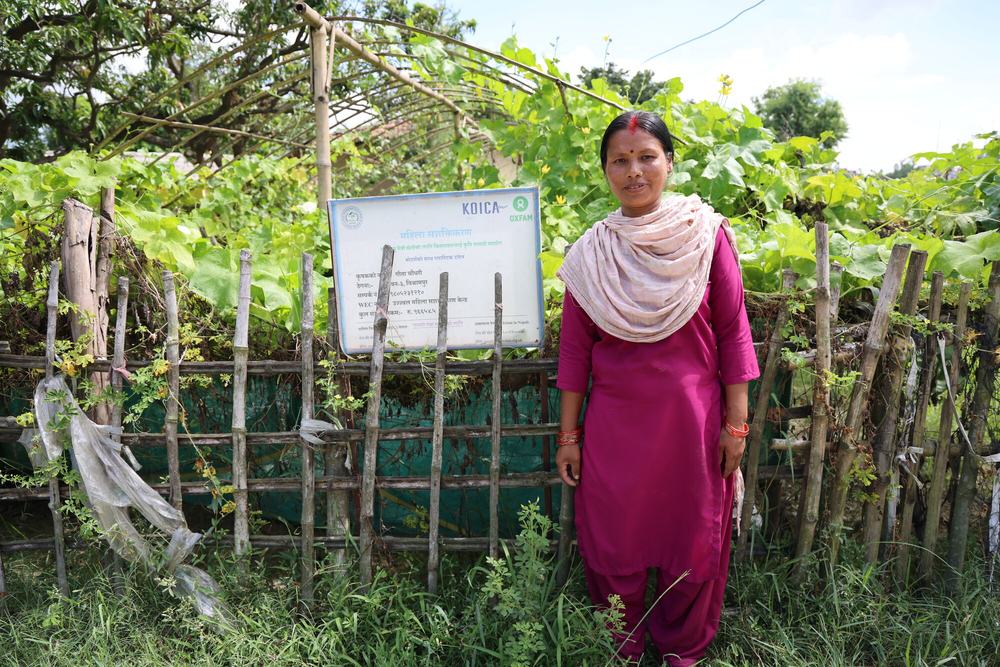
Gita stands on her farm in Bishrampur, Nepal.
"The ward office invited the women in our community to a meeting, about 50-60 women had gathered. During the session, we learned about the project, the establishment of Women's Empowerment Centres (WEC), and the selection criteria. All of us put our names down to join. My main motivation was the hope that the WEC would help me learn new things.
"Previously, our family relied entirely on my husband's income, forcing us to borrow from neighbours during emergencies. While I raised goats to sell, my husband helped sell them when we needed cash. I had no understanding of savings or bank accounts. Since joining the WEC, I have opened my own bank account and now save [money] every month.
Rachana Mukhia / Oxfam
As someone who rarely stepped outside the house, I now take my harvest to the market.”
Gita discussing her farming business.
“I let my customers know my vegetables are organic. This way I'm able to secure better prices and my produce sells out quickly. My husband also helps out in the field on his days off. Climate-smart farming has made it easier as it requires less labor, and with mulching [adding a protective layer above soil], I no longer have to weed on a regular basis.
"I want to expand my farming venture further and support my children’s education."
About the Women's Empowerment Centres project
This three year programme will run until the end of 2027, and is collaborating with communities to build a more secure future for local women.
“WEC has now given me confidence to dream and my ultimate goal is to become a political leader one day so that I can serve my community and my people.”
Gita, Nepal.
Participants are supported with:
- Training on techniques to grow more food in spite of a changing climate (climate-smart agriculture).
- Business and finance training and demonstrations.
- Access to a women-led business 'matching fund' to help women-led businesses get started.
So far, this programme has backed 42 women-led businesses, provided training to over 200 women in climate-smart agriculture, and provided additional training to 22 young women and girls.
Discover more
News
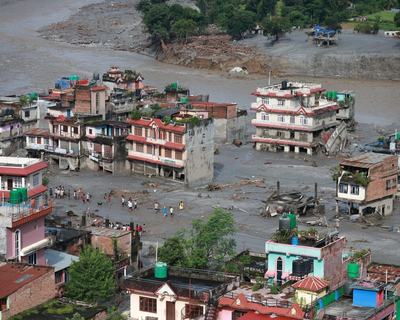
Nepal’s catastrophic floods “wake-up call” on climate action

Blog
Climate change and flooding
Discover more about how the climate crisis is causing extreme weather events around the world.

Petition
Make rich polluters pay
Join Oxfam and thousands of others demanding a tax on the biggest and richest polluters.