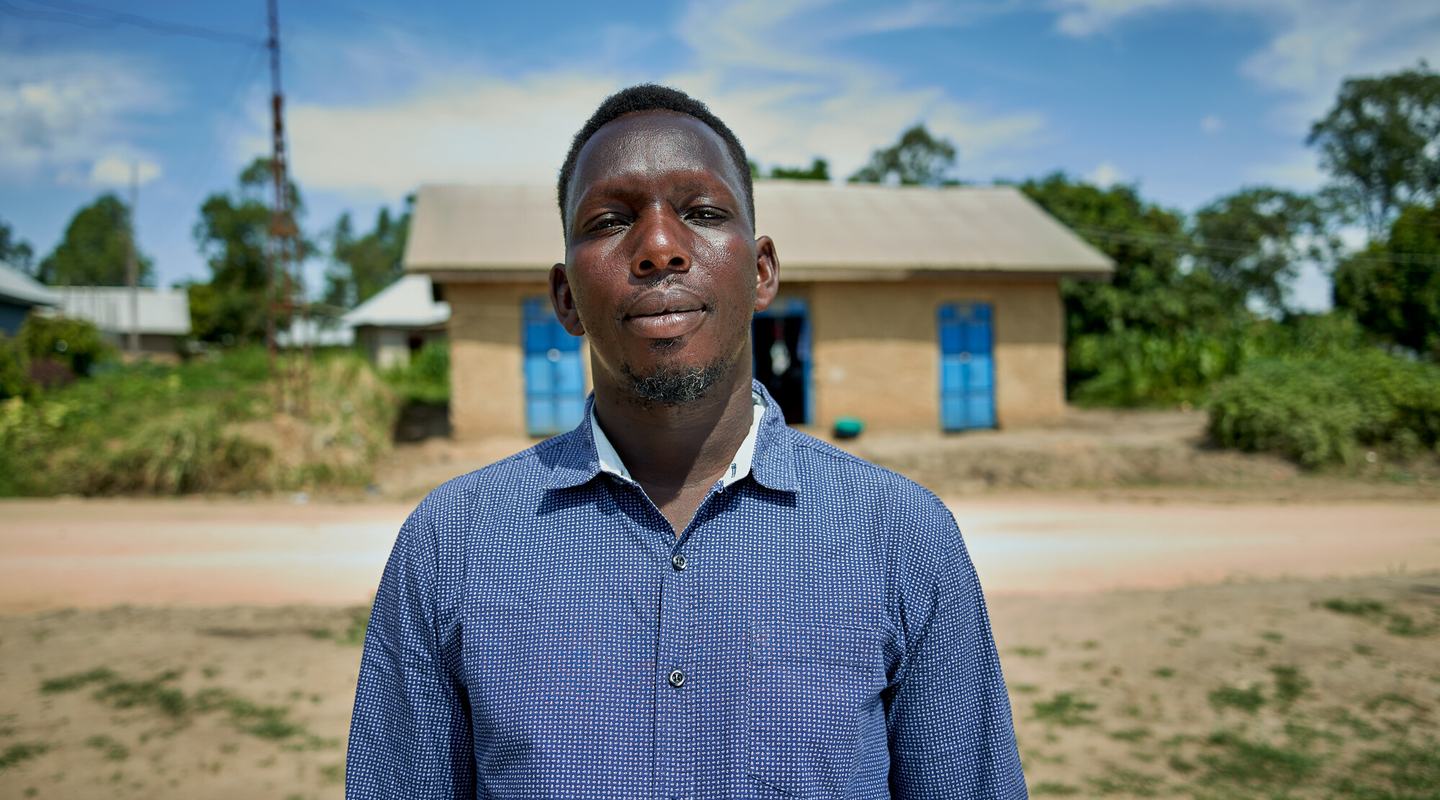
Salama, the president of the Rwampara youth structure. Credit: Azaria Muhongya / Oxfam
Stories of hope
Protecting communities in DR Congo
In eastern Democratic Republic of Congo (DRC), the Ebola outbreak is devastating communities already reeling from years of conflict.
Still facing one of the largest hunger crises in the world, almost a quarter of DRC’s population is experiencing crisis and emergency levels of food insecurity. However, collapsing global humanitarian funding has left aid agencies struggling to meet these needs.
The Ebola outbreak is hitting a country already stretched to breaking point. Yet, through it all, local communities are mobilising to protect their loved ones, spread awareness, and save lives.
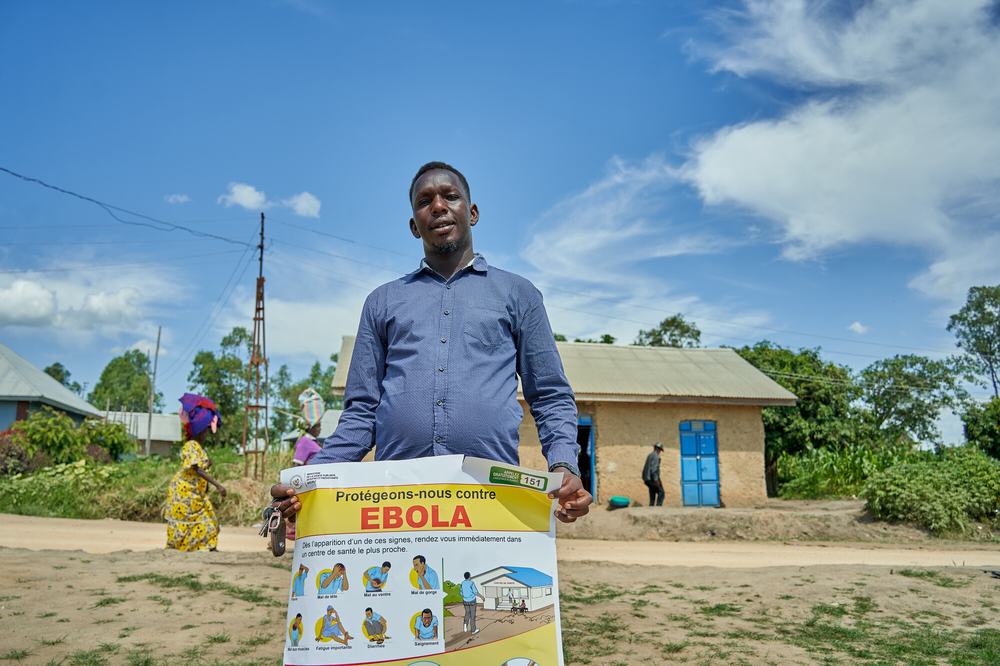
Salama holds up a poster saying (in French) "protect us from Ebola"
Salama's local leadership
Salama is a youth leader and the president of the Rwampara youth structure in Ituri province – the epicentre of the country’s Ebola outbreak. Amid aid cuts which have destabilised local organisations, which are key in sharing crucial information during epidemics, Salama is raising awareness about the virus within his community.
Through educating his community about Ebola's symptoms and how it's spread, Salama's work is mobilising other young people to slow down transmission and spot cases sooner.
“We will not accept that the spread continues, when we young people can take action.”
Salama in Ituri Province, DRC.
“We are protecting healthcare workers [from stigma and discrimination] and we will continue to do so because this disease exists and is killing people; we will not accept that the spread continues, when we young people can take action.
We will not accept anyone preventing healthcare workers from doing their job in the face of this disease that is ravaging our communities. We agree that doctors should be able to do their work safely, day and night, in our community, and feel comfortable doing their jobs.
Initially, people opposed it due to ignorance, but now all young people are aware of the Ebola epidemic. I encourage healthcare workers in their work; they should have no fear, as they are the ones responsible for our medical care."
The scale of the crisis
Containing Ebola requires informed communities with access to basic healthcare and hygiene services. Oxfam’s Ebola response involves sharing clear health information and working with local partners who are on the ground leading prevention efforts to stop the virus from spreading.
Together with our partners, we are carrying out an emergency response in affected areas, providing clean water, sanitation services, and health awareness.
Discover more
Emergency appeal
Donate to DRC Crisis Appeal
Give what you can today to help us scale up our response.
News
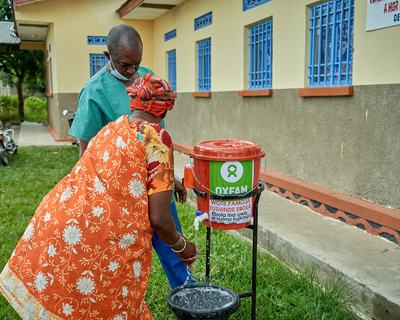
How a simple water tank is saving lives
Access to clean water is essential to the communities devastated by the Ebola outbreak in DR Congo.
News
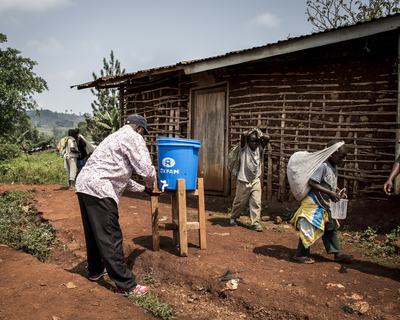
Aid cuts left DRC blind to Ebola
Oxfam reacts to the WHO’s declaration of the Ebola outbreak as a Public Health Emergency of International Concern (PHEIC).