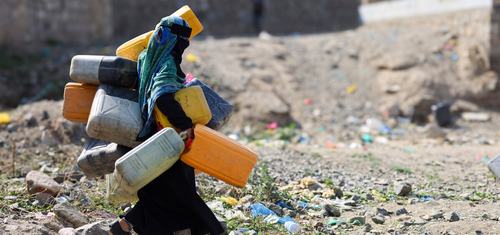
"I show them love and they show me love in return. I try to help people feel safe." Buthayna works for Oxfam KEDV in the emergency response team. She's a Syrian refugee whose home in Türkiye was destroyed by the earthquake. Image: Mustafa Karali/Oxfam
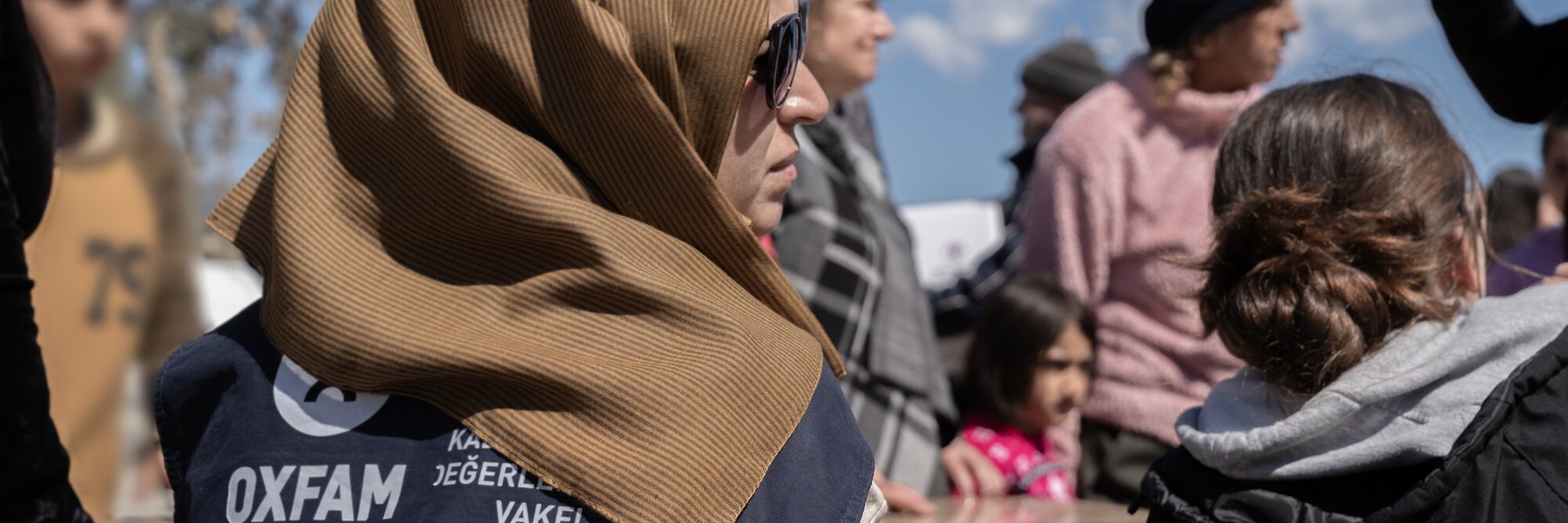
Buthayna stands wearing a brown hijab and sunglasses and an Oxfam vest. There are people in the background.

Turkey-Syria Earthquake 2023

Last updated: 27 October 2026

Oxfam, together with local partner organisations, worked with people affected by the 2023 earthquakes in Türkiye (Turkey) and Syria. Thank you for your support.

We are no longer raising funds for this appeal, but you can donate to Oxfam's Emergency Response Fund, which helps us respond immediately when a crisis strikes.

In the second week of the earthquake, women wait for their families to be found under the rubble, carrying family photos in their hands. Image: Yalcin Ciftci/Oxfam KEDV
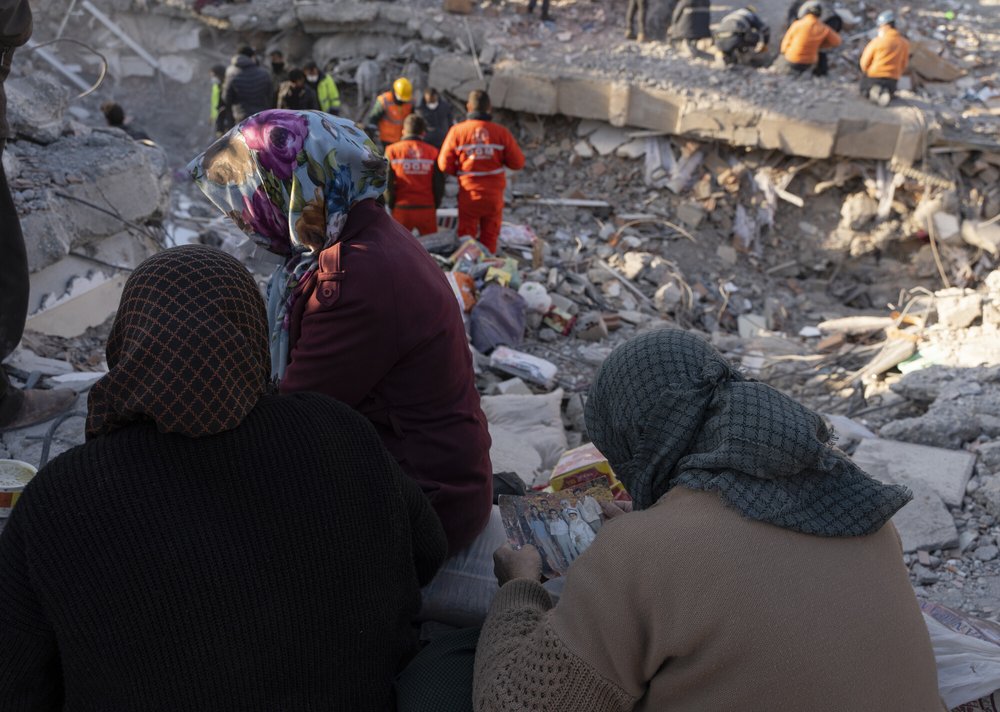
The backs of three women with headscarves, one holds a family photo in her hands. Behind them, rubble and people in orange emergency wear searching among it.

What happened in Türkiye (Turkey) and Syria

In the early hours of 6 February, a 7.8 magnitude earthquake hit Türkiye (Turkey) and Syria, followed by another earthquake soon afterwards.

Many thousands of people were killed. Survivors who were forced to flee their homes had to face freezing temperatures.

These were the worst earthquakes to strike Türkiye (Turkey) in nearly 100 years. They had devastated a region where large refugee communities were living in tough conditions.

The severe and continuous shocks from the earthquakes reached cities in Syria like Aleppo, Latakia, Hama and Idlib, where the humanitarian need was at its highest since brutal conflict began 12 years ago.

Infrastructure was heavily damaged, and people struggled to find safe shelter, water and food, especially in places impacted by ongoing conflict.

There was a huge loss of life and thousands of people were injured. The harsh weather and damaged roads made rescue efforts challenging.

A new earthquake, two weeks after the first, caused further physical damage and psychological trauma. The epicentre was in one of Oxfam-KEDV’s working areas. Hospitals were evacuated as a precaution against a possible tsunami, which, thankfully, did not occur.

Türkiye (Turkey) and Syria earthquake map. Image; Oxfam

The situation

Southern Türkiye (Turkey) was heavily affected, especially areas around Gaziantep and Hatay/Antakya.

In Syria, the cities of Aleppo, Latakia, Hama and Idlib were badly hit by the earthquake and severe aftershocks.

“

In February, in just a few minutes, my dream to build a house for my family was shattered by the earthquake. I thank God that I am strong.”

Buthanya Elfaris, who fled war in Syria in 2013, worked in the Oxfam KEDV emergency response team, in Türkiye.

How have Oxfam KEDV and partners responded

Oxfam-KEDV partners and cooperatives supported communities with items to meet people's basic needs, and focus on those who were in more immediate need in the areas affected by the earthquake and aftershocks.

Together with partners, we:

  • Provided essential items including blankets, food kits, stoves, hygiene items and power banks were distributed to affected families.
  • Installed basic facilities such as toilets and showers for families living in temporary accommodation.
  • Supported a network of women’s cooperatives to prepare hot meals for their communities by providing food and cooking equipment.
  • Fixed a large water storage reservoir, which served a temporary accommodation centre for up to 30,000 people.

Inequality in a crisis

Social inequalities show up starkly in disasters, with the most marginalised worst hit. The earthquakes deepened risks already facing women, children, older people, LGBTQIA+ people, people with disabilities and people with refugee status – those often unseen, unheard, and most excluded from society.

And it’s the voices of communities affected which are too often ignored when dealing with a crisis. They know best about what’s needed – from survival to recovery, to speaking out against underlying causes that makes them so vulnerable when disaster strikes.

Oxfam KEDV and Oxfam in Syria have been working on gender inequality for years. With KEDV rooted in women’s movements, and the team in Syria having a strong gender justice team, this experience and focus is a vital part of our response.

A person wearing an Oxfam jacket is shown with a hose with running water coming out of it into a tank outside in Aleppo.

Oxfam delivering water to shelters in Aleppo city. Image: Islam Mardini/ Oxfam

Oxfam Emergency Response