Ahmed Albasha/Oxfam

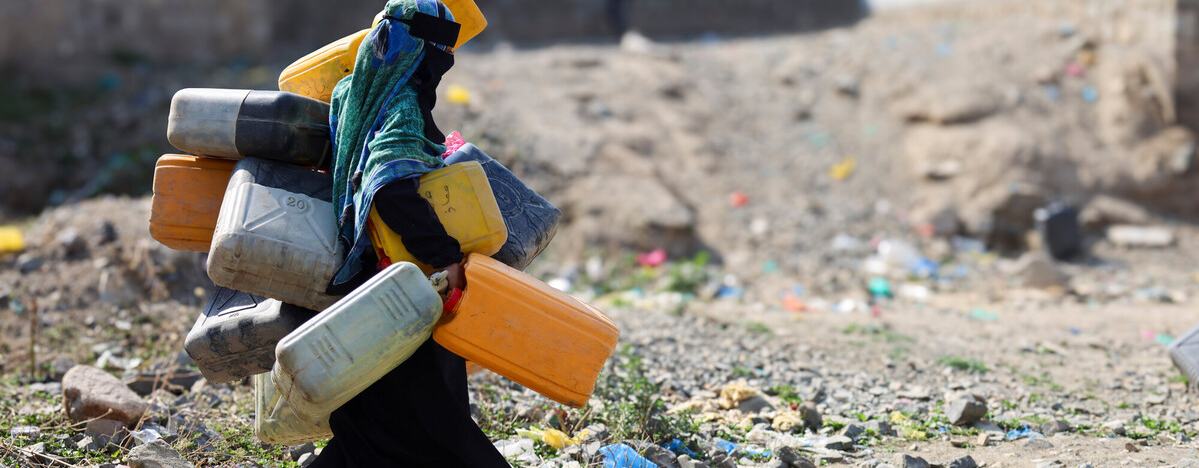
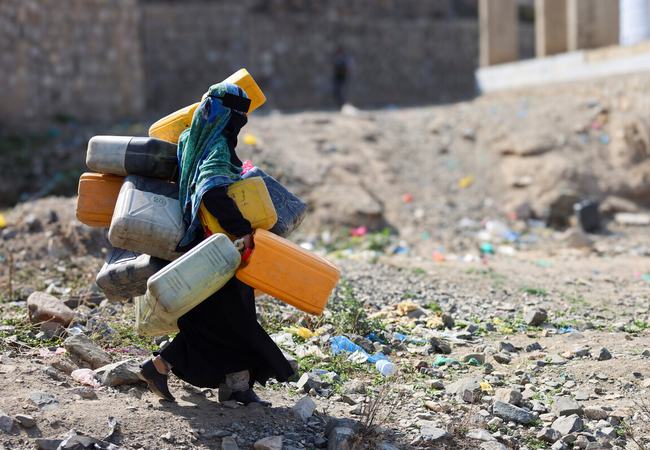
A woman in the city of Taiz, Yemen carrying lots of large water containers in her hands, under her arms and on her back walking across rubble.

Governments say they want peace but their budgets tell a different story

Bushra Khalidi and Amitabh Behar

21 Sep, 2026 / 3 mins read time

Every year on 21 September the world marks International Day of Peace, designated by the United Nations (UN) as a period of non-violence and ceasefire. As leaders gather at the United Nations General Assembly, they will speak of cooperation, security and our shared future.

The theme for 2026 asks us to “Invest in Peace – For Everyone, Everywhere, Every Day.” But across the world government budgets expose very different priorities.

Governments are spending more on war than peace

In 2025, governments spent a record $2.9 trillion on their militaries. Military investment increasingly extends to AI-enabled weapons, surveillance and targeting systems.

The richest donor countries provided just $174.3 billion in aid, after cutting it by 23 per cent, pleading financial scarcity. Humanitarian operations are closing, essential services are collapsing, and local organisations are being told to do more with less – while governments find greater sums for weapons and war and impunity spreads.

Yet the Pact for the Future says military spending must not undermine development or peace – a trade-off examined in the Secretary-General’s mandated report.

This is not scarcity. It is organized abandonment.

Budgets are declarations of political intent. They reveal whose security counts, what governments protect and whose insecurity they accept. A budget that funds weapons used to sustain aggression, occupation and violations while cutting food, water and medicine is not investing in peace. It is financing war.

Peace is not the silence left after people have been bombed, starved or displaced into submission, nor the quiet imposed on people living under occupation, repression or fear.

Positive peace requires rights, justice, equality and accountability. Feminist peace also asks whose security counts, who decides and who controls resources. A ceasefire is indispensable, but if it allows occupation, hunger, displacement and impunity to become further entrenched beyond view, it is a pause, not peace.

Conflict and impunity: where governments are failing to invest in peace

Across conflicts, money and power shape who is protected, who profits and who pays.

Nowhere is this clearer than Gaza where the UN Commission of Inquiry concluded that the Israeli government is committing genocide against Palestinians. The government of Israel has destroyed the foundations of Palestinian life, while governments continue supplying weapons, maintaining preferential trade and shielding it from accountability.

Recovery must be Palestinian-led, grounded in self-determination and preserve the unity of Gaza, the West Bank and East Jerusalem, not treat Gaza as a construction site awaiting foreign management. The same impunity enables the government of Israel’s attacks and continued occupation in Lebanon, where civilians again pay the price.

Elsewhere, atrocities by the Sudanese Armed Forces and Rapid Support Forces are sustained by external backing, while local responders struggle to keep communities alive amid funding cuts. In eastern Democratic Republic of Congo, communities are repeatedly uprooted as M23, backed by Rwandan forces according to the UN, expands its control while others profit from the region’s mineral wealth

Russia’s invasion of Ukraine continues to kill civilians and destroy infrastructure. Fighting in South Sudan has displaced hundreds of thousands and forced Oxfam to partially suspend assistance, while escalating fighting in Yemen threatens to deepen hunger, displacement and economic collapse and further disrupt lifesaving aid.

The United States and Israeli’s government attacks on Iran, like the United States’ military intervention in Venezuela, showed how quickly powerful states discard the UN Charter and international law when these constrain their geopolitical interests.

These crises have distinct histories, causes and responsible actors. But they expose a common failure to invest in peace where societies fracture, institutions collapse, and inequality deepens, while well-financed perpetrators continue unchecked.

Oxfam’s teams and partners see this first-hand. Aid saves lives, but humanitarian relief and development alone are no substitute for political action against the bombardment, occupation, extraction and repression driving human suffering.

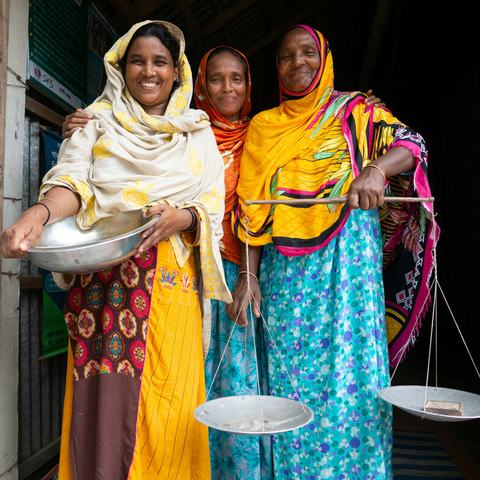
The imbalance is also about who receives money and political power. Women’s organisations receive less than half a cent of every dollar of international aid despite leading local responses, documenting violations and mediating disputes. Peace processes that exclude them reproduce the inequalities that fuel violence.
Three actions governments can take to invest in peace

On this International Day of Peace, leaders’ commitment should be measured not by speeches, but by budgets, votes, arms licences and trade relationships.

Governments must make three choices.

Stop bankrolling actions that harm civilians

International law must apply to allies as well as adversaries. Governments must halt arms transfers where weapons risk being used to commit serious violations, protect civilians, end unlawful occupations and sieges, and support accountability. The Security Council must fulfil its responsibility to maintain peace rather than allowing powerful states and their allies to place themselves above the law. International law that applies only to opponents is geopolitical privilege.

Fund services that allow people and societies to live

Investment should be focused on:

  • humanitarian action
  • water
  • food systems
  • healthcare
  • education
  • decent work
  • social protection
  • climate resilience

Cancel unsustainable debt and tax extreme wealth and corporate excess. Concentrated wealth and power also fuel conflict. Hunger and collapsing institutions are not peripheral development concerns. They are consequences of political choices.

Give local communities greater power and resources

Local organisations are not delivery subcontractors. Women’s rights organisations build peace by challenging the unequal power relations that sustain violence. They are not there to legitimise agreements negotiated without them.

Young people, women, displaced communities and people with disabilities must shape priorities, control resources and negotiate the future.

What should the United Nations do next?

The next UN Secretary-General should make this a priority from the first 100 days: defend the Charter consistently, challenge Security Council paralysis and put affected communities’ leadership at the heart of the UN’s work for peace.

The everyday architects of peace are already at work:

  • responders delivering water under bombardment
  • women organising across dividing lines
  • farmers protecting land and food systems
  • movements demanding justice

They need resources, protection, political space and an end to the policies making their work impossible.

You cannot bomb, blockade, occupy, starve or extract your way to peace.

Peace is the politically and economically sound choice. Governments know how to finance it. They are simply choosing to finance war.

About the authors

Bushra Khalidi

Bushra is Global Humanitarian Policy Lead at Oxfam International.

Amitabh Behar

Amitabh is Oxfam International Executive Director.