Elizabeth Stevens/Oxfam

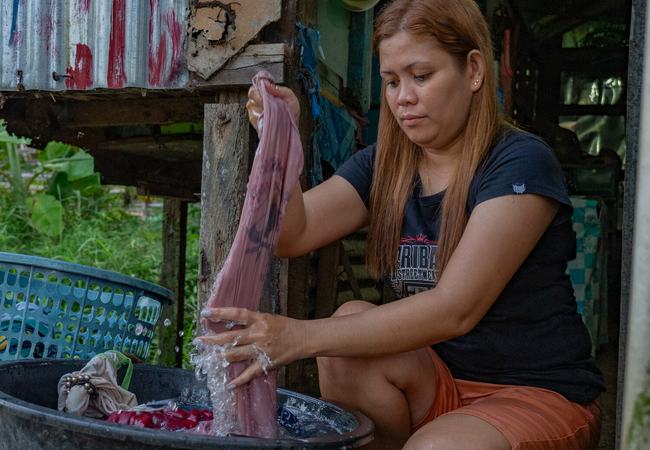
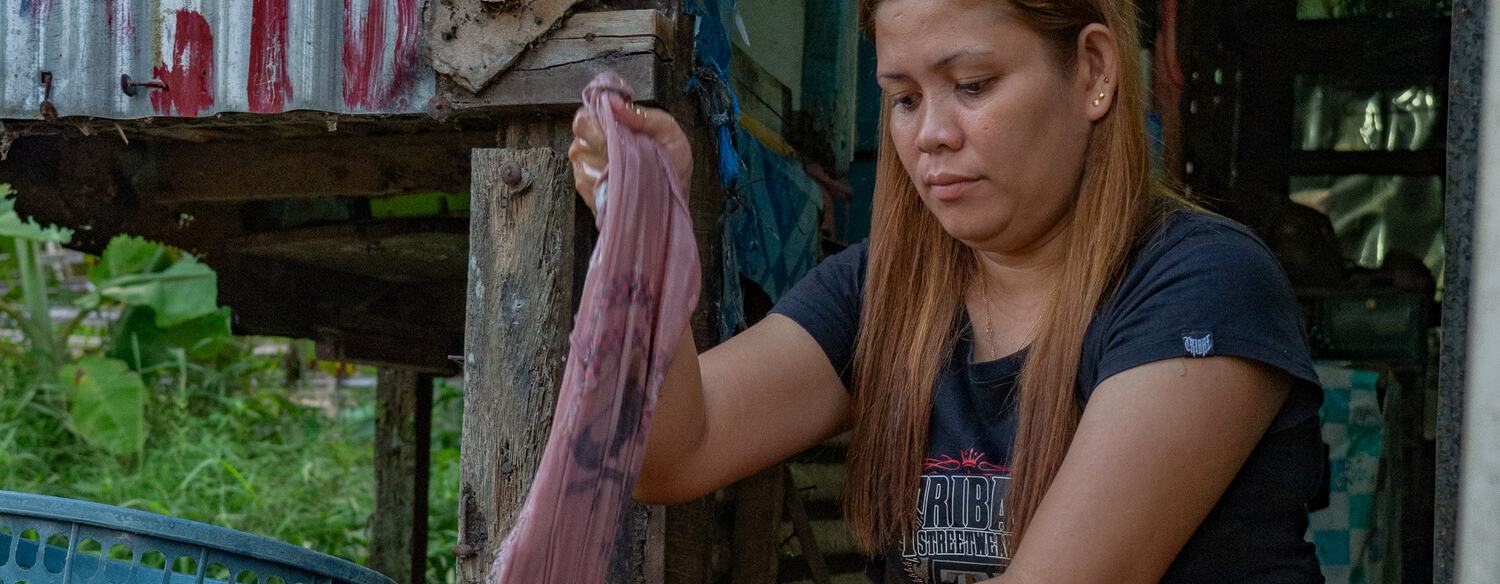
A young woman is crouched outside her home washing some clothes in a large tub.

Care as a compass for justice

Alex Bush and Silvia Galandini

29 Oct, 2026 / 5 mins read time

As we mark the International Day of Care and Support on 29 October, we ask: what if we organised our economy and society around care? Care for one another. Care for our planet. Care for a future built on hope, dignity and justice for all, not just for the few.

The authors call on the UK prime minister to change course, shift power and invest in fairness by putting care for people and planet at the heart of UK leadership.

Building a future for the many, not the few

UK Prime Minister Andy Burnham's challenge to "rip the plaster off" around fixing England's social care speaks to a broader truth: if we are serious about building a fairer, safer and more hopeful future, it is time to put care for people and planet at the heart of decision-making everywhere.

We live in a world of increasing conflict, accelerating climate breakdown and shocks including those driven by El Niño, attacks on human rights, worsening inequality, shrinking civic space and deepening social divisions. Yet too many decisions continue to prioritise extraction and accumulation of wealth for profit over people and planet.

An approach that centres care offers a different path – this idea is not new

Feminist and social justice movements, trade unions, community-led groups from Manchester to Mombasa have been calling for a different way to organise our economies and society.

At the heart of this vision is a simple truth: care keeps our world running, as wherever we are in the world, we all need or provide care at some point in our lives.

When care is missing, injustice grows

The consequences of not putting care for people and planet before profit are all around us.

Widening economic inequality

Wealth continues to accumulate at the top while women and girls, gender-diverse people, indigenous and racialised communities, disabled people, migrants and other marginalised groups face disproportionate harm and insecurity, with their unpaid and under-paid labour too often exploited and kept invisible.

Heavy, unequal and unrecognised care work fuelling gender inequality

Women and girls carry out 76.2% of the total amount of unpaid care work globally, 3.2 times more than men. This limits opportunities for education, paid employment, economic stability and wider wellbeing throughout their lives. Women are also over-represented in under-paid and poorly protected care jobs like healthcare, social care, childcare and domestic work.

“

It’s not just the woman’s job to do the household work. Everyone needs to help. And the mother should take a rest after a heavy day’s work. If I had more free time, I would use it to bond with my family. I would play volleyball and badminton with my children.”

Jamela Rosaldo (pictured) from San Vicente, the Philippines.

Climate, conflict and humanitarian crises

Decades of decisions prioritizing profit over environmental protection, rights, resilience and peacebuilding have left communities exposed to violence, displacement and chronic insecurity. Meanwhile, increasing unpaid care workloads fall overwhelmingly on women and girls, as more time is spent securing water, fuel, food, and supporting communities through climate and humanitarian shocks.

A crisis of care and a crisis of inequality

A roadmap to reorganise economies and societies

There is increasing international consensus on the need to shift our attention to care.

The UN Human Rights Council has recognised that care is central to the realisation of human rights and gender equality. The Inter-American Court of Human Rights has also established that care is a human right, and that States have to ensure people's rights to receive care, provide care in dignity, and practise self-care.

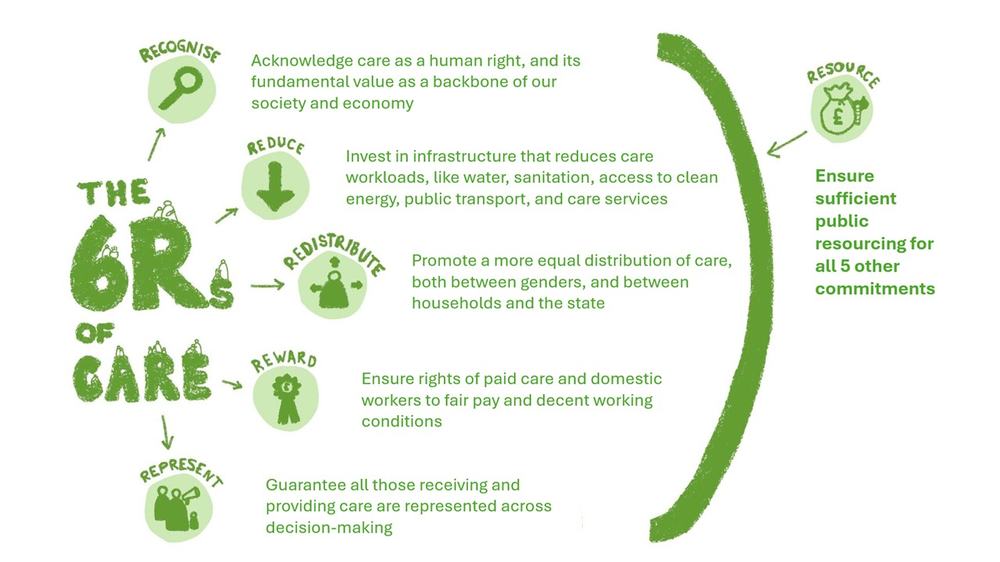
The emerging UN’s 6R Framework for transforming care systems reflects this consensus. It builds on longstanding advocacy to call for:

  • the value of all care work and the rights of all those providing and receiving care to be recognised
  • unpaid care to be reduced and redistributed
  • paid care work to be fairly rewarded
  • care workers and all those providing and receiving care to be meaningfully represented in decision-making
  • care systems to be backed by long-term public investment.

As climate breakdown and shocks increase care work and weaken the care infrastructure (eg floods destroy schools and hospitals), investing in care systems also means investing in climate resilience and sustainability.

The framework provides a practical roadmap for re-organising our societies and economies to deliver for both people and planet.

Alex Bush

A graphic showing the six Rs of care: recognise, reduce, redistribute, reward, represent all of which show a bracket to the right and the final R which is resource (the first five requiring sufficient funding).

Adapted from UN System Policy Paper https://unsdg.un.org/sites/default/files/2024-07/FINAL_UN%20System%20Care%20Policy%20Paper_24June2024.pdf

Political action is needed now to put care at the heart of UK leadership

Inequalities and injustice are a political choice, and so are their solutions.

As Mia Mottley, Prime Minister of Barbados, reminded world leaders at the United Nations, today’s many crises are not the result of a lack of knowledge, but a "repeated failure to convert what we know into what we do".

UK Prime Minister Andy Burnham’s commitment to “break with the direction of the past 40 years and put Britain on a new path”, presents an opportunity to do exactly that: turn words into action by putting care for people and planet at the heart of decision-making, both at home and globally.

Justice and prosperity in the UK cannot happen without justice and prosperity globally.

What does the UK need to do?

Fix the economic system to invest in justice

Act to build a fairer UK and global economic system that taxes wealth fairly, makes polluters pay, tackles corporate tax abuse and unsustainable global debt.

This is key to unlock resources for governments everywhere – in the UK and across the Global South – to invest in what matters. This includes climate action, universal public services, and social protection, as well as care systems to ensure that care work is recognised and valued, that unpaid care is reduced and redistributed, and that paid care workers including domestic workers are fairly rewarded, and all those receiving and providing care are represented in decision-making.

Root global solidarity in rights, equality and sustainability

Use aid, development and diplomatic leadership to protect human rights, uphold international humanitarian law, strengthen environmental sustainability, advance gender equality, and support communities facing crisis, conflict and climate shocks.

In a world marked by increasing insecurity and division, a care-centred approach means investing in the systems and relationships that sustain life, strengthen security and resilience, and safeguard dignity for everyone.

Build alliances for change and share power

Partner with like-minded governments to push for radical change through bold, collective political leadership; and share power with people and communities. From care workers and unpaid carers, to women’s rights groups, feminist and social justice movements across the UK and the world, communities must be at the centre of shaping solutions at all levels, with real influence and equal power in decision-making.

What happens next?

The UK's G20 presidency in 2027 is a critical opportunity to turn commitments into action.

It must be more than another gathering that produces promises on paper; it should build momentum for global action, with care for people and planet as the compass guiding UK leadership.

About the authors

Alex Bush

Alex is a researcher for Oxfam GB.

Silvia Galandini

Silvia is Head of Gender Justice for Oxfam GB.