Maxwell Osarenkhoe / Oxfam

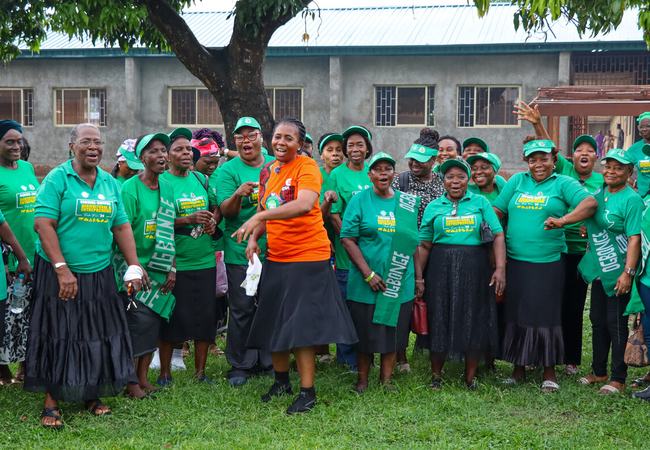
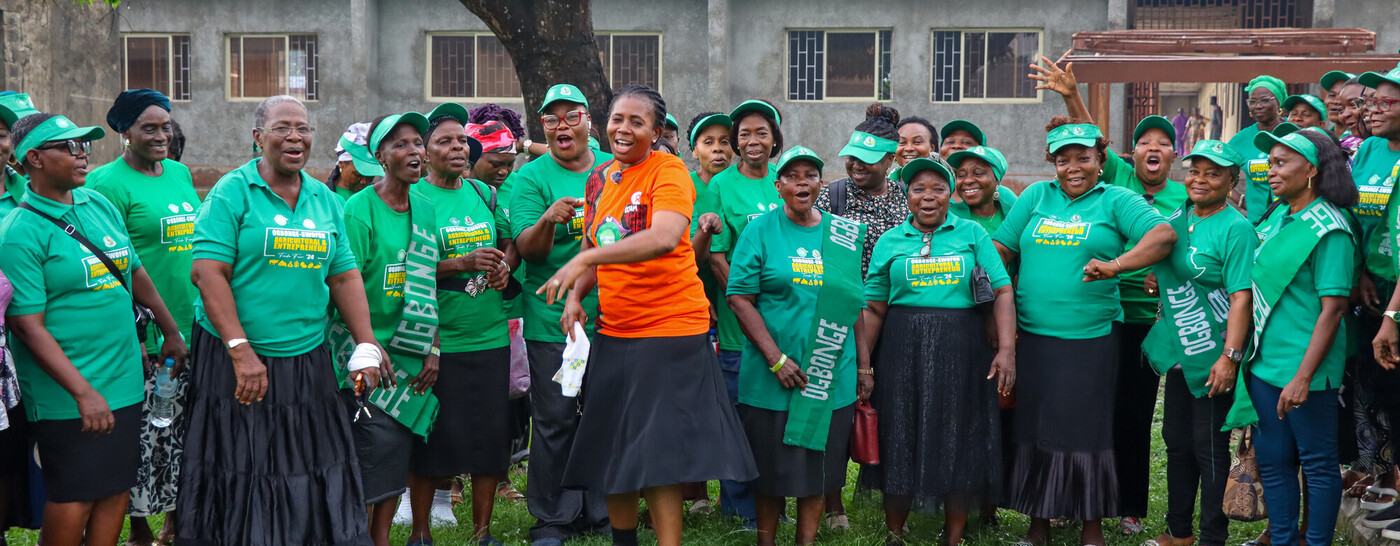
A woman wearing an orange t-shirt is stood in the middle of a large group of women wearing green t-shirts featuring the word 'Ogbonge'. They are all smiling and appear to be singing.

Honouring our communities for Black History Month

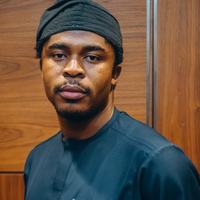
Maxwell Osasere Osarenkhoe from Oxfam in Nigeria posing for a headshot, stood in front of a wood-panelled wall, wearing a dark navy blue tunic and a black hat.

Maxwell Osasere Osarenkhoe

28 Oct, 2026 / 3 mins read time

As part of our themed celebrations for Black History Month 2026 we spoke with colleague Maxwell, based at Oxfam in Nigeria, to ask who he would like to honour, what more the charity sector should be doing to support Black communities and to provide his personal recommendations on how to explore this topic further.

Is there a person, group, or community you'd like to recognise in October 2026, and why?

I want to honour the Ogbonge Women, the smallholder women farmers of Lagos, Ogun, Delta and Nasarawa. They include former bankers, former teachers and entrepreneurs, alongside women who have farmed all their lives. Together they raise:

  • tilapia
  • catfish
  • poultry
  • pigs
  • maize
  • organic crops.

They have challenged assumptions about who a farmer is.

Maxwell Osarenkhoe / Oxfam
I invested in my farm and my profits began to grow.”

Sarah Patricia Ogabi, entrepreneur from Nasawara State, Nigeria.

Read Sarah's story

Through village savings groups they built real independence. Some turned their proceeds into businesses of their own, and one built a four-lodge property. They also persuaded Lagos State to include women farmers in its long-term development plans.

I would also recognise the families affected by insurgency in the Northeast of Nigeria and our local partners (CATAI, CRUDAN, CODERHI, YAHARAKARI), who show up first and stay longest.

What project or program have you felt most proud to contribute to at Oxfam?

The Ogbonge Women storytelling project. I led Nigeria’s submission to Oxfam International’s Content Stream grant, a fundraising initiative. It was one of three selected globally and the only one from Africa, winning €15,000 to amplify the stories of these women farmers as leaders in Nigeria’s food systems.

Their stories now appear on Oxfam America, Oxfam GB and Oxfam International platforms, and into the Oxfam America Annual Report. What makes me proudest is that the women told their stories in their own voices, with informed consent and dignity at the centre. The work also opened doors to new funding conversations.

At a time of growing global instability, what keeps you motivated?

The people behind the numbers. In Borno I have seen families and communities rebuild after displacement, and elsewhere I have watched a woman farmer explain her land rights challenge on camera with total clarity.

When a story we amplify leads to a road being built in Enugu, a policy being validated or a community getting kits, communications stop being content and becomes a form of justice.

Knowing that my work can shift who gets heard keeps me going, even when the world feels unstable.

What crises, communities and perspectives should the charity sector pay more attention to?

  • Protracted, underfunded crises conflicts in Northeast and Northwest Nigeria
  • Hunger and acute malnutrition
  • Recurring floods
  • Cholera outbreak
  • The long road to recovery after the headlines move on.

I would also highlight anticipatory action, where communities prepare before disaster strikes, and the voices of rural women, youth and persons with disabilities, who are often described in reports but rarely quoted in them. Too often, the scale of the response depends on who is affected and where, and that is a question of racial justice as much as funding.

What could the charity sector do differently to better support Black communities?

  • Fund and trust local organisations directly, rather than treating them only as implementers.
  • Examine who leads, who is paid what and who is promoted, so Black and Global South staff hold decision-making power, not only delivery roles.
  • Make ethical storytelling the norm: informed consent, dignity over pity, and communities shaping how their own stories are told.
  • Open more seats in global decision-making and messaging, and keep them open.
  • Let local context shape global narratives. A story grounded in Nigeria’s own data, such as its billionaire wealth figures, resonates far more than a generic one.

What brings you joy outside work?

My evenings usually mean a long walk around the neighbourhood with afrobeats in my headphones (Asake, Davido and others). It’s how I unwind.

Lately I have rediscovered my love for creative performance and I am active in Abuja’s poetry scene, where words can do what reports sometimes can’t.

Between poetry events and my membership of the World Economic Forum Global Shapers Community (Abuja Hub), I have also had conversations with ambassadors and senior diplomats who are hard to reach on ordinary days.

And in the kitchen? Beans and fried plantain. The best combination, no debate!

How can we explore this topic further?

I would point people to Nigerian music and poetry this Black History Month.

  • 20.10.20 by Burna Boy is a response to the Lekki Toll Gate shooting during the #EndSARS protests. I took part in those protests too, so it’s personal for me. It’s a powerful reminder of what young Nigerians stood for and what they paid for it.
  • A Tired Poem by Pariolodo is a piercing critique of the violence ordinary Nigerians endure and the deafening silence of those meant to protect them.

Both are art as testimony, and they say a lot about the communities we work alongside.

Fatima Mian / Oxfam

Black History Month

This October, we celebrate Black Joy, creativity and community while also asking why some Black communities and their experiences receive less attention than others.

Learn about Black History Month

About the author

Maxwell Osasere Osarenkhoe is the Media and Communications Officer at Oxfam in Nigeria, based in Abuja and joined Oxfam in October 2022. Maxwell leads the country programme’s storytelling, media relations, digital engagement and campaigns, from humanitarian responses in Northeast Nigeria to women’s rights, policy and food systems work.

He led Nigeria’s winning submission to Oxfam International’s Content Stream grant and has contributed to the global working group on public mobilisation for Oxfam’s signature Inequality Report since 2025.

Outside work, he is a member of the World Economic Forum Global Shapers Community (Abuja Hub), a member of Junior Chamber International, and a poetry enthusiast.